[Reporter’s Notebook] As the Price Ceiling Drags On, It’s Time to Design an Exit Roadmap
Two Months of Oil Price Controls... The Exit Dilemma
Time to Consider the Endgame and a Soft Landing Strategy
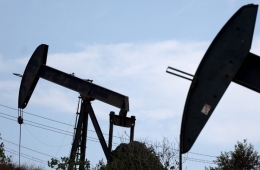
![[Reporter’s Notebook] As the Price Ceiling Drags On, It’s Time to Design an Exit Roadmap](http://www.asiae.co.kr/news/img_view.htm?img=2026050613450351714_1778042704.jpg)
"They told us to sell at low prices, but now we don't even have enough fuel to sell."
Mr. Kim (55), who runs a gas station in Seoul, lamented that he is struggling to secure inventory as the maximum oil price policy drags on. He explained that due to government price controls, refiners are required to sell oil at low prices and have started limiting supply, leaving gas station inventories virtually depleted. The current available supply is less than one-third of what it used to be. Kim said, "Refiners at least receive compensation for their losses, but gas stations are left to bear all the criticism for selling at high prices."
The fourth phase of the maximum oil price policy, which has been in effect since April 24, is set to expire on May 7. This marks the first time in 29 years since the liberalization of oil prices in 1997 that the government has directly intervened in the oil market. This measure was intended to ease inflation and relieve the burden on people's livelihoods amid a surge in oil prices triggered by the Middle East crisis.
As a short-term measure, the policy was clearly effective. It curbed soaring oil prices and contributed to price stability. The average price of gasoline, which had surged to 1,927 won per liter, dropped to 1,819 won after the first announcement of the price cap. The long lines at gas stations also disappeared. However, there were side effects, such as oil consumption not decreasing due to the artificially suppressed prices.
The ever-increasing compensation paid to refiners is also becoming a burden. The compensation amount currently estimated by the refining industry exceeds 3 trillion won, accounting for about 70% of the government's total reserve fund of 4.2 trillion won. There is also a significant gap between the government and the refining industry's positions on compensation standards. The government insists on compensation based on production costs, whereas the industry is demanding compensation based on product prices.
Policymakers are also aware of these concerns. Kim Jeongkwan, Minister of Trade, Industry and Energy, recently told reporters, "Personally, I don't think the price ceiling is a satisfactory measure," and added, "If the war in the Middle East ends or oil prices stabilize, we will end the policy as soon as possible."
Now, it is time to discuss a "responsible exit" to return the market to normal. However, abruptly withdrawing the policy is not a solution either. If the price ceiling is lifted while high oil prices persist, the suppressed prices of petroleum products will inevitably soar. For example, in Pakistan, from February to May 2022, the government froze gasoline and diesel prices, but after the policy ended, the price of gasoline surged by 66%, from 149.9 rupees per liter to 248.7 rupees per liter.
Hot Picks Today
!["Stock Set to Double: This Company Smiles Every Time a Data Center Is Built [Click e-Stock]"](https://cwcontent.asiae.co.kr/asiaresize/93/2026050416112750184_1777878687.jpg) "Stock Set to Double: This Company Smiles Every...
"Stock Set to Double: This Company Smiles Every...
- Even Wealthy Investors in Cheongdam and Apgujeong Are Turning to Stocks After Se...
- “Did They Bet Too Early?” Losses Snowball for ‘Geopverse Ants’ as KOSPI Soar...
- "Going to Seongsu-dong?" Japanese Girl Group Faces Taxi Refusal in Seoul
- Who Called It an 'Old Man's Hobby'? "Tired of the Usual," Millennials & Gen Z Bu...
Ultimately, what is needed is a "soft landing strategy." More important than the power to suppress prices is the ability to put the market back on a normal track. Rather than debating the success or failure of the policy, it is now necessary to develop an exit strategy that minimizes market shock.
© The Asia Business Daily(www.asiae.co.kr). All rights reserved.