Constitutional Court Rules Ban on Multimedia Messages in Cooperative Leader Election Campaigns Unconstitutional
Court Rules Provision Inconsistent with Constitution
Cites Concern Over Legal Vacuum
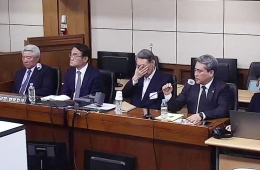
The Constitutional Court of Korea has ruled that the provision of the Entrusted Election Act, which prohibits the use of multimedia messages in cooperative association leader election campaigns, is unconstitutional.

On April 29, the Constitutional Court, located in Jongno-gu, Seoul, delivered its ruling for the April session, declaring by a 7-2 vote that the relevant part of Article 28, Item 2 of the Entrusted Election Act is inconsistent with the Constitution, in response to a constitutional complaint and a request for adjudication on the constitutionality of the law. If the National Assembly does not pass an amendment, the provision will lose its effect starting January 1 next year.
The Court acknowledged that the legislative purpose of ensuring election fairness is legitimate, but found that broadly and uniformly restricting multimedia messages is excessive. However, out of concern for a potential legal vacuum that could arise from an outright unconstitutionality decision, the Court issued a ruling of inconsistency with the Constitution, ordering the continued application of the provision until revised legislation is enacted.
The Court further pointed out that, since election campaigning using information and communications networks—including photos and videos—is already fully permitted, there is no particular need to specifically restrict election campaigning through multimedia messages. The Court also explained that election fairness can be sufficiently secured by other criminal provisions, such as those prohibiting the dissemination of false information and the defamation of candidates.
Article 28, Item 2 of the Entrusted Election Act bans the use of multimedia messages containing audio, video, or images in cooperative association leader elections. The rationale was to prevent unfair campaigning due to the economic power gap between candidates, as the cost of sending multimedia messages is higher than that of regular text messages.
Hot Picks Today
 "Parents Deposited 10 Million Won for Me"... Se...
- "SK Hynix Stock Windfall"... Teenager With Wads of Cash Turns Thief at Jewelry S...
- Over 100 Robotaxis Malfunction in Middle of Roads... China Halts Operating Permi...
- "Major Crash Is Coming... Buy Even If You Have to Skip a Meal" 'Rich Dad' Shares...
- Did Her Wealthy Husband Quash the Investigation? Yang Jungwon Appears Before Pol...
Previously, in the 2019 National Agricultural Cooperative Federation leader election, a candidate identified as A was fined 3 million won for sending text messages with attached images displaying his face, career, and candidate number during the campaign period.
© The Asia Business Daily(www.asiae.co.kr). All rights reserved.