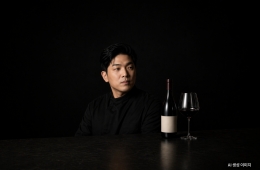
[Namsan Stroll] The Choice of 16 Million Viewers: When Cinema Speaks of Humanity Again
A Perspective That Rewrites the Record: How Did It Move the Public's Heart?
Insight, Aesthetic Sensibility, and Humanity Revealed by a Blockbuster
![[Namsan Stroll] The Choice of 16 Million Viewers: When Cinema Speaks of Humanity Again](http://www.asiae.co.kr/news/img_view.htm?img=2026042323022938538_1776952949.jpg)
Recently, the content industry has been expanding at an unprecedented pace. The number of formats available to the public—online video services (OTT), short-form content, YouTube, games, and even content powered by artificial intelligence (AI)—has exploded. While a wider range of choices certainly brings abundance, for the traditional content market, it can also pose a threat. In particular, the film industry is among the sectors most directly affected by this shift. Movie theaters, once at the center of everyday cultural consumption, are now facing the dual challenges of declining attendance and a polarized box office. People have grown accustomed to consuming content in more convenient, faster, and cheaper ways, and the reasons to visit a theater are gradually fading.
In this context, the emergence of a film that has recently surpassed 16 million viewers carries special significance. The number itself is astonishing, but more importantly, this achievement is not easily attainable in the current environment of the film industry. This mega-hit, the first in a long while, once again demonstrates that film remains an art form and industry capable of deeply moving the public. This leads to a pressing question: in an era where countless pieces of content compete, why this particular film? What drew so many people back to the theaters?
I recently had the opportunity to hear director Jang Hangjun speak about the film during a guest visit (GV). Although brief, the conversation made me reflect on how a single film can touch upon the spirit of the times and move people’s hearts. Director Jang explained that, with this work, he aimed to look at history from the perspective of the defeated, rather than the victors as is often the case. He sought to reinterpret Danjong—not just as a weak or tragic figure often remembered in history, but as a king with dignity and presence, rather than a mere scapegoat.
This is precisely the source of the film’s power. History is often defined by the perspective of those who record it. However, art delves beneath the surface, calling forth voices that have been forgotten or overshadowed. This film not only revives a historical figure who was on the verge of fading into obscurity, but also illuminates him with new interpretations and sensibilities. The film’s insight, which makes the familiar seem unfamiliar, delivers a profound resonance to the audience.
This transformative power closely resembles the messages found in contemporary art. When Marcel Duchamp presented an ordinary urinal as the piece “Fountain,” people were prompted to reconsider the very way they look at objects. What mattered was not the object itself, but the perspective through which it was viewed. The same is true for this film, which moved 16 million viewers. By breathing new life into history and figures many thought they already knew, the film creates moments that make audiences realize, “It can be seen this way, too.”

Another notable aspect is the film’s warm humanism. Many critics have commented on director Jang Hangjun’s trademark warmth, but this sentiment is felt as the film’s most solid foundation throughout the entire work. Today, AI and technology permeate nearly every aspect of life, and even people are constantly compared against each other in terms of efficiency and performance. Against this backdrop, the film quietly yet firmly upholds the value of caring for and respecting others, maintaining a gaze that looks after the vulnerable, and a belief in humanity. This may be why audiences rediscover the warmth of emotions they had forgotten, going beyond simple immersion.
What struck me most during the GV was director Jang’s decision-making style. He said that, as a director, he must make countless decisions, but does not perceive the process as excessively stressful. Instead, he assumes that the person who brings a question has thought about it the most and first listens to their opinion, gathering the thoughts of staff if necessary before making a decision. This approach is more than just a directing style; it is an attitude toward creation itself—one that prefers collective deliberation and joint decisions over holding all the answers alone. No matter how advanced technology becomes, the empathy, sensitivity, and creativity that emerge from the collective intelligence of people are difficult to replace.
Although brief, this conversation helped me better understand why this film resonated with 16 million viewers. It was not a chance box office hit, but the result of insightfully reinterpreting history, a warm faith in humanity, aesthetic completeness, and a creative attitude grounded in collaboration. The most impressive moment was when, asked whether he was happy that so many people came to the theater, director Jang replied, “I would be even happier if other films did well together.” This statement reflected his awareness that the success of a single film cannot be sustained if the film industry does not grow together.
Ultimately, this message is not limited to the film industry. While everyone talks about mutual growth, in reality, the value is often forgotten in the face of individual interests. However, industries and cultures that endure are not built on solitary success, but on thriving ecosystems where many grow together. This is why the record of 16 million viewers is all the more meaningful; it is not just a numerical achievement, but a reminder of why art is still necessary today and why our humanity remains important. In the end, what truly moves people is not the speed of technology, but a deep understanding and warm perspective toward others.
Hot Picks Today
 The Quoted 800,000 Won, the Bill Was 5 Million....
- "I Wish I Could Sleep": Frozen Meals, Two Hours of Rest... Japanese Prime Minist...
- "You Can Only Have This in Korea": Which National Museum Cafe Menu Is Captivatin...
- Tragedy in Luxury Apartment: Woman in Her 20s Found Dead, Suspect Identified
- "Never Hike Alone as a Woman" "Even Two Are at Risk"... Growing Fear of Crime on...
Jisook Hong, CEO of Art Token and Convergent Content Producer
© The Asia Business Daily(www.asiae.co.kr). All rights reserved.