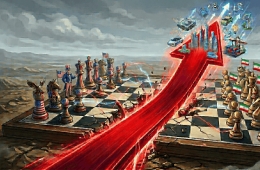
UK and France Lead Hormuz Navigation Talks... Military Plans Discussed by 30 Nations
With Main Warring Parties Absent,
Discussion Centers on Post-U.S.-Iran Conflict Measures
UK Stresses "Post-Conflict Premise"
The UK Ministry of Defence announced on April 22 that the United Kingdom and France are holding a military planning conference at the Northwood Permanent Joint Headquarters in London from April 22 to 23 (local time). The meeting involves more than 30 countries and is set to discuss plans for multinational operations following the reopening of the Strait of Hormuz.

This conference marks the stage where diplomatic agreements between heads of state are being translated into concrete military operational plans. Participating nations are expected to formulate detailed plans for a "defensive" multinational mission, which will include actions such as protecting merchant vessels and clearing mines once hostilities have ceased.
John Healey, the UK's Secretary of State for Defence, stated, "This meeting is important. It is about turning diplomatic agreements into joint plans to protect freedom of navigation and support a lasting ceasefire," adding, "I am confident we will see real progress over the next two days."
Previously, the UK and France have led international cooperation to guarantee freedom of navigation through diplomatic and summit-level efforts. At the Paris summit on April 17, more than 12 countries expressed willingness to provide military assets. Although over 40 countries attended that summit, the main belligerents—the United States and Iran—were not present.
However, the UK Ministry of Defence reiterated that, in contrast to U.S. President Donald Trump's calls for troop deployment, allied countries are maintaining a principle of limited postwar engagement. It emphasized that the current discussions are also premised on a de-escalation of the conflict.
Hot Picks Today
 "Stage Set for Samsung and SK hynix: How High C...
- [Exclusive] "What? I Used It for Fried Eggs and Kimchi Pancakes, but It Wasn't E...
- "Doctors Never Eat This": Foods Warned Against by Asan Medical Center Professor
- "We'll Give You 200,000 Won, Please Start Dating"... Japan Subsidizes Matchmakin...
- [Exclusive] Why Investors Are Flocking to the 'Forever Young Idols'... 7 Billion...
Currently, tensions remain high in the Strait of Hormuz amid a stalemate in U.S.-Iran negotiations, with Iran's Revolutionary Guard increasing the level of blockade, including the seizure of three vessels. Iran's seizure of the ships took place after President Trump announced an extension of the ceasefire with Iran, just one day before the end of the previously declared "two-week ceasefire." President Trump had stated that the maritime blockade against Iran and other readiness measures would remain in place.
© The Asia Business Daily(www.asiae.co.kr). All rights reserved.