Quantum Computing and Mythos Rise Together... Stock Market Focuses on RaonSecure's 'AI Authentication'

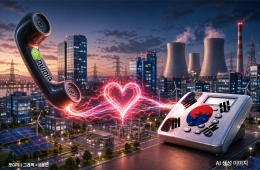
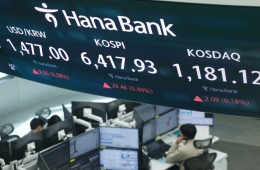
Recently, domestic security-related stocks have seen a sharp rise, drawing attention to the reasons behind this surge. In the market, there is an interpretation that this trend is not driven by a single factor, but rather by the convergence of multiple technological and policy issues, such as quantum computing and the Mythos shock.
First, on April 15, Jensen Huang, CEO of Nvidia, unveiled an AI model capable of improving technical challenges in quantum computers, which heightened expectations around post-quantum cryptography (PQC), and domestic related stocks reacted strongly. There is also a growing awareness that the entire authentication system may need to be redesigned, given the possibility that quantum computers could render existing cryptographic technologies obsolete.
The case of Anthropic's "Mythos" has put the spotlight back on the potential security threats posed by AI. It has come to light that AI is now approaching the level where it can both detect vulnerabilities and construct attack scenarios, heightening concerns about AI security. Whereas previously humans were the main agents of both attack and defense, now AI is also emerging as an independent agent, granted authority and acting autonomously in such environments.
Although these issues may appear to belong to separate domains on the surface, many in the market believe they are ultimately interconnected. The reason is that quantum computing, AI, and digital assets all converge on the question of "who, with what authority, and in what trustworthy manner, gains access"—that is, the issue of authentication systems.
In addition, since AI authentication also operates on a cryptography-based trust system, there is analysis that, in the era of quantum computing, combining this with PQC technology to provide protection will be essential.
Accordingly, the current market is focusing more on companies that can address quantum computing and Mythos from the perspective of a unified trust infrastructure, rather than on each issue individually.
Amid this trend, RaonSecure is evaluated as having established a relatively clear position. It is being highlighted for pursuing an "AI authentication-centered trust infrastructure" capable of managing both humans and AI based on PQC and agentic AI control technologies—a factor that sets it apart.
In particular, its strength is cited as supporting both the Korean post-quantum cryptography (KpqC) and the U.S. NIST standard algorithms in the PQC sector. In 2024, RaonSecure commercialized algorithms based on CRYSTALS-Kyber in its electronic signature solution "Key#Biz" and its segment encryption solution "Key#Wireless," applying these to businesses and institutions.
On the strength of this technological capability, last year RaonSecure was selected as the lead company in the healthcare sector for the "PQC Demonstration Support Project" by the Ministry of Science and ICT and Korea Internet & Security Agency (KISA), undertaking a demonstration project to apply PQC security to an open medical data platform. This is interpreted as evidence of its ability to proactively respond to the "harvest now, decrypt later (HNDL)" threat posed by quantum computers.
Even in the AI security threat phase triggered by the Mythos shock, RaonSecure has taken the lead in relevant responses. Given rising concerns that AI could act autonomously outside its granted authority, the authentication system that controls identity, authority, and actions themselves is emerging as a key countermeasure.
RaonSecure plans to launch an agentic AI-based security automation platform within the year, and is working on establishing an "AAM (Agentic AI Management)" system that integrates the management of AI identity, authority, and actions. Recently, the company signed an agreement with Upstage, a company recognized as a national leader in AI, to advance AI-based security, raising expectations that the realization of these technologies will accelerate.
Myungjun Kwon, a researcher at Yuanta Securities, analyzed, "The emergence of Mythos signifies the full arrival of the AI-based cybersecurity era," adding, "In Korea, RaonSecure and similar companies are highly likely to benefit structurally."
Global market research firms are also emphasizing the importance of authentication systems. MarketsandMarkets predicts that the non-human identity and access management market will grow from $9.45 billion (about KRW 13.9 trillion) in 2024 to $18.71 billion (about KRW 27.5 trillion) in 2030.
Hot Picks Today
![[Exclusive] "What? I Used It for Fried Eggs and Kimchi Pancakes, but It Wasn't Edible?"... Raw Pork Lard Supplied to Department Stores, Causing Stir](https://cwcontent.asiae.co.kr/asiaresize/93/2026042216151436513_1776842114.png) [Exclusive] "What? I Used It for Fried Eggs and...
[Exclusive] "What? I Used It for Fried Eggs and...
- "Chairman Chey Tae-won's Warning Comes True"... Laptop Prices Already Up 1 Milli...
- Israeli Military Chief of Staff: "Prepared to Return to Combat on All Fronts"
- Deokgu Returns: Mealtime Video Surpasses 1.3 Million Views... "Why Is the Food O...
- "From 8,000 Won to 730,000 Won: The Toy Everyone Wants but Can't Get"
An industry official stated, "Mythos has made AI a 'subject of authentication,' and quantum computing is changing the 'method of authentication.' As the center of security shifts to 'AI authentication,' this will become a critical inflection point for companies that have proactively secured related technologies."
© The Asia Business Daily(www.asiae.co.kr). All rights reserved.