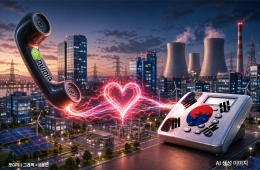
"The Era of Geoeconomic Trade... Korea and Japan Must Strengthen Cooperation on Critical Mineral and Industrial Supply Chains"
KERI Hosts Korea-Japan New Economic Cooperation Seminar Amid Complex Crises
Han-Koo Yeo, Trade Minister, Stresses Importance of Multilateral Platform Collaboration
There has been a recommendation that Korea and Japan should jointly respond to the restructuring of supply chains for critical minerals and advanced industries. With economic security-centered trade policies being strengthened worldwide following the launch of the second U.S. President Donald Trump administration, it has been diagnosed that the two countries must actively build industrial competitiveness by identifying joint projects through overseas resource development and multilateral cooperation platforms.
The Korea Economic Research Institute (hereafter KERI), under the Federation of Korean Industries, announced this on April 22 as it co-hosted the "Korea-Japan New Economic Cooperation Seminar for an Era of Complex Crisis" with the Comprehensive Policy Research Institute of Keidanren, Japan. The seminar was held to explore new directions for Korea-Japan economic cooperation amid a rapidly changing international economic environment.

On this day, Han-Koo Yeo, Trade Minister for Trade Negotiations at the Ministry of Trade, Industry and Energy, delivered a keynote speech on the theme of "Direction of Korea-Japan Economic and Trade Cooperation." He emphasized, "Korea and Japan are facing common challenges and uncertainties," and added, "With instability in the Middle East persisting and U.S.-China strategic competition intensifying, what is needed now is flexible solidarity among countries that share values and interests."
From the supply chain perspective, Minister Yeo highlighted the importance of cooperation based on the SCPA (Korea-Japan Supply Chain Partnership Agreement), including responding to supply chain disruptions and exploring and investing in critical minerals, all on a multilateral platform. In practice, both countries have been focusing on strengthening cooperation in advanced industries such as semiconductors and stabilizing supply chains for critical materials like rare earths. Korea is pushing forward with the Three Supply Chain Laws and comprehensive measures for rare earths, while Japan is conducting domestic rare earth exploration and development based on its Economic Security Law.
Minister Yeo also pointed out, "From the perspective of energy security, we need to strengthen mutual stockpiling and swap cooperation for resources such as oil and gas, to establish a system for rapid joint response in the event of supply and demand crises." Previously, Korea Gas Corporation and Japan's JERA signed an "Agreement for LNG Supply Cooperation" last month on the occasion of the Indo-Pacific Energy Security Ministerial Meeting.
In his keynote presentation, Sungbae Ahn, Vice President of the Korea Institute for International Economic Policy (KIEP), emphasized, "Korea and Japan need to expand joint projects such as mine development and infrastructure investment in third countries." He pointed out that since the two countries already have experience cooperating on resource development projects involving nickel, copper, and iron ore, there is a need to further expand these efforts. Vice President Ahn noted that the Agreement on Trade in Critical Minerals (ATCM), a multilateral cooperation platform, could shape future price mechanisms, investment standards, and supply chain norms, making Korea-Japan cooperation vital.
Arata Kuno, Professor at Asia University, also stated in a subsequent presentation, "The most important area where Korea and Japan must focus their cooperation is supply chain stabilization." He presented that the key task is to reduce dependence on specific countries in strategic industries such as semiconductors, batteries, and critical minerals, and to establish a system that enables joint response in times of crisis. Professor Kuno further explained that to achieve this, the two countries must urgently enhance more practical cooperation mechanisms, including information sharing, joint procurement, and production collaboration.
Based on the discussions at this seminar, KERI plans to prepare a policy proposal report during May that can lead to tangible results. Previously, Professor Won Yoojib of KAIST, based on research commissioned by KERI, proposed a "Twin Hub AI Infrastructure Alliance" model. This cooperation model involves conducting AI training in Japan, where electricity and cooling conditions are advantageous, and providing inference and services in Korea, which has competitiveness in semiconductors and data centers.
Hot Picks Today
![[Exclusive] "What? I Used It for Fried Eggs and Kimchi Pancakes, but It Wasn't Edible?"... Raw Pork Lard Supplied to Department Stores, Causing Stir](https://cwcontent.asiae.co.kr/asiaresize/93/2026042216151436513_1776842114.png) [Exclusive] "What? I Used It for Fried Eggs and...
[Exclusive] "What? I Used It for Fried Eggs and...
- [Report] "Professionals in Their 30s and 40s With at Least 2 Billion Won in Cash...
- "375 Won Per Share" SK hynix to Pay 26.58 Billion Won Cash Dividend
- No More Updates on 'Star' Wolf Neugoo for Now... Was the Pressure from Fans Over...
- "Chairman Chey Tae-won's Warning Comes True"... Laptop Prices Already Up 1 Milli...
Chul Chung, President of KERI, stated in his welcoming remarks, "I hope that this seminar will go beyond normative discussions to seek practical models for Korea-Japan cooperation, and that it will serve as an opportunity to develop Korea-Japan economic cooperation in a more stable and sustainable direction."
© The Asia Business Daily(www.asiae.co.kr). All rights reserved.