[Choi Junyoung's World+] A Crisis Creeps In Slowly and Spreads Fast... Like the Spring Sunlight
Illusion of Stability in Oil Prices Is Over: Supply Shortages Begin Now
Petroleum-Based Products, Including Food Packaging, Are Getting More Expensive
Agriculture and Construction Sectors Under Strain While Focus Remains on Semiconductor Bon

The weekend scenes of parks and roads filled with people and cars enjoying the spring weather appeared the same as always. Yet, there was something different—long lines forming in front of several gas stations. As people flocked to stations offering gasoline about 40 won per liter cheaper than elsewhere, congestion ensued. With the Iran war, which began on February 28, entering a two-week ceasefire, it feels as though everything has momentarily stabilized. However, beneath the tranquil spring days, a crisis is quietly approaching.
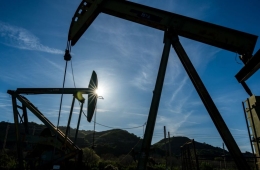
Despite the closure of the Strait of Hormuz, gasoline prices have remained around 2,000 won per liter due to the government’s price ceiling and several buffer factors. A key contributor was that global crude oil and petroleum product inventories reached record highs in January this year. Large-scale strategic oil releases, led primarily by the United States and Japan after the outbreak of war, also helped alleviate the effects of supply disruptions. Most importantly, however, were the oil tankers that had already passed through the Strait of Hormuz just before the conflict. The maritime transport of oil, loaded in Middle Eastern producing countries and bound for major Asian nations, takes about two to four weeks. Up until late March, Middle Eastern crude was still arriving in Korea. However, after the last tanker that departed Iraq on March 20 arrived, the supply of Middle Eastern crude was halted for a time. In Japan as well, no further supply has arrived since the last tanker docked on April 3. We are now entering a period where supply itself is starting to decrease in earnest.
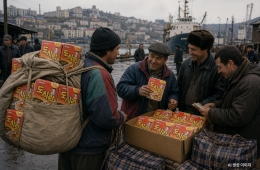
The prices of everything we consume in our daily lives are rising. From food packaging to disposable syringes in hospitals, everything made from petroleum is becoming more expensive and scarce. Such shocks hit the most vulnerable sectors first—agriculture being a prime example. This is a busy season for sowing, and the most important resources in the field are fertilizer, plastic film, plastics, and diesel. Large quantities of plastic and film are used, from seedling trays to mulching films that suppress weeds. There is growing anxiety in the field as goods are hard to obtain even at prices that have jumped 30 to 50 percent. Fertilizer, which is essential for farming, is also climbing in price. Globally, nitrogen fertilizer prices are up 35.2% from a month ago and 168.6% from a year ago. For now, farms are operating using last year’s inventory and already contracted supplies, but the outlook beyond that is unpredictable. There is a growing risk not only of higher agricultural product prices but also of farm bankruptcies and defaults, yet our attention seldom reaches this far.

A gasoline and diesel price notice is placed at a gas station in Yongsan-gu, Seoul. Photo by Yoon Dongju
View original imageThe construction sector is also on edge. Ready-mixed concrete, the most critical material on construction sites, is made of cement, gravel, sand, and water, but also requires the addition of chemical admixtures. While admixtures account for only 1–2 percent of the mix, they ensure the fluidity of concrete and control its setting speed and strength. Without them, quality standards cannot be met. Admixtures are made from ethylene extracted from naphtha. Naphtha prices have more than doubled, and supply is increasingly difficult to secure. If the current situation persists, admixture inventories could be depleted by early May, bringing construction sites to a standstill. Like agriculture, construction sites use a large amount of petrochemical products. Many essential construction materials, such as interior and insulation materials, are derived from petroleum. Even if construction sites come to a halt due to material shortages, costs such as tower crane rentals and insurance premiums continue to accrue daily. Progress payments (interim payments based on construction progress) are not made if work is suspended. This raises the risk of financially weaker subcontractors going under. The crisis in construction will ripple across the broader economy. Small businesses, already struggling from weakened consumer spending, are likely to become even more vulnerable.
While every sector supporting our society is sounding the alarm, many people remain focused on record-high export volumes, surging stock prices, and the semiconductor industry’s bonuses reportedly exceeding 1 billion won. For many city dwellers, the effects of the Hormuz Strait blockade and rising oil prices are only felt as gasoline prices in the 2,000 won range. Yet, it is clear that a much greater shock is looming. Still, the government’s response remains excessively cautious and passive, emphasizing that there are no major problems while failing to address the impending crisis and shocks.
While it is important to avoid exaggerating the crisis and triggering unnecessary panic or hoarding, it is equally difficult to find responsible officials continuously highlighting the gravity of the situation and encouraging vigilance and preparedness.
Even if the United States and Iran immediately end the war and reopen the Strait of Hormuz, returning to the previous state will take a considerable amount of time. Oil and liquefied natural gas (LNG) production facilities have been damaged, and the production capacity of affected oil and gas wells has decreased. As seen with Qatar’s force majeure declaration to halt LNG supplies to Korea and China for five years, recovery will be a long process. Prices for various industrial raw materials such as sulfur and ammonia, which heavily depend on the Middle East, are also likely to remain elevated. Rather than relying solely on short-term measures like conserving oil due to immediate shortages, this should be an opportunity to review the entire supply chain and consumption patterns to improve overall efficiency. Whenever a crisis arises, the media is flooded with articles lamenting insufficient preparation and stockpiling, yet once the situation ends, no one pays attention. Now is the time to look beyond efforts to secure more crude oil and examine every corner of our oil-dependent society, paying special attention to sectors facing insurmountable difficulties. We must not forget that the true crisis and shock have already arrived, as quietly as the spring sunshine.
Hot Picks Today
 The Quoted 800,000 Won, the Bill Was 5 Million....
- "How Do Six People Sleep in a 44㎡ Apartment?" Subscription Point System Controv...
- They Say They'd Rather Go to Japan Than Travel Domestically... But a 'Surprising...
- Came to Shop for Clothes, Ended Up Singing and Getting an Eye Exam... Inside Mus...
- "Never Hike Alone as a Woman" "Even Two Are at Risk"... Growing Fear of Crime on...
Junyoung Choi, Senior Specialist at Yulchon LLC (Global Policy and Law)
© The Asia Business Daily(www.asiae.co.kr). All rights reserved.

![The 'Epic' 1,500 Trillion Won Bill... In the End, the Poor Pay the Price [Data Pick]](https://cwcontent.asiae.co.kr/asiaresize/307/2026042310001637425_1776906017.jpg)