[Back to Nuclear Power] Kim Hoecheon Appointed as KHNP CEO...Cooperation System with KEPCO Expected to Restart
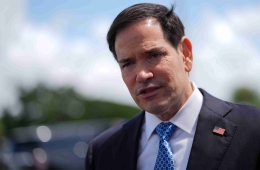
With the appointment of Kim Hoecheon, former CEO of Korea South-East Power and a Korea Electric Power Corporation (KEPCO) veteran, as the new CEO of Korea Hydro & Nuclear Power (KHNP), the cooperative system between KEPCO and KHNP—which has led the country’s nuclear power sector—is expected to be restored.
![[Back to Nuclear Power] Kim Hoecheon Appointed as KHNP CEO...Cooperation System with KEPCO Expected to Restart](http://www.asiae.co.kr/news/img_view.htm?img=2026031709031177759_1773705791.jpg)
According to the industry on March 17, Kim Hoecheon will take office as the new CEO of KHNP on March 18. Previously, the Public Institution Management Committee of the Ministry of Economy and Finance held a personnel subcommittee meeting and selected Kim as the candidate for the new KHNP CEO, and KHNP subsequently convened a general shareholders’ meeting to approve his appointment. Kim is a former KEPCO executive who held key positions within the company, rising to Executive Vice President for Corporate Support. He served as CEO of Korea South-East Power from 2021 to 2024. Following a six-month vacancy after the previous CEO’s resignation, Kim now faces tasks including the construction of two large-scale nuclear reactors (2.8 GW), one small modular reactor (SMR), competition for overseas nuclear power plant contracts, coordination with KEPCO, and resolving the dispute over additional construction costs at the Barakah nuclear power plant in the United Arab Emirates (UAE).
The restoration of relations with KEPCO is drawing particular attention. Originally, KEPCO handled all nuclear power exports exclusively, but since 2016, KEPCO and KHNP have divided international project bids by region. KEPCO is responsible for marketing and financial procurement, while KHNP handles construction and operation. For countries such as the United States, UAE, and Vietnam, where Korean-designed reactors can be directly applied, KEPCO takes the lead; for countries like the Czech Republic, Romania, and the Philippines, where design modifications are required, KHNP is in charge.
KEPCO and KHNP have been in conflict over the settlement of an additional KRW 1.4 trillion in construction costs for the Barakah nuclear power plant in the UAE. KHNP argued that KEPCO, as the main contractor, should pay for the increased costs due to design changes, while KEPCO insisted that it could only pay after first settling with the UAE side. This led to an unprecedented situation in which KHNP, as a subsidiary, filed for arbitration against its parent company KEPCO at the London Court of International Arbitration. The Ministry of Trade, Industry and Energy recommended transferring the international dispute to the Korean Commercial Arbitration Board (KCAB), but since this recommendation is not binding, both KEPCO and KHNP must autonomously decide after going through internal procedures such as board resolutions.
Hot Picks Today
 "Only Two Per Person" Garbage Bag Crisis Was Just Yesterday... Japan Also Faces Shortage Anxiety
- "Samsung Electronics Employee with 100 Million Won Salary Receiving 600 Million Won Bonus... Estimated Tax Revealed"
- Lived as Family for Over 30 Years... Daughter-in-Law Cast Aside After Husband's Death
- 'Will Demand Finally Decline Due to High Prices?'... "I'll Just Enjoy Nearby Trips" as Japan and China See a Surge
- "Wore It Once, Then This? White Spots All Over 4.15 Million Won Prada Jacket... 'Full Refund Ordered'"
With the selection of new nuclear power plant sites accelerating and a global nuclear power boom underway, close cooperation between the two organizations is essential to carry out national-level tasks. Industry insiders expect that Kim Hoecheon will play a key role in resolving the conflict between KEPCO and KHNP and establishing a smooth cooperative framework.
© The Asia Business Daily(www.asiae.co.kr). All rights reserved.