Mayor Lee Sangil of Yongin Takes Preemptive Action Against 'Middle East Economic Crisis'... Emergency Economic Task Force Activated
Yongin Freezes Water, Sewage, and Garbage Bag Rates for First Half of Year
Mayor Lee Sang-il: "Livelihoods Come First... We Will Minimize the Burden on Ordinary Citizens"
Discussions on Price and Energy Management, and Employment Support for Vul
Yongin Special City in Gyeonggi Province (Mayor Lee Sangil) has decided to prepare and implement sector-specific response measures to address the possibility that the chaotic international economic situation—including rising global oil prices due to the war between the United States and Iran—could increase the burden on the livelihoods of ordinary citizens, the self-employed, small business owners, and farmers.

Yisangil, Mayor of Yongin Special City, held a Middle East-origin crisis response economic and livelihood stabilization policy meeting on the 16th. Provided by Yongin City
View original imageOn March 16, Mayor Lee Sangil held an "Emergency Economic and Public Livelihood Stabilization Countermeasure Meeting" in the city hall's video conference room, where he reviewed the current status of energy and consumer goods prices directly affecting the local economy, and discussed support measures for ordinary citizens.
Mayor Lee said, "If problems such as the sharp rise in oil prices due to international circumstances become prolonged, it is highly likely to make life more difficult for the city's socially vulnerable groups, small business owners, self-employed individuals, ordinary citizens, and farmers. That is why I called for this countermeasure meeting, believing that the city must prepare a variety of support measures." He added, "The city needs to monitor each sector and establish meticulous policies for those who may face difficulties in order to ensure public livelihood stability."
Mayor Lee also stated, "There may be things the central government has overlooked, so at the city level, we need to review what we should request from the government," and emphasized, "Let us work with exceptional resolve until the emergency situation is over."
The city will form and operate an "Emergency Economic Response Task Force" until the instability in the international situation and economic uncertainty are resolved.
This task force will be led by Mayor Lee Sangil as the head, with First Deputy Mayor Ryu Gwangyeol serving as deputy head. It will consist of the following teams: General Support, Price Stabilization, Vulnerable Group Support, and Transportation/Energy Support. Each team will monitor and review developments in their respective sectors in real time.
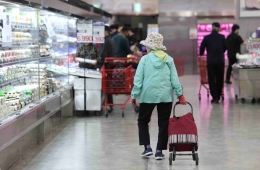
The city plans to focus on price stabilization by monitoring personal service fees, agricultural, livestock, and fishery products, and government-designated special management items to prevent factors that could drive up the prices of consumer goods that affect ordinary citizens' daily lives.
In this regard, the city has decided to freeze water and sewage rates and garbage bag prices until the first half of the year.
The city will consult with public transportation operators to ensure that bus routes are not shortened due to rising oil prices, and will also supervise and inspect these operations.
Yongin will monitor supply conditions at 198 gas stations in the city and plans to conduct joint inspections with the Korea Petroleum Management Institute to prevent problems such as the sale of fake oil, hoarding, and illegal distribution.
The city will also expand job creation programs for vulnerable groups in phases.
In these job programs, the city will consider giving additional points to low-income residents, people with disabilities, and long-term unemployed individuals to increase participation, and will also review measures to support reemployment.
Furthermore, the city will expand the eligibility for the "Hope Dream Job Program," giving priority to citizens aged 18 or older who own assets worth 400 million won or less.
To support small business owners, the city plans to request additional central government funding for the issuance of local currency. Yongin will also ask Gyeonggi Province to consider waiving intermediary fees for Baedal Teukgeup franchisees.
Expecting that the use of tax-free fuel will increase during the farming season, Yongin City will establish a cooperation system to ensure the smooth supply of tax-free fuel to farms, and will make efforts to secure expanded national and provincial funding for energy-saving projects to help stabilize farm management.

Yisangil, Mayor of Yongin Special City, is holding a Middle East Crisis Response Economic and Livelihood Stabilization Measures Meeting on the 16th. Provided by Yongin City
View original imageAdditionally, given that most livestock farms rely on imported feed, Yongin City will propose that the central government expand support for the "feed purchase fund (loans)" to alleviate the burden on farms caused by rising grain prices and exchange rates.
The city also explored support measures for vulnerable groups and welfare facilities that are significantly burdened by rising oil and food prices.
Yongin plans to formulate policies that can benefit basic livelihood security recipients, elderly households, senior citizen centers, people with disabilities, and child and childcare households and facilities, in line with the central government's support policies and budgetary situation.
Hot Picks Today
 "Only Two Per Person" Garbage Bag Crisis Was Just Yesterday... Japan Also Faces Shortage Anxiety
- US Secretary of State: "No Agreement Possible If Iran Imposes Hormuz Strait Tolls"
- Lived as Family for Over 30 Years... Daughter-in-Law Cast Aside After Husband's Death
- 'Will Demand Finally Decline Due to High Prices?'... "I'll Just Enjoy Nearby Trips" as Japan and China See a Surge
- "Wore It Once, Then This? White Spots All Over 4.15 Million Won Prada Jacket... 'Full Refund Ordered'"
To ensure smooth logistics and transportation, the city will also review securing a supplementary budget to prepare for an increase in subsidies due to rising oil prices.
© The Asia Business Daily(www.asiae.co.kr). All rights reserved.