"Gwangju-Jeonnam Integration Must Not Neglect Rural Areas"...Jin Woojun Urges Transfer of Fisheries Authority
At the Budget Committee, Caution Against a "Superficial Integration"
Calls for the Transfer of Authority Over Fishing Licenses and Funds
Proposal to Unify the Management System of Inhabited and Uninhabited Islands Under the Integrated Market
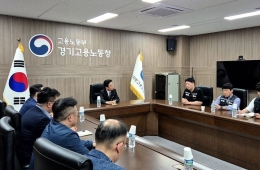
Assemblyman Jin Woojun of the Jeonnam Provincial Assembly (Democratic Party of Korea, Wando 2) has strongly urged proactive measures by Jeonnam Province to ensure the practical transfer of authority in the fisheries sector and to protect the rights and interests of farmers and fishermen during the administrative integration process between Gwangju and Jeonnam.
According to the Jeonnam Provincial Assembly on March 11, Assemblyman Jin recently stated at the Special Committee on Budget and Accounts, "The fundamental purpose of integrating Gwangju and Jeonnam is to achieve specialized regional balanced development and efficient administrative execution." He emphasized, "The success or failure of this integration hinges on the real transfer of key authorities from the central government to local governments, going beyond simply securing additional budget allocations."

Assemblyman Jin asserted that, considering the status of Jeonnam's fisheries industry—the largest in the country—the integration process must include: the right for the integrated market to operate the fisheries development fund, the transfer of authority for issuing and revoking fishing licenses and permits to the local level, and the right to request the designation of national fishing ports related to offshore wind power.
He also sharply pointed out issues regarding island policies, which are facing limitations due to the dispersion of management responsibilities across different ministries. Assemblyman Jin explained, "Currently, inhabited islands are managed in detail by the Ministry of the Interior and Safety, while uninhabited islands are separately managed by the Ministry of Oceans and Fisheries, making systematic and comprehensive development difficult." He suggested, "We need to improve the system so that the integrated market can comprehensively exercise management authority over all islands, including the more than 1,700 uninhabited islands owned by Jeonnam."
In particular, he conveyed concerns from the field that, if Gwangju and Jeonnam with their vastly different industrial structures are integrated, the budget for the agriculture and fisheries sectors—which form the foundation of Jeonnam—may be neglected, and urged a proactive response from the provincial government.
He stated, "After the integration, it will be difficult for residents to predict how the fisheries industry will specifically change," and proposed, "Regular public hearings and forums should be held to transparently disclose the expected effects and future vision of the integration to the residents."
Hot Picks Today
!["It Has Now Crossed Borders": No Vaccine or Treatment as Bundibugyo Ebola Variant Spreads [Reading Science]](https://cwcontent.asiae.co.kr/asiaresize/93/2026052019230771274_1779272587.jpg) "It Has Now Crossed Borders": No Vaccine or Treatment as Bundibugyo Ebola Variant Spreads [Reading Science]
"It Has Now Crossed Borders": No Vaccine or Treatment as Bundibugyo Ebola Variant Spreads [Reading Science]
- [Breaking] Samsung Labor Union to Hold Vote on Tentative Agreement from 22nd to 27th
- [Report] "I Think Twice Before Going to a Store"... Starbucks '5/18 Tank Day' Controversy Grows
- "Stocks Are Not Taxed, but Annual Crypto Gains Over 2.5 Million Won to Be Taxed Next Year... Investors Push Back"
- "Who Is Visiting Japan These Days?" The Once-Crowded Tourist Spots Empty Out... What's Happening?
He added, "I will make sure that not a single farmer or fisherman is left out during the administrative integration process," and declared, "I will focus all legislative efforts so that this integration goes beyond a simple merger of administrative districts, and directly leads to the revitalization of Jeonnam's fisheries industry and a tangible increase in the income of farm and fishing households."
© The Asia Business Daily(www.asiae.co.kr). All rights reserved.