[Good Morning Market] U.S. Stocks Turn Weak on Middle East Tensions...Korea Volatility Rises
International Oil Prices Surge on Fears of Iranian Ground Troop Deployment
U.S. AI Chip Export Controls Add Pressure
Korean Stock Market Expected to Open Lower, Followed by Stock-Specific Differentiation
![[Good Morning Market] U.S. Stocks Turn Weak on Middle East Tensions...Korea Volatility Rises](http://www.asiae.co.kr/news/img_view.htm?img=2026030516521463612_1772697134.png)
As concerns grow that the war between the United States and Iran could escalate into a ground conflict and draw in neighboring countries, the New York stock market has shifted into a downward trend. With oil prices rising once again, worries over a global economic downturn have intensified, and volatility in the domestic stock market is also expected to increase.
On March 5 (local time) at the New York Stock Exchange, the S&P 500 Index closed at 6,830.71, down 0.56% from the previous day. The Dow Jones Industrial Average plunged 1.61% to finish at 47,954.74. The tech-heavy Nasdaq Composite Index slipped 0.26% to 22,748.99.
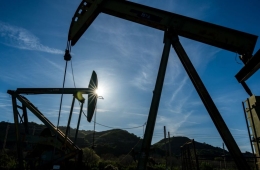
The renewed spike in oil prices appears to have dampened investor sentiment. On the New York Mercantile Exchange, West Texas Intermediate (WTI) crude for April delivery surged 8.51% to settle at $81.01 per barrel, marking the highest level in one year and eight months since July 2024. This is attributed to the effective closure of the Strait of Hormuz, which handles about 20% of the world’s oil shipments. Despite U.S. President Donald Trump’s announcement that insurance and U.S. Navy escorts would be provided for ships passing through the Strait of Hormuz, anxiety persists as reports have emerged of a tanker being hit after a collision and explosion involving a small boat within the Gulf.
There are also mounting concerns that the Iran war could expand into a prolonged Middle East conflict. Iran has targeted neighboring countries considered pro-Western, striking an oil refinery in Bahrain with missiles. In response to rumors that Kurdish forces would be deployed as ground troops into Iran, Iran also attacked Kurdish strongholds in Iraq. Major foreign news outlets reported that President Trump spoke with Kurdish leaders and conveyed that if Kurdish ground forces are deployed, the U.S. military would provide wide-ranging air cover and support.
News that the U.S. government is considering export controls on artificial intelligence (AI) chips has also weighed on the market. According to Bloomberg News on March 5 (local time), the U.S. government has drafted regulations requiring government approval for overseas sales of AI chips produced by Nvidia and AMD. This effectively expands current AI chip export controls, which apply to about 40 countries, to a global scale.
Volatility is expected to intensify in the domestic stock market, with sharp declines and rebounds anticipated. Ample liquidity and aggressive investor sentiment have already been demonstrated. Overnight, the MSCI Korea ETF, which tracks movements similar to the domestic stock market, plunged 6.42% in U.S. trading. The MSCI Emerging Markets Index ETF also dropped 2.40%. The Philadelphia Semiconductor Index fell 1.17% as well.
Given the high energy dependence of the Korean economy, it is expected that a sharp rise in international oil prices could trigger a wave of selling. In addition, the potential for increased volatility among semiconductor companies is also cited as a risk factor.
However, since there are expectations that the U.S. Treasury Department could announce measures to stabilize the market, there remains a possibility that international oil prices could stabilize. In fact, as these expectations gained traction, the increase in international oil prices narrowed somewhat in the final hours of U.S. trading.
Hot Picks Today
 The Quoted 800,000 Won, the Bill Was 5 Million....
- "How Do Six People Sleep in a 44㎡ Apartment?" Subscription Point System Controv...
- They Say They'd Rather Go to Japan Than Travel Domestically... But a 'Surprising...
- Came to Shop for Clothes, Ended Up Singing and Getting an Eye Exam... Inside Mus...
- "Never Hike Alone as a Woman" "Even Two Are at Risk"... Growing Fear of Crime on...
Han Jiyoung, a researcher at Kiwoom Securities, commented, "The domestic stock market is expected to open with a decline of more than 2%. However, rather than accelerating the decline as seen in recent plunges, a 'stock selection' trend is likely to emerge, with buying concentrated in companies with strong earnings, similar to the recent behavior of the U.S. stock market."
© The Asia Business Daily(www.asiae.co.kr). All rights reserved.

![The 'Epic' 1,500 Trillion Won Bill... In the End, the Poor Pay the Price [Data Pick]](https://cwcontent.asiae.co.kr/asiaresize/307/2026042310001637425_1776906017.jpg)