Business Community: "Seven Oil Tankers Stranded in Hormuz"... Democratic Party Urges Energy Supply Scenario Measures
Repeated Calls for Passage of the Special Act on U.S. Investment on March 12
Cabinet Briefing and Follow-up Discussions in Standing Committees to Proceed
The business community has called on the National Assembly and the government to devise countermeasures, warning that the de facto blockade of the Strait of Hormuz due to the Middle East crisis could disrupt maritime transport and lead to higher logistics and shipping costs, ultimately weakening price competitiveness.
Kim Youngbae, a member of the Democratic Party of Korea and the ruling party secretary of the National Assembly's Foreign Affairs and Unification Committee, told reporters after an urgent meeting with the business sector on Middle East issues held at the National Assembly on March 5 that "one of the biggest uncertainties caused by the Middle East situation is the rise in logistics and transportation costs," and added, "In the mid-term, this could lead to increased manufacturing costs." He also emphasized, "In the semiconductor industry, rising oil prices are directly linked to higher electricity rates in Korea, which will inevitably result in higher semiconductor unit costs," noting, "There were concerns that this could pose a serious threat to the price competitiveness of semiconductors."

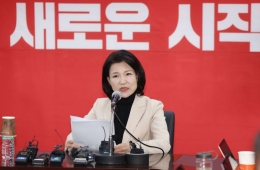
On the 5th, at the National Assembly Members' Office Building during an urgent meeting between the Democratic Party of Korea and the business community on Middle East issues, Jeongae Han, the Chair of the Policy Committee, is speaking. Photo by Yonhap News.
View original imageAccording to Assemblyman Kim, a total of seven Korean oil tankers are currently stranded in the Strait of Hormuz, with some owned by HD Hyundai Oilbank and GS Caltex. Of these seven vessels, three are carrying as much as 2 million barrels of oil, equivalent to Korea's total daily consumption. Regarding the 208-day oil reserve, the business community stated that demand for each industry should be identified and that scenario planning should be tailored accordingly. It was also suggested that, given the challenges of storing liquefied natural gas (LNG), which is difficult to store for long periods, market diversification needs to be reviewed.
The semiconductor industry expressed concern that disruptions in the supply of key materials could arise as it plans to build 7 to 8 data centers in the United Arab Emirates by 2030. The business sector also stressed the urgent need to pass the Special Act on U.S. Investment at the plenary session on March 12 to resolve uncertainties related to tariffs on exports to the United States. The meeting was attended by Democratic Party lawmakers from the Foreign Affairs and Unification Committee, the Trade, Industry, Energy, SMEs, and Startups Committee, and the Strategy and Finance Committee, as well as representatives from the Korea Enterprises Federation, Korea International Trade Association, KOTRA, Samsung Electronics, SK, Hyundai Motor Company, LG, Hanwha Ocean, GS Caltex, and other export and energy companies.

On the 5th, business representatives were present at the emergency meeting between the Democratic Party of Korea and the business community on Middle East issues held at the National Assembly Members' Office Building. From left to right: Inseop Jung, President of Hanwha Ocean; Youngjo Yoon, Vice President of Samsung Electronics; Hangsoo Lee, Vice President of Hyundai Motor Company; Taegil Oh, Vice President of HD Hyundai Oilbank; Seokjung Park, Director of SK Management and Economic Research Institute; Yoonju Go, Head of LG Global Strategy Development Institute; Youngmo Ahn, Head of Policy Division at GS Caltex. Photo by Yonhap News Agency
View original imageOn the same day, the Ministry of Trade, Industry and Energy also held a meeting chaired by Kang Gamchan, Director-General for Trade and Investment, to discuss emergency support measures for export-oriented small and medium-sized enterprises (SMEs) in the Middle East region.
KOTRA announced that, starting March 11, it will offer emergency export vouchers to SMEs and mid-sized companies with export records (including contracts) to the Middle East. The program includes new support items such as reimbursement for export logistics return costs and war risk surcharges. For companies facing severe damages, a separate fast-track system will be operated, issuing vouchers within three days of application.
Korea Trade Insurance Corporation is implementing an emergency financial support program for SMEs and mid-sized companies exporting to countries near the Strait of Hormuz. The program will increase the maximum export production funding guarantee by up to 1.5 times and extend guarantee maturities. In the event of an insurance claim, advance insurance payments will be made to enable prompt compensation, and measures such as early cash settlement of export receivables will be taken to ease liquidity pressures on companies.
Hot Picks Today
 "Using Company Funds Like a Personal Piggy Bank...
- After Firing 1,000 $3.6 Million Missiles, U.S. Faces Critical Weapons Shortage
- "Stabbing Pain" Should Not Be Ignored... This Disease Linked to Obesity Injectio...
- "Be Quiet, Pig": Jimmy Kimmel Live! Wins 'Broadcasting Pulitzer' After Sharp Sat...
- "My Wife Is 9 Years Older Than My Mother": 20s Student Marries 60s Teacher, Prom...
The Korea International Trade Association is establishing a database of export companies in urgent need of support to monitor their difficulties and connect them with support agencies, as well as provide information. In particular, through its network with existing shipping companies and the transportation industry, it plans to provide up-to-date local logistics information, including the feasibility of maritime transport. Director Kang stated, "We will work to alleviate the burden faced by export-oriented SMEs struggling due to instability in the Middle East and minimize the negative impact on the current upward trend in exports. We will also prepare for the possibility of a prolonged crisis in the Middle East and work closely with related ministries and agencies, including the Ministry of SMEs and Startups and the Ministry of Oceans and Fisheries."
© The Asia Business Daily(www.asiae.co.kr). All rights reserved.