Minister of Oceans and Fisheries Post Vacant for Two Months...Concerns Over "Slowdown" in Arctic Route Strategy
Delay in Successor Appointment Since Jeon Jaesu's Resignation in December
Growing Concerns Over Weakened Momentum in Maritime Policy

Concerns are growing that the government's overall momentum on maritime policy is weakening as the post of Minister of Oceans and Fisheries has remained vacant for a second month. In particular, critics point out that the government's flagship initiatives, such as its Arctic shipping route activation strategy and key tasks for transforming the maritime industry, are losing speed amid a leadership vacuum at the ministerial level.
According to government officials on the 17th, the position has remained vacant since former Minister of Oceans and Fisheries Jeon Jaesu tendered his resignation in December last year in connection with allegations of receiving money from the Unification Church, and the president has yet to appoint his successor.
Jeon submitted his resignation just as the Ministry of Oceans and Fisheries was pushing ahead in earnest with its relocation to Busan and a shift in maritime policy. With the ministry having completed the Sejong relocation phase and transitioned to a temporary government complex system in Busan, many assess that internal confusion has become unavoidable after the sudden resignation of its head in the midst of implementing major policy initiatives.
Within political circles and across the government, there is growing talk that "if the appointment of a successor becomes entangled with the variables of the local elections, the vacancy could be prolonged." Analysts say there is concern that, with elections approaching, the ministerial appointment could be interpreted through a political lens. During a visit to Busan in December last year, President Lee Jaemyung stated that he would "preferably appoint someone from Busan" as the next Minister of Oceans and Fisheries. Since then, both political figures from the Busan region and people from the maritime industry have been mentioned in speculation over potential candidates, but no clear frontrunner has yet emerged.

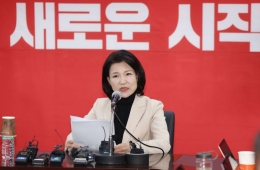
Jeon Jaesu, Minister of Oceans and Fisheries, who is implicated in allegations of accepting money and gifts from the Unification Church, returned to the country via Incheon International Airport Terminal 2 on the 11th and, after expressing his intention to resign, is departing. 2025.12.11 Photo by Kang Jinhyung
View original imageThe Arctic shipping route activation strategy being pursued by the Ministry of Oceans and Fisheries is not a simple shipping policy but a complex agenda that spans diplomacy, security, logistics, and environmental regulation. The government is preparing pilot operations of the Arctic route in cooperation with related industries and global companies, and for this purpose, it has launched a public-private consultative body led by the ministry. This consultative body, together with shipping companies, logistics firms, industry representatives, and relevant agencies, is carrying out practical preparatory work for the pilot operations.
However, observers warn that the leadership vacuum could translate into a "slowdown" on key issues of the Arctic route strategy, which require minister-level policy coordination and diplomatic consultations at the same time. To commercialize the Arctic shipping route, cooperation with Russia and the resolution of international sanctions, as well as the establishment of insurance and safety regulations, are essential, making diplomacy and negotiations unavoidable. Both inside and outside the government, there is an assessment that, without a minister in place, final decision-making could be delayed. In fact, working-level officials at the ministry state that they are pushing ahead with plans for international cooperation and institutional improvements related to the Arctic route, but add that "specific external negotiation plans will be announced at a later date."
The ministry is also simultaneously implementing a wide range of policies, including restructuring of the fisheries industry, strengthening maritime safety, and building automated ports and smart logistics infrastructure. Complex issues such as catch fluctuations due to climate change, stabilizing fishers' incomes, and improving the distribution system for marine products require coordination among stakeholders and budget allocations. Critics argue that, in the absence of a minister, the setting of priorities and political coordination for these policies is inevitably delayed.
In particular, smart infrastructure projects linked to the port logistics industry are being promoted through a combination of government budgets and cooperation with the industrial sector, and many say that clear policy leadership is needed to minimize unnecessary disputes during the implementation process.
Hot Picks Today
 After Firing 1,000 $3.6 Million Missiles, U.S. ...
- "Using Company Funds Like a Personal Piggy Bank"... Musk Turned to SpaceX Whenev...
- "Stabbing Pain" Should Not Be Ignored... This Disease Linked to Obesity Injectio...
- "Be Quiet, Pig": Jimmy Kimmel Live! Wins 'Broadcasting Pulitzer' After Sharp Sat...
- "My Wife Is 9 Years Older Than My Mother": 20s Student Marries 60s Teacher, Prom...
An official at the Ministry of Oceans and Fisheries stressed that "under the system where the vice minister is acting as minister, major working-level tasks are being maintained," but acknowledged that "it is undeniable that minister-level leadership is necessary to clarify the strategic direction of policy and external negotiations."
© The Asia Business Daily(www.asiae.co.kr). All rights reserved.