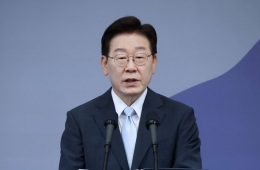
Daejeon Councilor Lee Hanyoung: "Multicultural Policy Must Shift to a Settlement-Centered Population Strategy"
"Need to Shift Policy Focus from Attracting Foreigners to Supporting Settlement"
Policy Debate on "Exploring a Shift in Multicultural Policy and Implementation Strategies" Held

On February 12, the Daejeon Metropolitan Council held a policy debate titled "Exploring a Shift in Multicultural Policy and Implementation Strategies" in the council communication room, where participants discussed directions for transforming multicultural policies in response to demographic changes and explored effective implementation strategies.
The debate was hosted by the Welfare and Environment Committee of the Daejeon Metropolitan Council. Chairing the session, Representative Lee Hanyoung of the Daejeon Metropolitan Council (People Power Party, Seo District 6) explained the purpose of the discussion, stating, "It is time to redefine multicultural policy not as a simple area of support or welfare, but as a core population policy that determines the sustainability of the region."
Participants in the debate included Representative Lee Hanyoung of the Daejeon Metropolitan Council; Professor Kim Seongsik of Hannam University; Professor Heo Eunkyung of Chungbuk Health & Science University; Jang Laesuk, Secretary General of the Daejeon Council on Social Welfare; Mo Seokbong, Vice President of the Korea Media Reporters Association; Yoo Seonwon, President of the Korea Youth International Exchange Association; Jang Youngrae, Head of the Regional Cooperation Center at the Institute for Conflict Studies, Hanyang University; Choi Youngsuk, Director of the Department of Women, Family and Youth of Daejeon City; Jin Misuk, Head of the International Exchange Team at the Office of International Trade of Daejeon City; Professor Han Kimoon of the Department of Trade and Logistics at Hannam University; and Kim Gangdeok, President of Monthly The Plus.
Professor Kim Seongsik of Hannam University, who delivered the keynote presentation on the discussion topic, analyzed the limitations of Korea's current multicultural policies and stressed the need to shift the policy focus from attracting foreigners to supporting their long-term settlement.
Professor Kim identified several major limitations: a policy structure centered on short-term stays; a fragmented implementation system divided among ministries and local governments; and gaps in education and career development for children from multicultural families.
As alternatives, he proposed developing customized policies tailored to each stage of migrants' life cycles; establishing an integrated support system that links education, employment, and welfare; and creating a control tower for multicultural and migration policy at the metropolitan level.
He also stated that, in connection with the ongoing discussion on integrating Daejeon and South Chungcheong Province, multicultural policy should be redesigned as part of a broader metropolitan population strategy.
The subsequent discussion brought forward a wide range of opinions that bridged on-the-ground realities and policy.
Professor Heo Eunkyung of Chungbuk Health & Science University said, "The population crisis is not a matter of childbirth, but of settlement," and added, "We must approach foreigner and multicultural policy from the perspective of population policy, not labor policy."
Jang Laesuk, Secretary General of the Daejeon Council on Social Welfare, emphasized, "Whether people settle down depends more on living conditions than on institutions," and stated, "A social welfare approach that encompasses children and adolescents, care services, and housing is necessary."
Mo Seokbong, Vice President of the Korea Media Reporters Association, stressed, "In a multicultural society, discrimination begins with language," and added, "If we do not correct expressions that label migrants as unfamiliar outsiders, it will be difficult to expect policy to be effective."
Yoo Seonwon, President of the Korea Youth International Exchange Association, noted, "Multicultural policy is not a cost, but an investment in the population of the future," and said, "A long-term settlement strategy based on education and youth exchanges is important."

Jang Youngrae, Director of the Regional Cooperation Center at the Institute for Conflict Studies, Hanyang University (Photo by Mo Seokbong)
View original imageJang Youngrae, Head of the Regional Cooperation Center at the Institute for Conflict Studies, Hanyang University, suggested, "In the process of transitioning to a multicultural society, building a conflict management system is essential," and added, "It is necessary to foster professional conflict management personnel in cooperation with the private sector."
Hot Picks Today
 "Stocks Are Not Taxed, but Annual Crypto Gains Over 2.5 Million Won to Be Taxed Next Year... Investors Push Back"
- "Don't Throw Away Coffee Grounds" Transformed into 'High-Grade Fuel' in Just 90 Seconds [Reading Science]
- Signed Without Viewing for 1.6 Billion Won... Jamsil and Seongbuk Jeonse Prices Jump 200 Million Won in a Month [Real Estate AtoZ]
- Despite Warnings of "Do Not Enter, You May Not Make It Out Alive"... Foreign Tourist Stranded After Unauthorized Climb on Jeju Sanbangsan
- "Even With a 90 Million Won Salary and Bonuses, It Doesn’t Feel Like Much"... A Latecomer Rookie Who Beat 70 to 1 Odds [Scientists Are Disappearing] ③

In closing, Representative Lee Hanyoung stated, "Today's debate is a starting point for redefining multicultural policy from the perspective of 'settlement and coexistence' rather than 'support,'" and added, "At the council level, we will work to ensure that the points discussed here are translated into actual policy through institutional improvements and policy reviews."
© The Asia Business Daily(www.asiae.co.kr). All rights reserved.