Samil PwC: "Entrenched Trade Risks... A Major Overhaul of Industrial Structure and Corporate Strategy Is Needed"
Report on Changes in Trade Policy and Response Strategies under the Second Trump Administration
"Complete Overhaul of Export and Supply Chain Strategies Inevitable"
With tariff policy uncertainty in the United States becoming entrenched during the first year of the second Trump administration, a recommendation has been made that Korean industries should completely overhaul their export and supply chain strategies.

On the 12th, Samil PricewaterhouseCoopers published a report titled "The Second Trump Administration: Changes Over the Past Year and Future Response Measures," which analyzes changes in trade policy during the first year of the second Trump administration.
"Trump's tariff policy is being combined with diplomatic and security strategy and turned into a standing trade policy tool"
The report first stated that "the Trump administration's tariff policy is evolving from a short-term bargaining tool into a standing trade policy instrument combined with diplomatic and security strategy," and diagnosed that "rather than the simple change in tariff rates itself, the policy environment in which tariffs can be reviewed or readjusted at any time is placing a heavier burden on companies' medium- to long-term management decisions."
The report analyzed the impact over the past year focusing on Korea's five key industries: automobiles, semiconductors, steel and aluminum, pharmaceuticals and bio, and shipbuilding. The steel and aluminum industry was cited as the sector that suffered the most direct blow, as U.S. tariff rates were raised from 25% to 50%. In reality, exports of Korean steel and home appliances to the United States declined by around 8% to 10%, and companies are accelerating supply chain restructuring, including sourcing raw materials from the United States and reviewing local production.
In contrast, despite a decline in exports to the United States, the automobile industry achieved a record-high export value thanks to market diversification into regions such as Europe and the Middle East and increased local production. The semiconductor industry mitigated risks through rising demand for artificial intelligence (AI) and localization of back-end processes, but regulations in equipment and materials were identified as potential risk factors. The bio and pharmaceutical industry maintained a stable trajectory by expanding facilities in the United States and other measures. The shipbuilding industry has emerged as a key beneficiary, driven by the full-scale implementation of the Korea-U.S. shipbuilding cooperation project known as the MASGA policy.
"Korean companies should pursue process-centered strategic localization"
The main risks in this year's trade environment were cited as: the normalization of the possibility of tariff hikes; questions over the legality of tariff imposition based on the International Emergency Economic Powers Act (IEEPA); the emergence of tailored regulations targeting strategic industries; structural costs arising from supply chain restructuring; and increased policy volatility around the U.S. midterm elections.

The report advised that Korean companies should move beyond simple diversification of production sites and pursue strategic localization centered on core processes. It added that they should establish a scenario-based decision-making framework that allows flexible management of prices and portfolios, and secure technological competitiveness to build a foundation capable of structurally absorbing trade risks.
Hot Picks Today
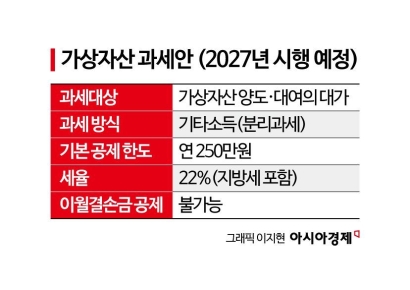 "Stocks Are Not Taxed, but Annual Crypto Gains Over 2.5 Million Won to Be Taxed Next Year... Investors Push Back"
- "Not Jealous of Winning the Lottery"... Entire Village Stunned as 200 Million Won Jackpot of Wild Ginseng Cluster Discovered at Jirisan
- "Even With a 90 Million Won Salary and Bonuses, It Doesn’t Feel Like Much"... A Latecomer Rookie Who Beat 70 to 1 Odds [Scientists Are Disappearing] ③
- "Rather Than Endure a 1.5 Million KRW Stipend, I'd Rather Earn 500 Million in the U.S." Top Talent from SNU and KAIST Are Leaving [Scientists Are Disappearing] ①
- "How Did an Employee Who Loved Samsung End Up Like This?"... Past Video of Samsung Electronics Union Chairman Resurfaces
Ryu Giljoo, Market Leader at Samil PricewaterhouseCoopers, said, "Tariffs are not just a matter of export costs, but a signal of which industries the United States regards as strategic and which industries it intends to keep in check," adding, "Korean companies now need an approach that realigns their medium- to long-term industrial strategies, rather than short-term responses focused on cost reduction."
© The Asia Business Daily(www.asiae.co.kr). All rights reserved.







