Seoul Requests Expansion of "Foreign Tourist Urban Homestay Business" to Include Korean Nationals
Proposal to Improve Tourism Regulations for Enhanced Competitiveness
Request to Ease Distance Restrictions Between Small Tourist Hotels
Expectations for Revitalizing Travel Agencies in Residential Buildings
The Seoul Metropolitan Government has requested the central government to expand the eligibility for the "Foreign Tourist Urban Homestay Business," which is currently available only to foreigners, to include Korean nationals as well. In addition, the city proposed adjusting the current standard that recognizes only office facilities as "offices" for travel agency registration, to allow residential buildings to be recognized as "business premises."
On December 10, Seoul City announced that it had requested the Office for Government Policy Coordination to improve tourism regulations in order to enhance Seoul's tourism competitiveness, including the expansion of tourism and accommodation infrastructure.

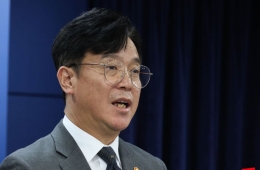
Seoul City requested the Office for Government Policy Coordination on the 10th to improve tourism regulations in order to enhance Seoul's tourism competitiveness, including the expansion of tourism and accommodation infrastructure. Photo by Yonhap News Agency.
View original imageFirst, when building small-scale tourist hotels in general residential areas in the city center, Seoul requested that the regulations on building setbacks be relaxed by taking into account local conditions such as the number of tourists and the degree of commercialization, and that the requirement to designate at least 15% of the land as green space be lifted. Under current law, when building a hotel, the distance between the building's windows or doors and the adjacent land must be at least half the height of the building. In the narrow city center, it is difficult to meet this standard, resulting in cases where hotel rooms cannot have windows, which in turn undermines guest safety and convenience.
Seoul City also requested that, considering the differing conditions in each region, if it takes time for the central government to establish standards for installing tourism accommodation facilities in the city center, local governments be given the authority to adjust the standards-either relaxing or tightening them-as appropriate for their circumstances. The city expects that if these improvements are made, it will be possible to establish a variety of unique tourist hotels in urban areas, thereby resolving the shortage of accommodations in city centers with high tourism demand.
In particular, the city proposed expanding the eligibility for the "Foreign Tourist Urban Homestay Business," which is currently limited to foreigners, to include Korean nationals and changing the name to "Urban Homestay Business." This reflects industry feedback that, due to the application of the regulatory sandbox, many Korean nationals are already using the "Foreign Tourist Urban Homestay Business," and that limiting eligibility to foreigners is actually an obstacle to revitalizing the sector.
Seoul City also recommended expanding the current standard, which recognizes only neighborhood living facilities or office facilities as "offices" for travel agency registration, to include residential buildings as "business premises," reflecting the reality that online consultations and contactless reservations have become commonplace. Currently, one-person or small-scale travel agencies face difficulties starting a business due to the burden of having to rent a separate office space.
In addition, the city requested that major Southeast Asian countries with high demand for travel to Korea, such as Thailand and Malaysia, be included as temporary exemption countries for the Electronic Travel Authorization (K-ETA) system. K-ETA is a system that requires nationals of visa-free countries to register personal information and travel plans online and obtain prior approval before visiting Korea.
Furthermore, to enhance convenience for foreign patients seeking medical tourism, the city asked the government to lift restrictions on advertising locations so that hospitals certified by the Ministry of Health and Welfare and other government agencies as excellent in attracting foreign patients can freely advertise their medical services within Korea.
Hot Picks Today
 "Stocks Are Not Taxed, but Annual Crypto Gains Over 2.5 Million Won to Be Taxed Next Year... Investors Push Back"
- "Don't Throw Away Coffee Grounds" Transformed into 'High-Grade Fuel' in Just 90 Seconds [Reading Science]
- Signed Without Viewing for 1.6 Billion Won... Jamsil and Seongbuk Jeonse Prices Jump 200 Million Won in a Month [Real Estate AtoZ]
- "Groups of 5 or More Now Restricted"... Unrelenting Running Craze Leaves Citizens and Police Exhausted
- "Even With a 90 Million Won Salary and Bonuses, It Doesn’t Feel Like Much"... A Latecomer Rookie Who Beat 70 to 1 Odds [Scientists Are Disappearing] ③
Lee Changhyun, Director of Regulatory Innovation Planning for Seoul City, stated, "Tourism is a key industry that enhances urban competitiveness and revitalizes the local economy, so it is important to actively improve outdated regulations that do not fit current realities while maintaining the original intent of the system. Through cooperation with the central government, we will create Seoul as a tourist city that is convenient for anyone to visit and stay in."
© The Asia Business Daily(www.asiae.co.kr). All rights reserved.