[Economy Pulse] Financial Education: A Breakwater Against Asset Inequality
![[Economy Pulse] Financial Education: A Breakwater Against Asset Inequality](http://www.asiae.co.kr/news/img_view.htm?img=2025120709373646090_1765067855.jpg)
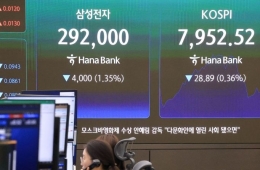
Recently, the Korean stock market has shown an unusually strong performance. This year, the KOSPI’s growth rate ranks among the highest of major global stock markets. Starting at the 2,400 level at the beginning of the year, the KOSPI surged sharply after May, surpassing 4,000 points. The new government’s vision of a “KOSPI 5000 era” is now being discussed as a realistic goal. This is the result of multiple factors coming together: the effects of value-up policies and amendments to the Commercial Act, anticipation for additional policy measures, the conclusion of tariff negotiations with the Trump administration, the expansion of global liquidity, and the easing of the “Korea Discount.” Investors who have already participated in the market are celebrating, while individuals who missed the entry point are now debating whether they should jump in, even at this stage.
However, amid this excitement, it is necessary to objectively examine the underlying risk structure of the market and prevailing investment behaviors. Last year, Korea’s average monthly stock turnover rate was about 16%, exceeding the global average of around 10%. This indicates that investors are more focused on short-term trading than long-term holding. A high turnover rate reflects a tendency to chase short-term gains rather than fundamental value based on a company’s medium- to long-term profitability, and this can limit long-term upward trends. In fact, aside from the recent rebound, the long-term trajectory of the real KOSPI index does not show a clear upward pattern.
Stock markets in advanced economies tend to recover and maintain long-term growth even after shocks like the global financial crisis or COVID-19. This “long-term investment culture” is the result of trust that remains unshaken by short-term volatility. In contrast, Korean retail investors still exhibit a strong tendency toward short-term speculation, hoping for a “big win.” This is why Bloomberg described Korean retail investors as “Squid Game-style investors.”
High-risk investments using leverage or two- to three-times leveraged exchange-traded funds (ETFs) can amplify not only returns but also losses. Virtual assets are also high-risk assets that can fluctuate dramatically within a single day. Of course, if investors understand the nature and intrinsic value of assets and manage risk based on future outlooks, this can become a process of challenge and learning. The problem arises when people jump into “blind investments” without financial knowledge. Losses are repeated, and in an effort to recover these losses, investors may take on even greater risks, perpetuating a vicious cycle.
One basic principle of asset management is to “invest a percentage of your assets in risky assets equal to 100 minus your age.” This is because, over the long term, the expected return on risky assets exceeds that of safe assets. However, the range and composition of risky assets should vary according to age, income, and goals. The ability to periodically diversify and rebalance assets, and to assess one’s own risk tolerance, cannot be developed through a one-off lecture or by watching a video. This is only possible through systematic financial education and the accumulation of real experience.
Starting next year, high schools will introduce a new subject called “Finance and Economic Life.” This is a welcome change aimed at developing financial knowledge and decision-making skills. However, there are concerns that its effectiveness may be limited, as the subject will not be included in the college entrance exam. Currently, organizations such as the Financial Supervisory Service, Bank of Korea, and Korea Federation of Banks are running various educational programs, but there is still a lack of customized curricula designed for different generations and income levels. There is an urgent need for “outreach financial education” that can provide practical, experience-based learning to help people build assets and make financial decisions in real life.
Another group in need of financial education is the senior generation, who must manage their assets after retirement. Many retirees either lock up most of their assets in deposits or, conversely, suffer losses from overly aggressive business investments. In Korea’s super-aged society, the financial literacy of seniors is directly linked to the sustainability of the national economy. In this regard, Japan’s recent policy responses, as a country that has already entered a super-aged society, are highly instructive. The Japanese government and financial institutions have established a public-private financial education system to help seniors prevent financial fraud, manage asset succession and inheritance, and utilize digital finance. This approach is not simply about selling financial products, but combines retirement planning with financial counseling. The Financial Services Agency (FSA) and regional banks are working together to expand this nationwide, resulting in a reduction of excessive concentration in safe assets among seniors and a strengthening of financial market stability.
The basic economic principle that “there is no free lunch” always holds true. High returns always come with high risks. Financial education serves as a social safety net, ensuring that all members of society internalize this simple principle. When a system of practical, lifelong financial learning is established in schools, workplaces, and throughout retirement, we can develop “financial muscles” that allow us to control risk and remain resilient even in uncertain markets. Furthermore, only then will capital flow from unproductive assets like real estate to innovative industries and business activities, solidifying the foundation for “productive finance.”
Hot Picks Today
 If They Fail Next Year, Bonus Drops to 97 Million Won... A Closer Look at Samsung Electronics DS Division’s 600M vs 460M vs 160M Performance Bonuses
- RIA Accounts Surpass 240,000 Subscriptions... Sold Nvidia, Bought Samsung Electronics
- Room Prices Soar from 60,000 to 760,000 Won and Sudden Cancellations: "We Won't Even Buy Water in Busan" — BTS Fans Outraged
- "Manhole Cover Blasts Open in 12 Seconds... The Reason Behind the 'Gangnam Flood Disaster' [Report]"
- "Who Is Visiting Japan These Days?" The Once-Crowded Tourist Spots Empty Out... What's Happening?
Kwak Noseon, Professor of Economics at Sogang University (Former President of the Korean Finance Association)
© The Asia Business Daily(www.asiae.co.kr). All rights reserved.
!['WHO Declares International Public Health Emergency' Why the Untreatable 'Variant Ebola' Is More Deadly Than COVID-19 [Reading Science]](https://cwcontent.asiae.co.kr/asiaresize/307/2026052110164072055_1779326201.png)
!["Please Help Us": How Much Do Those Bowing 90 Degrees These Days Actually Earn? [Data Pick]](https://cwcontent.asiae.co.kr/asiaresize/307/2026052010120870131_1779239528.png)