Industry Committee to Pass Semiconductor Special Act Today... 52-Hour Workweek Issue Sent to Climate and Labor Committee
Green Light for Passage in National Assembly This Year
52-Hour Workweek Debate Remains Unresolved
The Semiconductor Special Act, which provides national financial support such as subsidies to semiconductor companies, is expected to pass the National Assembly’s Trade, Industry, Energy, SMEs, and Startups Committee, its relevant standing committee, on December 4. This signals a green light for the passage of the Semiconductor Special Act, which has been under discussion for over a year, within this year. However, the contentious issue of exempting semiconductor R&D personnel from the 52-hour workweek will be transferred to the National Assembly’s Climate, Energy, Environment, and Labor Committee for further discussion.
On this day, the National Assembly’s Trade, Industry, Energy, SMEs, and Startups Committee (TIESS Committee) will hold a full committee meeting in the afternoon, following a morning meeting of the Subcommittee on Intellectual Property, to vote on the Semiconductor Special Act. An official from the committee stated, “Since we have scheduled both the subcommittee and the full committee meetings consecutively, most of the contentious issues have been resolved,” adding, “There is a high possibility that the bill will pass the standing committee today.”
Previously, Democratic Party lawmakers Lee Eonju and Jeong Jinwook, as well as People Power Party lawmakers Lee Cheolgyu, Park Sooyoung, and Ko Dongjin, proposed the Semiconductor Special Act, which includes measures to support the semiconductor industry. The bill calls for the central and local governments to strengthen the competitiveness of the semiconductor industry by establishing infrastructure such as power and water supply, and by providing financial support, including subsidies.

The controversial issue of exempting R&D personnel from the 52-hour workweek, which had been a major point of contention between the parties, will not be included in the bill. Instead, an additional opinion will be attached stating, “There is consensus on the need for flexible working hours, and the relevant standing committee will discuss the matter.” As a result, further discussions on this issue will be handled by the Climate, Energy, Environment, and Labor Committee.
While both parties have agreed on the necessity of the Semiconductor Special Act, they have remained at odds over the exemption from the 52-hour workweek. The Democratic Party considered designating the special act, without the exemption clause, as a fast-track (expedited bill), but continued negotiations with the People Power Party due to concerns over passing the bill unilaterally. The People Power Party also stepped back, recognizing that there would be no way to block the bill if the Democratic Party pushed it through on its own.
There is still debate over whether the financial support provisions for the semiconductor industry should be mandatory or discretionary. Among the bills under review by the committee, the proposal by People Power Party lawmaker Ko Dongjin contains a mandatory provision stating that “financial support such as subsidies and administrative and tax benefits must be provided,” while the other bills include discretionary provisions stating that “financial support may be provided.” A committee official commented, “It is uncommon to include mandatory provisions in legislation, but since both parties fundamentally agree on the need for support, further discussion is necessary.”
Once the Semiconductor Special Act is passed, discussions surrounding the 52-hour workweek are expected to intensify. People Power Party lawmakers Ko Dongjin, Kim Sohee, and Woo Jaejun have already proposed amendments to the Labor Standards Act to exempt R&D personnel from the 52-hour workweek. A member of the People Power Party’s Special Committee on Semiconductor and AI Advanced Industries stated, “After the Semiconductor Special Act is passed, we will continue discussions centered on Kim Sohee’s proposal.” However, with both major labor unions strongly opposing the exemption, it is widely believed that the Democratic Party is unlikely to accept it.
Hot Picks Today
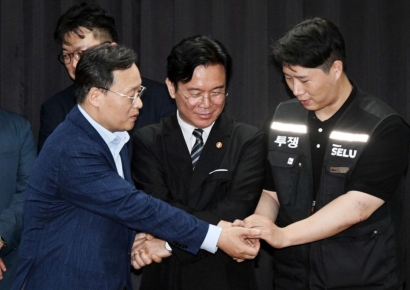 Dramatic Agreement Reached on Eve of Samsung Electronics General Strike... Minister Kim Young-hoon: "Showcased Korea's Strength in Dialogue" (Update)
- "It Has Now Crossed Borders": No Vaccine or Treatment as Bundibugyo Ebola Variant Spreads [Reading Science]
- "Even With a 90 Million Won Salary and Bonuses, It Doesn’t Feel Like Much"... A Latecomer Rookie Who Beat 70 to 1 Odds [Scientists Are Disappearing] ③
- "Stocks Are Not Taxed, but Annual Crypto Gains Over 2.5 Million Won to Be Taxed Next Year... Investors Push Back"
- "Who Is Visiting Japan These Days?" The Once-Crowded Tourist Spots Empty Out... What's Happening?
The semiconductor industry, for which the passage of the Semiconductor Special Act has been the highest priority, has welcomed the development. However, there is also a consensus that swift discussions on the flexibility of the 52-hour workweek are necessary. Ahn Kihyun, Executive Director of the Korea Semiconductor Industry Association, stated, “Rather than having both the Semiconductor Special Act and the 52-hour workweek exemption clause fail to pass because they are combined, it is better to pass what can be passed first and discuss the 52-hour issue separately to ensure its passage.”
© The Asia Business Daily(www.asiae.co.kr). All rights reserved.