Director Yoon Ga-eun's "Master of the World": A New Sensibility Spoken Through Silence [Slate]
Breaking Free from the Victim Narrative to Explore the Structure of the World
The Ethical Power That Makes the Audience Uncomfortable

Director Yoon Ga-eun's "Master of the World" possesses a unique sensibility rarely seen in contemporary Korean cinema. The film does not amplify emotions by placing the trauma of sexual violence at the forefront. Nor does it realistically reenact the incident or deliver an overt social message. Instead, it quietly follows the process by which a person, pushed to the margins of the world, begins to sense the world anew in that gap.
The protagonist, Joo-in (Seo Subin), is never fully part of a complete world. Abandoned objects, indelible stains, and spaces suspended somewhere between home and school-all these function not as firm ground beneath her feet, but as surfaces from which she is constantly pushed away and slips further.
Silence is a central axis in the film. Adults incessantly ask, "Why did you do that then?" and "Why don't you speak?" On the surface, these seem like questions seeking the truth, but in reality, they are moments when those who control the order of language dictate the direction of the conversation. Joo-in does not remain silent because she cannot speak, but rather resists by refusing to speak in their language.
Korean cinema has long used narratives of victimhood to elicit the audience's empathy and compassion through emotional catharsis. However, "Master of the World" does not repeat this familiar structure. It neither inflates emotions nor forces tears. Instead, it places the audience at the periphery of the incident, making them stand in discomfort.

One particularly striking motif in the film is the act of "wiping." Joo-in is constantly wiping surfaces-at home, at school, and at the car wash. This is her way of reconnecting with the world. Water flows, soap bubbles spread, and for a moment, the surface appears clean, but the stains never fully disappear. The act of wiping does not erase wounds; rather, it becomes a gesture that reaffirms the persistence of an indelible world.
The audience is not easily given the opportunity to empathize with Joo-in's misfortune. Instead, they are confronted with themselves-their own tendency to observe, judge, and interpret her. This device reveals that the audience stands in a position not so different from the adults in the film.
The demand for answers from Joo-in is directly connected to the structural violence the film exposes. The audience, often unknowingly, becomes complicit in this world, and the film does not hide this fact. The force that enables viewers to endure this discomfort is precisely where the film's ethical power lies.
Rather than asking "Who is the master of the world?" the title poses a different question: "To whom does the world grant the position of master?" Joo-in is not the master of the world. She endures on its margins, sensing the world anew from that very edge.
Director Yoon Ga-eun’s previous works, "The World of Us" and "The House of Us," delicately captured misunderstandings and ruptures in children's relationships. In "Master of the World," she takes a step further, looking beyond relationships to the very structure of the world itself. The focus shifts from the cracks in relationships to the fractures in the world, and the core of the film moves from the ethics of misunderstanding to the ethics of silence.
Hot Picks Today
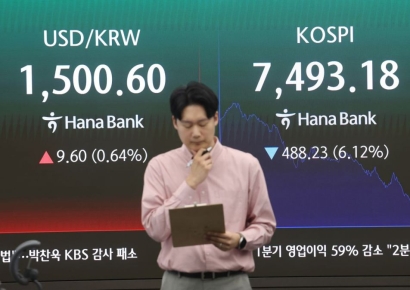 After Topping 8,000 Instead of Hitting 10,000... KOSPI Plunges—When Will It Rebound?
- "Samsung and Hynix Were Once for the Underachievers"... Hyundai Motor Employee's Lament
- [Breaking] Court Rules Against Samsung Electronics Union...1 Billion Won per Day Penalty for Exceeding Strike Scope
- 'Real Strike' Looms as Samsung Union Grows More Hardline... How the 2024 Strike Process Compares
- "That? It's Already Stashed" Nightlife Scene Crosses the Line [ChwiYak Nation] ③
This film asks viewers, "How are you connected to this world?" It does so not through emotional release or the framework of compassion, but by dissecting the ethical structure of the world. By prompting reflection on silence, surfaces, gaze, and structure, it remains an important signal for the next generation.
© The Asia Business Daily(www.asiae.co.kr). All rights reserved.