"More Taxed Than Lottery Winnings... Employee Invention Compensation Faces 'Tax Bomb' Even for Achievements"
Non-taxable Limit Stands at Only 7 Million Won
Controversy Over Higher Tax Rate Than Lottery Winnings
It has been revealed that nearly 5,000 professionals in the science and technology sector each year are unable to receive tax benefits due to the non-taxable limit on compensation for employee inventions. Since rewards for research achievements are classified as earned income, cases have emerged where tax rates of up to 45% are applied, prompting urgent calls for policy reform.
According to data submitted by the National Tax Service to Assemblywoman Hwang Jeonga of the National Assembly's Science, ICT, Broadcasting, and Communications Committee (Democratic Party of Korea, Daejeon Yuseong-eul), 4,771 people reported compensation for employee inventions at the non-taxable limit amount (5 million won) in 2023.

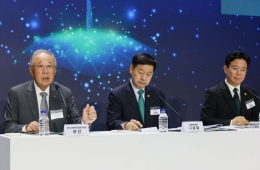
Assemblywoman Hwang Jeonga making an inquiry. Courtesy of Assemblywoman Hwang Jeonga's office.
View original imageCompensation for employee inventions is a reward received in exchange for transferring the rights to an invention made in the course of one’s work to the employer (institution or company).
The number of people reporting at the non-taxable limit has been steadily increasing: 3,436 in 2019, 3,927 in 2020, 4,703 in 2021, and 4,798 in 2022. This group consistently accounts for about 9% of those eligible for non-taxable benefits each year.
Initially, compensation for employee inventions was classified as non-taxable miscellaneous income when the system was first introduced. However, in 2017, the Ministry of Economy and Finance reclassified it as earned income, making it subject to taxation. As a result, the compensation is combined with earned income and taxed at rates up to 45%.
The science and technology community has consistently called for improvements to this system. In fact, controversy over fairness has persisted, as these rewards are subject to higher tax rates than lottery winnings (which are taxed at a maximum of 33%). In a report published in February last year, the Science and Technology Policy Institute (STEPI) recommended that “the nature of the compensation should be redefined as miscellaneous income, and the non-taxable limit should be raised to as much as 40 million won.”
However, tax authorities have maintained a negative stance, and the non-taxable limit was only slightly increased from 5 million won to 7 million won last year. The science and technology community has criticized this as “a negligible adjustment that falls far short of providing global-level rewards for research achievements.”
Hot Picks Today
Assemblywoman Hwang Jeonga stressed, “To foster and secure global talent, an appropriate performance-based reward system is essential. It is necessary to significantly expand the non-taxable limit to ensure fair compensation for research achievements and to implement bold measures that will substantially improve the treatment of researchers.”
© The Asia Business Daily(www.asiae.co.kr). All rights reserved.