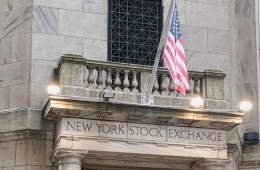
"Trump Has Workarounds Even If Tariffs Are Ruled Illegal... Korea Needs to Seek an Agreement"
"Trump Could Continue Tariffs Under Other Laws"
Even if the U.S. Supreme Court rules that President Donald Trump's "reciprocal tariffs" are illegal, experts have suggested that the United States could still impose tariffs based on other legal grounds. Therefore, South Korea should prepare a trade agreement in anticipation of such scenarios.

Jesse Kreier, a law professor at Georgetown University, stated at a seminar hosted by the Korea-U.S. Congressional Exchange Center in Washington, D.C. on the 25th (local time) that even if the Supreme Court, like the lower courts, issues a ruling limiting the president's authority to impose tariffs, "it is difficult to expect the United States to suddenly revert to an 'open economy' as it was 20 years ago, or even just four years ago."
Kreier, a trade law expert who has also served as an interim director at the World Trade Organization (WTO), explained that President Trump has a wide array of tools at his disposal if he is determined to change trade relations with the world, citing Section 232 of the Trade Expansion Act as an example. Section 232 grants the president the authority to restrict imports of items that negatively impact national security. President Trump has already used this authority to impose item-specific tariffs on automobiles and steel. Even if the Supreme Court invalidates reciprocal tariffs, President Trump could significantly expand item-specific tariffs.
To impose item-specific tariffs under the Trade Expansion Act, the impact of the item on national security must be investigated, and the Department of Commerce is responsible for this investigation. Since it is a government department and not an independent agency, Kreier explained that it is highly likely the results will align with President Trump's preferences. He noted that investigations under Section 232 are already underway for various items, and the president has broad discretion regarding the outcomes. Therefore, even if reciprocal tariffs are ruled illegal, the Trump administration is likely to find alternative measures "quite quickly," according to Kreier.
He also mentioned Section 301 of the Trade Act as another tool for imposing tariffs. Section 301 focuses on identifying whether a foreign country fails to uphold trade agreement commitments or engages in discriminatory practices that excessively burden trade, serving as a means to counter "unfair trade." In fact, the Trump administration initiated a Section 301 investigation into China's maritime, logistics, and shipbuilding industries, and concluded this January that China was unfairly competing to dominate these industries, causing harm to the United States.
Additionally, Section 112 of the Trade Act could be used as a tool, Kreier explained, as it is specifically designed to address balance of payments issues, but its use is strictly regulated in terms of timing and measures. He stated, "South Korea will likely need to find a negotiable agreement in some practical form," adding, "It is difficult to expect that a court ruling will restore the situation to what South Korea was accustomed to. Such a scenario is unlikely to occur under the Trump administration."
Regarding the Supreme Court's ruling, Kreier said, "This is not simply a matter of 'legal or illegal,'" and added, "If the Supreme Court seeks to invalidate the tariff measures, it could do so in a very narrow or a very broad way." He continued, "For example, the Court could rule that 'tariffs can never be imposed under the International Emergency Economic Powers Act (IEEPA),' or it could decide that 'the issue (national emergency) and the solution (imposing tariffs) do not correspond.'"
Hot Picks Today
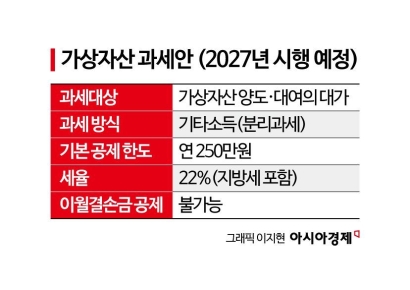 "Stocks Are Not Taxed, but Annual Crypto Gains Over 2.5 Million Won to Be Taxed Next Year... Investors Push Back"
- "Not Jealous of Winning the Lottery"... Entire Village Stunned as 200 Million Won Jackpot of Wild Ginseng Cluster Discovered at Jirisan
- "Rather Than Endure a 1.5 Million KRW Stipend, I'd Rather Earn 500 Million in the U.S." Top Talent from SNU and KAIST Are Leaving [Scientists Are Disappearing] ①
- "How Did an Employee Who Loved Samsung End Up Like This?"... Past Video of Samsung Electronics Union Chairman Resurfaces
- "Even With a 90 Million Won Salary and Bonuses, It Doesn’t Feel Like Much"... A Latecomer Rookie Who Beat 70 to 1 Odds [Scientists Are Disappearing] ③
The U.S. Supreme Court will begin hearings on November 5 to make a final determination on whether there is a legal basis for President Trump's reciprocal tariffs, which apply different rates by country to most items from South Korea and other countries around the world. President Trump cited the IEEPA as the basis for his executive order imposing reciprocal tariffs, but the U.S. Court of International Trade (USCIT) and the U.S. Court of Appeals for the D.C. Circuit both ruled that while the IEEPA grants the president authority to regulate imports, it does not extend to a "broad authority to impose tariffs."
© The Asia Business Daily(www.asiae.co.kr). All rights reserved.