Constitutional Complaint Filed After Statute of Limitations Expired
Disappeared After Receiving Additional Retainer Fee
"I sought out a lawyer to recover from a voice phishing scam, but it seems I was scammed by the lawyer as well."
As cases continue to emerge of clients, who should be protected by the law, suffering secondary harm at the hands of untrustworthy lawyers, the victims have taken matters into their own hands by forming a group called "Angry Clients." The group, which currently has 25 members, was created to expose the reality of these "rogue lawyers" who victimize people twice.
The nightmare for victim A began when they lost 60 million won to a voice phishing scam. In an attempt to recover the loss, A appointed lawyer Jin as their representative in 2022, attracted by promises of a low retainer fee and a high success rate, and filed a lawsuit seeking confirmation of non-existence of debt (Seoul Central District Court 2022Gadan5328966).

It was A's first lawsuit, and they transferred the retainer fee to lawyer Jin without any formal contract. However, the lawsuit took a strange turn. In July 2024, Jin abruptly demanded an additional 1.1 million won, insisting that a constitutional review needed to be requested. The legal provision Jin challenged was not typically an issue in such cases. Both the request for constitutional review (2024Kagi51632) and the constitutional complaint (2024Hunma602), filed in July and August 2024 respectively, were dismissed. The Constitutional Court pointed out in its decision that even if the provision in question became known through the defendant's response during the trial, the 90-day period for filing the claim had clearly expired, making the request inadmissible. A was never informed of this fact.
Instead, Jin told A, "Since a decision hasn't been made yet, we need to appeal," and demanded another 1.1 million won for the appeal. During the appeal process, Jin even disappeared for a month, later offering the excuse, "Please attend the next hearing for me. I am currently on overseas training."
A lamented, "My legal representative suddenly disappeared while my case was in a disadvantageous position," and questioned, "Does trusting a lawyer count as gross negligence on my part?" Ultimately, with the help of "Angry Clients," A had to hire a new lawyer to continue the lawsuit.
A's case was not an isolated incident. B, who was under police investigation for alleged embezzlement at work, also paid Jin a retainer and a 550,000 won attendance fee for the police interrogation, but Jin did not even submit a notice of representation by the day of the investigation. Jin only informed B one and a half hours before the investigation that he could not attend due to a COVID-19 diagnosis. However, Jin was caught by B working at his office three days later, and this fact was acknowledged during Jin's disciplinary proceedings.
The common thread among these problematic lawyers is that they lure clients with low retainer fees and then abandon the cases without providing proper legal representation. A's new lawyer commented, "At the time of A's first trial for the voice phishing case, there was active debate in similar cases, making it a critical time to argue the case vigorously. However, the legal proceedings were extremely weak. Jin frequently engaged in actions that a typical lawyer would never do in a relationship of trust."
The effectiveness of disciplinary action is also being questioned. According to Article 90 of the current Attorney-at-Law Act, there are five types of disciplinary measures for lawyers: permanent disbarment, disbarment, suspension for up to three years, and others. Even if disbarred, lawyers can re-register five years after the penalty. Permanent disbarment applies only in cases where a lawyer has been sentenced to imprisonment or higher for work-related offenses twice or has been suspended twice or more and commits another offense. However, as of 2025, there has been only one case of permanent disbarment.
Hot Picks Today
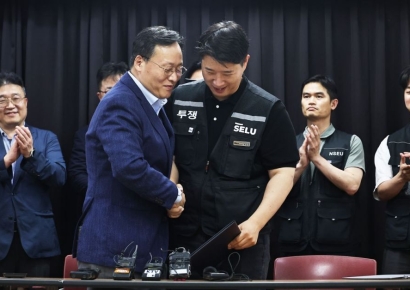 Up to 600 Million Won for Semiconductors, 160 Million Won Bonus for Loss-Making Non-Memory… Samsung Electronics Labor and Management Reach Tentative Deal on Unprecedented Performance Compensation (Comprehensive)
- "Could I Also Receive 370 Billion Won?"... No Limit on 'Stock Manipulation Whistleblower Rewards' Starting the 26th
- "From a 70 Million Won Loss to a 350 Million Won Profit with Samsung and SK hynix"... 'Stock Jackpot' Grandfather Gains Attention
- [Click eStock] "Hyundai Motor's New Business Value Reassessed... Target Price Raised to 770,000 Won"
- "Who Is Visiting Japan These Days?" The Once-Crowded Tourist Spots Empty Out... What's Happening?
Seo Hayeon, Law Times Reporter
※This article is based on content supplied by Law Times.
© The Asia Business Daily(www.asiae.co.kr). All rights reserved.







