Sajo Group Gets 'Failing Grade in Win-Win Payments' from First Year of Disclosure... Only Half of Subcontractor Fees Paid in Cash
Overall Retail Cash-Equivalent Payment Ratio at 96%
Sajo Daerim at 26.8%, Sajo Seafood at 50.3%
Only 11 Out of 37 Companies Have Established Dispute Mediation Bodies
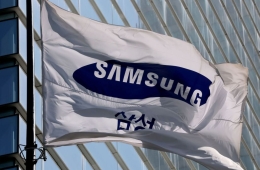
Sajo Group's ratio of cash payments for subcontracting fees to its subcontractors has been found to be low compared to other companies in the retail industry. Critics point out that the continued reliance on promissory notes instead of cash has solidified a structure in which subcontractors are burdened with liquidity issues.

Sajo Pulls Down Industry Average... Failing Grade from the First Year of Disclosure
According to an analysis by Asia Economy on September 9 of the payment terms of 37 business groups subject to disclosure by the Fair Trade Commission (those with total assets of 5 trillion won or more), the average cash payment ratio for Sajo Daerim, Sajo Industries, and Sajo Seafood was only 47%, with the average cash-equivalent payment ratio at just 51%. Breaking it down further, the cash payment ratios for Sajo Daerim, Sajo Industries, and Sajo Seafood were 26.8%, 66.0%, and 50.3%, respectively.
Furthermore, even when including cash-equivalent payment methods such as win-win payments and promissory note substitutes, the cash-equivalent payment ratios remained at 38.7% for Sajo Daerim, 66.0% for Sajo Industries, and 50.3% for Sajo Seafood. The gap is significant compared to the overall retail industry average (cash payment 77.5%, cash-equivalent payment 96%). This stands in contrast to most large companies, which have adopted payment structures close to 100% cash-equivalent to protect the liquidity of their subcontractors.
This year, Sajo Group was included for the first time as a business group subject to disclosure and released related data. While Sajo Industries and Sajo Seafood generally adhered to the statutory payment deadline (within 60 days), Sajo Daerim paid some fees after more than 60 days. None of the three companies established a dispute mediation body to resolve conflicts with subcontractors, indicating a lack of institutional safeguards.
Under the Fair Trade Act, companies belonging to business groups subject to disclosure that are primary contractors in subcontracting transactions are required by Article 13-3 of the Act on the Fairness of Subcontract Transactions to disclose, semiannually via the electronic disclosure system, information on payment methods, amounts paid by payment period, and the existence of dispute mediation bodies related to subcontracting fees. Win-win payments and promissory note substitutes are intended to facilitate early cash conversion for subcontractors, but if not actively utilized, their institutional significance is diminished.
Promissory note substitute payment methods include corporate purchasing cards, accounts receivable-backed loans, and purchase loans. Win-win payments are electronic payment methods that guarantee cash payment on the payment date using accounts receivable, and also allow early cash conversion at low cost before the payment date. The cash payment ratio includes cash and checks, win-win payments with a maturity of 10 days or less, and promissory note substitutes with a maturity of 1 day or less.

The average cash payment ratio for 11 food companies was 77.7%. Nongshim, Dongwon Industries, Lotte Chilsung, Lotte Wellfood, and KT&G all recorded 100%, while CJ CheilJedang also posted a high level at 90.9%. In contrast, HiteJinro (21.2%), Sajo Daerim (26.8%), Sajo Seafood (50.3%), and Sajo Industries (66%) ranked at the lower end. Excluding the three Sajo affiliates, all of the remaining eight companies recorded 100% cash-equivalent payment ratios. As a result, Sajo pulled down the average cash-equivalent payment ratio for the food industry to 87%.
In the convenience store sector, CU (BGF Retail), 7-Eleven (Korea Seven), and GS Retail all recorded 100% cash-equivalent payments. Although GS Retail's cash payment ratio was only 39.1%, it supplemented this with win-win payments (44.3%) and promissory note substitutes (16.6%). Among major retailers, Lotte Shopping, Hyundai Department Store, Shinsegae, and Lotte Himart maintained 100% cash payments, while Coupang's cash ratio was lower at 63.7%.
In the food materials industry, CJ Freshway recorded a cash payment ratio of 67.1%, while Ourhome was at 5.4% and Samsung Welstory at 0%. However, all three companies utilized win-win payments and promissory note substitutes to achieve a 100% cash-equivalent payment ratio.
The average cash payment ratio for four hotel companies was 77%, with Josun Hotels & Resorts recording the lowest at 20%. In the cosmetics industry, LG Household & Health Care (97.3%) and Amorepacific (95.7%) posted high ratios, while Aekyung Industrial lagged behind at 32.9%. In the restaurant industry, Shinsegae Food achieved 100%, but CJ Foodville (16.0%) and Lotte GRS (26.3%) were low. All four fashion companies paid entirely in cash.

Half of Payments Made Within 10 Days... Long-Term Payments Still Exist
Looking at payment periods, the overall average was 48% paid within 10 days, 13% within 11-15 days, 19% within 16-30 days, and 18% within 31-60 days. Cases of exceeding the statutory payment deadline of 60 days were found at Lotte Chilsung, Sajo Daerim, Coupang, and Amorepacific. In particular, Coupang paid nearly 90% of its supply fees after 31 days, and 0.2% (2.6 billion won) after more than 60 days. While nearly half of payments are made within 10 days, the proportion taking more than 30 days remains at 18%, meaning some subcontractors are still struggling with liquidity pressures.
Hot Picks Today
The rate of establishing dispute mediation bodies to resolve conflicts with subcontractors institutionally was only 11 out of 37 companies (29.7%). This means that 7 out of 10 companies have no official channel for conflict resolution. By industry, the fashion and cosmetics sectors were more active in establishing such bodies, while most companies in the food, retail, and restaurant industries had not done so.
© The Asia Business Daily(www.asiae.co.kr). All rights reserved.