Seoul Metro Conducts Real Train Fire Simulation... Moves to Improve Fire Response Manual
Fire Safety Simulation Conducted on Decommissioned Train Cars
Testing Interior Materials and Toxic Gas Emissions
Collaboration with Fire Authorities to Enhance Subway Safety
Seoul Metro (President Baek Ho) announced on September 4 that it conducted a fire simulation for electric train car interiors and six types of onboard equipment at the Jichuk Train Depot, in collaboration with the Seoul Metropolitan Fire & Disaster Headquarters.

According to the company, the main components of newly manufactured electric trains-such as interior panels, insulation, seats, flooring, inter-car barriers, and handrails-are made from non-combustible and flame-retardant materials that meet the highest fire safety rating (Grade 4) required by the Railroad Safety Act. However, following the arson incident on Line 5 in May, there has been a growing need to closely examine not only the flame resistance but also the speed of smoke diffusion, fire temperature, and the composition of toxic gases generated during combustion.
This simulation was conducted under conditions similar to actual train operation. Using a decommissioned Line 5 train set (No. 420), the procedures included verifying the fire safety of interior equipment, recreating a fire scenario inside the train car, and inspecting the cabin after extinguishing the fire. During the experiment, flammable materials were applied and ignited, and measurements were taken for burn duration, smoke diffusion, toxic gas components, and fire temperature.
The verification was overseen by the Seoul Metropolitan Fire & Disaster Headquarters and carried out under strict safety measures, including fire suppression and safety management, standby fire trucks, and response to unusual situations. Previously, on July 23, Seoul Metro signed a work agreement with the Seoul Metropolitan Fire & Disaster Headquarters to establish a subway fire response system and to cooperate on research into fire-adaptive materials.
Additionally, prior to the simulation, a preliminary mock exercise was held on August 14, with external fire safety experts invited to provide consultation. The experts offered suggestions on improving evacuation manuals for passengers and are expected to participate in developing future safety management measures.
Seoul Metro plans to use the results of this simulation to improve electric train car facilities, update fire response manuals for subway stations and tunnels, and strengthen joint response systems with fire authorities. Any issues identified during the fire simulation will also be reflected in the design and manufacturing process of electric trains to further enhance safety.
Hot Picks Today
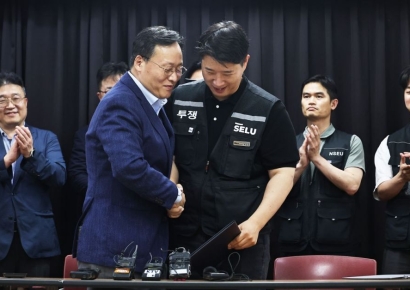 Up to 600 Million Won for Semiconductors, 160 Million Won Bonus for Loss-Making Non-Memory… Samsung Electronics Labor and Management Reach Tentative Deal on Unprecedented Performance Compensation (Comprehensive)
- "Could I Also Receive 370 Billion Won?"... No Limit on 'Stock Manipulation Whistleblower Rewards' Starting the 26th
- "From a 70 Million Won Loss to a 350 Million Won Profit with Samsung and SK hynix"... 'Stock Jackpot' Grandfather Gains Attention
- Opening a Bank Account in Korea Is Too Difficult..."It Costs 150,000 Won Just to Open a Child's Account or Check Card" [Foreigner K-Finance Status]②
- "Who Is Visiting Japan These Days?" The Once-Crowded Tourist Spots Empty Out... What's Happening?
Baek Ho, President of Seoul Metro, stated, “This fire simulation was organized to verify risk factors by assuming a fire during actual train operation and to strengthen a citizen safety-focused response system. Based on the results of the experiment, we will continuously improve our facilities and manuals to ensure a safe subway environment under any circumstances.”
© The Asia Business Daily(www.asiae.co.kr). All rights reserved.