[Report] Restoring Haengjeongjeongsa, the Cradle of Confucian Learning from 570 Years Ago... Reviving Lost Scholarly Roots
Restoring the Roots of Scholarship Together:
A Collaborative Project by the Descendants of Kwon Sik, Residents, and Uiseong County
The tranquil stone wall paths and winding alleys of Sachon Village in Uiseong County, North Gyeongsang Province, preserve a landscape that seems to transport visitors back to the early 15th century.

The administrative official beam-raising ceremony was held on July 25. Photo by Byunggeon Kwon
View original imageThis is where Haengjeongjeongsa (Haengjeong Lecture Hall), established by Kwon Sik (1423-1485) to nurture future scholars during the era when Neo-Confucianism guided the order and education of local society, once stood.
570 years ago, Haengjeongjeongsa was the heart of Sachon Village, where scholarship, etiquette, and communal ethics thrived. However, with the passage of time and changing eras, the lecture hall disappeared, and the spiritual roots of the village faded as well.
Now, descendants, residents, and the local government have joined forces to revive this lost cradle of Confucian learning. Last month, after extensive preparation, the first shovel was struck to begin the restoration work.
◆ "Haengjeongjeongsa is the Heart of Sachon’s Confucian Tradition"
In Sachon Village, the lecture hall was more than just a building. It was the center of scholarship, education, and communal ethics, embodying Neo-Confucian values.
After settling in the village, Kwon Sik established a grove for learning, dedicated himself to educating future generations, and laid the foundation for the development of local scholarship. His teachings became the soil from which many scholars grew, and the absence of the lecture hall signified a break in Confucian values. For this reason, the lecture hall remained a source of longing for the villagers over many years.
◆ "Restoration Means the Recovery of Scholarly Heritage"
Experts believe that the restoration of Haengjeongjeongsa is not merely the reconstruction of a building, but a meaningful endeavor to recover the region’s scholarly history and identity.
Kang Hyunkook, former president of Daegu National University of Education, emphasized, "Haengjeongjeongsa was a space symbolizing Sachon Village’s Confucian traditions and intellectual community culture. This restoration is an important process to revive a lost scholarly heritage and to instill a sense of roots and cultural pride in future generations."
After its restoration, Haengjeongjeongsa is expected to be reborn as a venue for traditional education and academic exchange. For youth, it will serve as a place to learn Confucianism and etiquette; for academia, it will be an academic resource to revisit the values of traditional thought; and for visitors, it will become a valuable cultural heritage where they can experience Korea’s traditional educational culture.
◆ A ‘Living History’ Created by Descendants and the Local Government
The descendants of Kwon Sik have devoted themselves for a long time to collecting historical materials and researching ancient documents in preparation for the restoration. Kwon Ojin (age 83) contributed 200 million won, and the total donations collected by the descendants amounted to 297.7 million won. Their dedication laid the foundation for the restoration.
One descendant said, "The lecture hall symbolizes the spirit of our family and the cradle of scholarship. Now, it is not just the descendants but also the local government and community who must work together to revive this historical value."
An official from Uiseong County stated, "The restoration of the lecture hall holds great historical, cultural, and scholarly value, and will also contribute significantly to regional development and the securing of educational resources. We will work with the Cultural Heritage Administration to develop concrete implementation plans."
◆ 570 Years of Heritage, a Path of Scholarship Leading to the Future
The restoration of Haengjeongjeongsa is not simply an act of recreating the past. It is a historical project to revive the scholarly roots of Sachon Village and to connect the Neo-Confucian values and educational spirit left by ancestors with the present day.
As the breath of scholarship and culture is revived on the site where the lost lecture hall once stood, the cooperation of descendants, residents, and the local government is now beginning to write a new chapter in history.
On July 25, the sangryangsik (ridge beam-raising ceremony) for Haengjeongjeongsa was held. The sangryangsik is a ceremony performed when the framework of a wooden building is nearly complete, in which the main beam is placed atop the structure and a written record and wishes for the construction are enshrined in the ridge beam.
Hot Picks Today
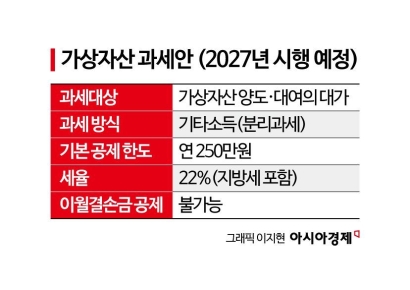 "Stocks Are Not Taxed, but Annual Crypto Gains Over 2.5 Million Won to Be Taxed Next Year... Investors Push Back"
- "Not Jealous of Winning the Lottery"... Entire Village Stunned as 200 Million Won Jackpot of Wild Ginseng Cluster Discovered at Jirisan
- "Even With a 90 Million Won Salary and Bonuses, It Doesn’t Feel Like Much"... A Latecomer Rookie Who Beat 70 to 1 Odds [Scientists Are Disappearing] ③
- "Rather Than Endure a 1.5 Million KRW Stipend, I'd Rather Earn 500 Million in the U.S." Top Talent from SNU and KAIST Are Leaving [Scientists Are Disappearing] ①
- "How Did an Employee Who Loved Samsung End Up Like This?"... Past Video of Samsung Electronics Union Chairman Resurfaces
As the reporter left the stone wall path, there was a sense of anticipation for the new stories that this place, where past and present meet, will create in the future.

On July 25th, the main beam raising ceremony for the administrative office was held.
View original image© The Asia Business Daily(www.asiae.co.kr). All rights reserved.







