77% of Listed Companies Fear Direct Hit to Corporate Growth from Second Commercial Act Amendment
KCCI Survey of 300 Listed Companies
76.7% Say "Negative Impact on Corporate Growth"
Concerns Over Simultaneous Expansion of Cumulative Voting and Separate Audit Committee Elections
"Possible Threats to Management Rights... Supplement First Amendment First"
After the first amendment to the Commercial Act passed both the National Assembly and the Cabinet, concerns have grown among listed companies about the possibility of additional measures?such as the mandatory cumulative voting system and the expansion of separate election for audit committee members?being added after further discussions. It has been revealed that the majority of listed companies are deeply concerned about these developments.

The Korea Chamber of Commerce and Industry announced on the 24th that, according to a recent survey of 300 listed companies on "The Impact of the Commercial Act Amendment on Companies and Improvement Measures," 76.7% of listed companies responded that "the second amendment to the Commercial Act, which targets companies with assets of 2 trillion won or more, could negatively affect corporate growth." Only 23.3% responded that "there would be no impact."
Previously, the Commercial Act was amended to include measures such as the so-called "3% rule," which limits the combined voting rights of the largest shareholder and related parties to 3% when appointing or dismissing audit committee members, and expanding the fiduciary duty of directors to both the company and its shareholders. However, the government and the ruling party are pushing for a second amendment to further expand the rights and interests of shareholders.
The second amendment to the Commercial Act is expected to include provisions that would have a significant impact on corporate governance, such as making the cumulative voting system mandatory for listed companies with assets of 2 trillion won or more (with no option to exclude cumulative voting via articles of incorporation), and increasing the number of separately elected audit committee members (from one to two). In relation to this, the Legislation and Judiciary Committee of the National Assembly held a public hearing on July 11, just one week after the first amendment to the Commercial Act.
In particular, listed companies expressed concerns about the potential side effects if both the mandatory cumulative voting system and the expansion of separately elected audit committee members are amended simultaneously. 74% of listed companies responded that "there is a possibility of threats to management rights." 26% responded that "there is no such possibility." More specifically, 38.6% of listed companies said, "While the risk of threats to management rights is low, the possibility itself exists," and 28.7% pointed out that "due to the shareholder structure, the possibility of threats to management rights is high." Additionally, 6.7% of companies stated that "simulation results led them to conclude that they could actually be exposed to threats to management rights."
Furthermore, 39.8% of listed companies responded that if the number of separately elected audit committee members is increased from "at least one" to "at least two," their greatest concern is that candidates recommended by external parties could dominate the audit committee, intensifying checks on the board of directors. Other concerns included "increased burden of securing and verifying audit committee candidates (37.9%)," "delays or disruptions in board decision-making because audit committee members also serve as directors (16.5%)," and "increased risk of corporate secrets being leaked by audit committee members recommended by competing companies (5.8%)."
Many also argued that supplementary measures for the first amendment should be put in place before discussions on the second amendment proceed.
As the most urgent supplementary measure, 38.7% of listed companies said "the government should provide legal interpretation guidelines," while 27.0% responded that "the principles of breach of trust and management judgment should be explicitly codified." Additionally, 18.3% of companies emphasized the need to "revise subordinate regulations."
Concerns were also raised about the current breach of trust offense. 44.3% of listed companies cited "ambiguous requirements" as the biggest problem. This is because, in practice, punishment can be imposed even when no actual damage has occurred but there is a risk of damage, or even when risks were taken in the course of decision-making for ventures such as mergers and acquisitions (M&A) without any intent of breach of trust. Other issues cited included "excessive aggravated punishment (20.7%)," "easy procedures for filing complaints or accusations (18.3%)," "punishment standards set 40 years ago (12.0%)," and "abuse of breach of trust accusations as a means to obtain trade secrets for competing companies (4.7%)."
There are also criticisms that Korea's breach of trust offense does not reflect changes in the times. Under criminal law, breach of trust is divided into three types: general/occupational breach of trust, special breach of trust under the Commercial Act, and aggravated breach of trust under the Act on the Aggravated Punishment of Specific Economic Crimes (the only such aggravated provision among major countries). The punishment standards, which range from 500 million to 5 billion won, remain unchanged from when the system was introduced 40 years ago in 1984.
Hot Picks Today
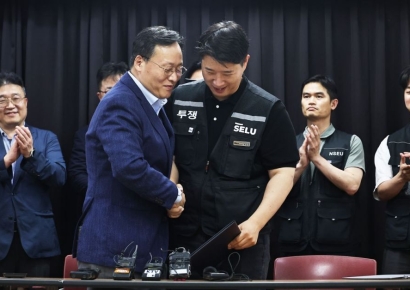 Up to 600 Million Won for Semiconductors, 160 Million Won Bonus for Loss-Making Non-Memory… Samsung Electronics Labor and Management Reach Tentative Deal on Unprecedented Performance Compensation (Comprehensive)
- "Could I Also Receive 370 Billion Won?"... No Limit on 'Stock Manipulation Whistleblower Rewards' Starting the 26th
- "From a 70 Million Won Loss to a 350 Million Won Profit with Samsung and SK hynix"... 'Stock Jackpot' Grandfather Gains Attention
- [Scientists Are Disappearing]④A Shaky Regional Research Ecosystem... "Professors Now Take the Initiative"
- "Who Is Visiting Japan These Days?" The Once-Crowded Tourist Spots Empty Out... What's Happening?
The Korea Chamber of Commerce and Industry stated, "As the scope of directors' fiduciary duty has been expanded to include shareholders, companies are confused about whether breach of trust can now be established against shareholders, and whether the management judgment rule, which has been recognized under existing precedents, still applies." The organization also emphasized, "As an increase in shareholder complaints and accusations is expected in the future, legislative improvements such as revising the breach of trust offense are urgently needed to resolve uncertainties."
© The Asia Business Daily(www.asiae.co.kr). All rights reserved.
!["Please Help": How Much Do Those Bowing 90 Degrees Really Earn? [Data Pick]](https://cwcontent.asiae.co.kr/asiaresize/307/2026052010120870131_1779239528.png)