Chairperson Choi Hojung: "Digital Skills Are Now Basic Competencies Alongside Literacy and Numeracy... I Will Build an Effective Council"
Choi Hojung, Chairperson of Seoul Metropolitan Council, Interview
"Considering Ways to Evaluate Students' Digital Competencies"
"The Field Comes First... Achievements Also Emerge from the Field"
Research on Constitutional Revision... "Preparing and Proposing Meaningful Alternatives"
"In order to improve students' basic academic skills, we will ensure that they acquire not only literacy and numeracy, but also digital competencies."
The Seoul Metropolitan Council, which previously enacted an ordinance to allow the disclosure of basic academic skills assessment results, is now discussing ways to evaluate students' digital competencies. The intention is to increase the use of artificial intelligence (AI) in school learning and to encourage students to take initiative in their own studies. In an interview at the Seoul Metropolitan Council in Jung-gu, Seoul, on July 17, Chairperson Choi Hojung stated, "Digital competency has now become an essential skill that children must possess," emphasizing this point.
Chairperson Choi recently proposed to Seoul Metropolitan Office of Education Superintendent Jeong Geunsik that they consider ways to evaluate students' digital competencies. He said, "Securing digital competency is an inevitable direction for education in the AI era," and added, "The Office of Education will develop methods to test digital competencies."
Chairperson Choi's push to strengthen students' digital competencies is also driven by concerns that the AI boom may force students and parents into the private education market. As the scope of AI usage expands exponentially, if students do not receive adequate digital education in the public education system, they will ultimately turn to private academies, leading to increased private education costs and educational disparities based on income and region.
He has focused on processes that bring changes to citizens' lives and stated that he will continue to communicate what the council does and why it is necessary. The council's role in achieving meaningful local autonomy is also noteworthy. Recently, he proactively ordered a research project on "Directions for Constitutional Amendments on Local Autonomy in the 10th Constitutional Revision." Chairperson Choi said, "We are preparing measures to strengthen local autonomy in anticipation of constitutional revision," and added, "We will prepare meaningful alternatives at the local council level and make concrete proposals when the time comes." The following is a Q&A.

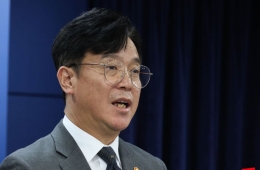
On the 17th, Choi Hojung, Chairperson of the Seoul Metropolitan Council, held an interview with Asia Economy at the Seoul Metropolitan Council in Jung-gu, Seoul, emphasizing the need to prepare for strengthening students' digital capabilities. Photo by Jo Yongjun
View original image-You mentioned educational assessments to strengthen digital competencies such as AI. Wouldn't this become entangled with the issue of AI textbooks?
▲The council should focus on what it can do. Let's not worry that students are being exposed to digital technologies and AI too quickly. We need to educate students so that they can lead the world, and teachers must also be knowledgeable. If education is delayed, students will inevitably turn to private academies. The world is moving in an irresistible direction.
-The disclosure of basic academic skills assessment results remains controversial. There are concerns about school rankings and stigmatization of certain schools.
▲Proper diagnosis and assessment are necessary in order to prescribe solutions. When the results of basic academic skills assessments are transparently disclosed, more educational investment can be made in areas with higher numbers of underperforming students, and teachers will have greater incentives to teach diligently. Rather than blocking disclosure unconditionally, the correct responsibility of public education is to seek alternatives so that side effects such as ranking do not occur. I have thoroughly discussed the intent of the ordinance with Superintendent Jeong Geunsik. Since we have reached a consensus that improving basic academic skills is a duty of public education, I expect proper cooperation and implementation to follow.
-This year, the "Field Civil Complaints Officer" position was established. Has it been effective?
▲From the citizens' perspective, they now have one more place to turn to when they feel helpless or frustrated. The processing of civil complaints has become much faster and more reliable. Investigators visit the site directly to assess the situation, coordinate with the executing agencies, and, unless there are special circumstances, provide a response within two weeks. This month, we upgraded the department by renaming it the "Field Civil Complaints Division" and expanding its advisory functions.
-You spent a year as the first female chairperson in the 68-year history of the council.
▲When I took office as chairperson a year ago, I pledged to make the Seoul Metropolitan Council a successful and effective council. Over the past year, I have gone wherever citizens called, never hesitating to take action. After hearing about poor meal conditions for firefighters, I visited in person, tried the food, and sought improvements. At the scene of the "random crime" in Sinchon, I listened to residents' concerns about light pollution and secured a budget for wall-mounted lighting that would both reduce light pollution and ensure alleyway safety. By examining the working conditions of police officers in welfare blind spots, the council persuaded the city to increase welfare points. For the remaining year of my term, I will continue to be present in the field and close to citizens, responding to their needs as a council of action.
-There are concerns that large-scale projects promoted by the Seoul Metropolitan Government, such as the Ferris wheel and floating hotels, require enormous financial resources.
▲Not only do these projects require massive budgets, but they also have an absolute impact on citizens' lives for the next 10 or 20 years. Once started, they are difficult to reverse. That is why I have repeatedly urged the city not to rush. Especially for development projects that are essential for Seoul's future, I have stated several times that, even if not mandatory, the city should go through a prior consultation process with the council before making any public announcements, in order to present well-developed policies. We will actively exercise the council's oversight and monitoring functions. We will ensure that citizens' taxes and national funds are not wasted or cause disappointment based on mere justifications. We will cut or adjust unverified policy budgets to put the brakes on them.
-In the rapidly changing city of Seoul, what do you see as the most important need going forward?
▲Jobs. As aging accelerates, seniors are leaving the workforce too quickly. We need to provide more opportunities for them to participate and contribute to society. In this context, protecting jobs for small business owners is also important. After the COVID-19 pandemic, they have not been able to operate as before. Now, with the commercialization of AI, more jobs may disappear, and the introduction of a 4.5-day workweek is possible. It is crucial to secure a variety of jobs so that people can work more.
-During the issuance of livelihood recovery consumption coupons, the central government shifted the budget burden to local governments.
▲The government notified local governments to shoulder 25% of the total budget with city and district funds, without any prior consultation. Local governments are now in a situation where they must raise funds for the consumption coupons by issuing local bonds or taking on debt. Imposing an excessive 25% burden solely on Seoul is a clear case of reverse discrimination. Seoul already faces financial discrimination, such as being excluded from the general grant tax due to its high fiscal independence. The situation is even more serious for basic local governments. Since the president previously served as a local government head, he should understand their situation better than anyone.
Hot Picks Today
 "Stocks Are Not Taxed, but Annual Crypto Gains Over 2.5 Million Won to Be Taxed Next Year... Investors Push Back"
- "Don't Throw Away Coffee Grounds" Transformed into 'High-Grade Fuel' in Just 90 Seconds [Reading Science]
- Signed Without Viewing for 1.6 Billion Won... Jamsil and Seongbuk Jeonse Prices Jump 200 Million Won in a Month [Real Estate AtoZ]
- "Groups of 5 or More Now Restricted"... Unrelenting Running Craze Leaves Citizens and Police Exhausted
- "Even With a 90 Million Won Salary and Bonuses, It Doesn’t Feel Like Much"... A Latecomer Rookie Who Beat 70 to 1 Odds [Scientists Are Disappearing] ③
-It still seems a long way to achieving genuine local autonomy. Although constitutional revision for local autonomy was a major issue in the last presidential election.
▲Even after the presidential election, constitutional revision for local autonomy remains a valid and pressing issue. Now that the 1987 Constitution has outlived its usefulness, it is time for an urgent constitutional amendment for local autonomy. Enshrining the independent autonomy of local governments and councils in the Constitution will allow for the development of region-specific strategies that meet citizens' demands and adapt to changing times, and will also help prevent the chronic problems of the imperial presidency. For this reason, the Seoul Metropolitan Council has proactively launched related research. We plan to prepare meaningful alternatives for constitutional revision at the local council level and make concrete proposals as soon as the constitutional amendment movement gains momentum. We must broaden the path of change, starting with urgent tasks such as local fiscal autonomy and legislative authority.

Choi Hojung, Chairperson of the Seoul Metropolitan Council, is giving an interview to Asia Economy at the Seoul Metropolitan Council in Jung-gu, Seoul. Photo by Jo Yongjun
View original image© The Asia Business Daily(www.asiae.co.kr). All rights reserved.