"Korea Should Use Shipbuilding, SMR, and LNG as Negotiation Leverage in Trade Policy"
7th NEAR Korea-China-Japan Seoul Process
"Alongside the Korea-China-Japan FTA, RCEP Renegotiations Should Be Led"
There is an analysis suggesting that, in response to the trade policies of a potential second Donald Trump administration in the United States, Korean companies should leverage their technological capabilities and price competitiveness in sectors such as shipbuilding and SMR (Small Modular Reactors) as bargaining chips in negotiations. Additionally, since all three countries?Korea, China, and Japan?are facing trade pressure from the United States, proposals were made for joint response measures focusing on specific industries such as digital trade and climate change.

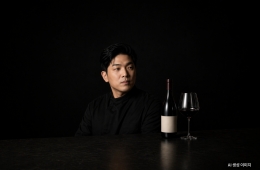
On the 9th, at the Korea Chamber of Commerce and Industry in Jung-gu, Seoul, the 7th Korea-China-Japan Seoul Process hosted by the NEAR Foundation took place, with Chairman Deokgu Jung of the NEAR Foundation, Chairman Kihwan Kim of the Korea Foundation, and Director Xiaoye Ma of the Shanghai World Observatory Institute participating in the seminar. (Photo by NEAR Foundation)
View original imageOn June 9, at the 7th Korea-China-Japan Seoul Process hosted by the NEAR Foundation at the Korea Chamber of Commerce and Industry in Jung-gu, Seoul, Park Taeho, Professor Emeritus at the Graduate School of International Studies at Seoul National University and former Minister for Trade at the Ministry of Foreign Affairs and Trade, stated, "There is significant potential for Korean companies to cooperate in areas that President Trump has shown interest in, such as shipbuilding, LNG (liquefied natural gas), and SMR, based on their technological strength and price competitiveness."
Professor Park said, "If these sectors are used as bargaining chips, it will be possible to secure an advantageous position," adding, "In other words, it will be important to develop a 'negotiation package' that includes a variety of agendas and to establish a negotiation strategy that balances national interests." This means that Korea should actively participate in tariff negotiations by designing a mutually beneficial structure, rather than making unilateral concessions.
There were also opinions that the three Northeast Asian countries?Korea, China, and Japan?should jointly respond to the trade policies of a possible second Trump administration. Ma Xiaoye, Director of the Shanghai World Observatory Institute, assessed, "The best way for the three countries to cope with the tariff war is to cooperate with each other to maintain the resilience of manufacturing clusters as much as possible." He emphasized, "One of the key competitive strengths of East Asian manufacturing is its sophisticated processing and supply chain clusters. Considering the urgent need for cooperation in the artificial intelligence (AI) revolution, it will be necessary to define new methods or guidelines for determining the added value of multinational manufacturing processes between East Asian countries and the United States."
Kuno Arata, Professor at the School of International Relations at Asia University, said, "The three countries should take the lead in developing new trade rules that allow for temporary and conditional departures from existing commitments for legitimate economic security purposes." However, he suggested, "Such exceptions should be limited to essential goods that would otherwise result in significant social costs." He added, "Rather than focusing excessively on concluding a free trade agreement (FTA), the three countries should lead renegotiations of the RCEP (Regional Comprehensive Economic Partnership) in parallel with Korea-China-Japan FTA negotiations."
He also pointed out, "The United States and China have agreed to reduce some reciprocal tariffs, but the key tariffs under Section 301 of the 1974 Trade Act, Section 232 of the 1962 Trade Expansion Act, and the fentanyl-related tariffs remain in place." He analyzed, "These tariffs have played a crucial role in blocking Chinese products from entering the U.S. market." He further assessed, "Although Japan and Korea are in a different position from China in their relations with the United States, Washington is likely to demand significant concessions from both countries due to their structural dependence on the U.S."
Ji Mansoo, Senior Research Fellow at the Korea Institute of Finance, also noted, "New uncertainties may arise not only from the spread of global protectionism but also from domestic political polarization in each country." He evaluated, "To prevent this, it is important to stabilize and institutionalize trilateral cooperation." He emphasized, "The Korea-China-Japan FTA has served as an 'anchor' and at least a minimal safeguard for maintaining economic cooperation dialogue among the three countries, even in the face of external challenges. In light of this, the goals of the trilateral free trade agreement should evolve."
Hot Picks Today
!["What Should I Eat? Cooking at Home Is a Hassle... 10,000~20,000 Won 'Hotel-Level Catering' Spreads in Ultra-Luxury Apartments [Luxury World]"](https://cwcontent.asiae.co.kr/asiaresize/93/2026042610544940447_1777168490.png) "What Should I Eat? Cooking at Home Is a Hassle...
"What Should I Eat? Cooking at Home Is a Hassle...
- Even with KOSPI at 6,500..."Selling Samsung and SK hynix for Cash," Individuals ...
- US Millionaire Trampled to Death by Elephant While Hunting in Africa
- "Up to 600,000 Won Per Person, Finally Available"... Be Careful: Filling Up at Y...
- No Work, No Inheritance for the Eldest... 30 Billion KRW in Shares Gifted to Sec...
To this end, Senior Research Fellow Ji argued, "In order to evolve the goals of the free trade agreement, it is necessary to add new objectives such as stabilizing supply chains, promoting decarbonization and digital transformation, and preventing internal and external imbalances." He also asserted, "There must be a response to the growing heterogeneity among the economic systems of major countries participating in global value chains, which could lead to unfair competition in international trade."
© The Asia Business Daily(www.asiae.co.kr). All rights reserved.