US Congressional Budget Office Warns "Trump Administration Could Default as Early as May"
"Debt Ceiling Must Be Raised or Suspended Before Special Measures Are Exhausted"
The Congressional Budget Office (CBO) has warned that if the US Congress does not raise the debt ceiling, the federal government could default as early as the end of May.

On the 26th (local time), the CBO stated in a press release that the 'X date'?the point at which the US reaches default?will occur between the end of May and September. This is earlier than the Bipartisan Policy Center (BPC)'s previous estimate of mid-July to early October as the default period.
The 'X date' refers to the point when the special measures taken by the US Treasury to avoid reaching the debt ceiling are exhausted. Congress sets the debt ceiling to limit government borrowing, but as national debt rapidly increases, the White House and Congress repeatedly clash over raising the debt ceiling. Currently, the federal government debt stands at $36.1 trillion, having already reached the debt ceiling on January 21. The Treasury is using existing cash assets and special measures to secure necessary funds.
The CBO predicted, "If the debt ceiling is not changed, the government's ability to borrow using special measures will likely be exhausted by August or September," adding, "If the government's borrowing needs are substantial, Treasury resources could be depleted at some point in late May or June." This means that if the Treasury's special measures run out before the mid-June quarterly tax payment deadline, default could occur even earlier.
Accordingly, President Trump and Congress must agree to raise the debt ceiling to avoid a federal government default. If Congress does not raise the debt ceiling and a default occurs, federal government operations such as defense, public safety, and medical services will be shut down. Civil servants and military pension recipients will not receive salaries or welfare benefits.
Moreover, if a federal government default becomes imminent, it could lead to a downgrade of the US credit rating and cause significant shocks to global financial markets. Previously, during the Biden administration in August 2023, when the ruling Democratic Party and opposition Republican Party clashed over raising the debt ceiling, global credit rating agencies such as Moody's and Fitch downgraded the US credit rating.
The CBO warned, "If the debt ceiling is not raised or suspended before special measures are exhausted, the government will be unable to fulfill all its obligations," adding, "As a result, payments for some activities will be delayed or a debt obligation default will occur. Perhaps both could happen."
Earlier, when he was president-elect at the end of last year during the temporary budget approval, President Trump argued that "Congress should abolish the absurd debt ceiling or extend its suspension until 2029." This reflected his intention to quickly resolve the debt ceiling risk as he prepared for a second term. However, he withdrew this claim amid the possibility of a federal government shutdown at the time.
Hot Picks Today
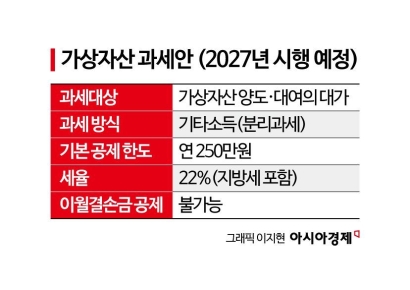 "Stocks Are Not Taxed, but Annual Crypto Gains Over 2.5 Million Won to Be Taxed Next Year... Investors Push Back"
- "Not Jealous of Winning the Lottery"... Entire Village Stunned as 200 Million Won Jackpot of Wild Ginseng Cluster Discovered at Jirisan
- "Rather Than Endure a 1.5 Million KRW Stipend, I'd Rather Earn 500 Million in the U.S." Top Talent from SNU and KAIST Are Leaving [Scientists Are Disappearing] ①
- "How Did an Employee Who Loved Samsung End Up Like This?"... Past Video of Samsung Electronics Union Chairman Resurfaces
- "Even With a 90 Million Won Salary and Bonuses, It Doesn’t Feel Like Much"... A Latecomer Rookie Who Beat 70 to 1 Odds [Scientists Are Disappearing] ③
Currently, with the Republican Party controlling both the House and Senate, it is highly likely that the debt ceiling will be raised without much difficulty. The Republicans plan to handle the debt ceiling increase as part of a package deal centered on the House, including the tax cut policies promised by President Trump. However, some Republican senators, who advocate for smaller government and criticize expanded government spending, are reportedly opposed to this.
© The Asia Business Daily(www.asiae.co.kr). All rights reserved.