Yoon's Fate Hinges on Decisions Regarding 'Emergency Martial Law,' 'Parliament Blockade,' and 'Arrest of Politicians'
Five Key Issues in the Impeachment Trial
Legality of Martial Law Proclamation, Attempt to Seize NEC, and More
Five Major Points in Yoon's Impeachment Case
Final Statement at the 11th Trial Session This Afternoon
73 Days After National Assembly Passed the Impeachment Motion
Expected to Address Key Issues and Deliver a Public Message
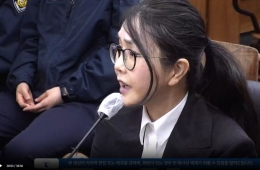
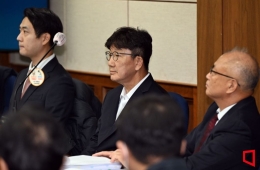
President Yoon Suk-yeol will make his final statement at the 11th impeachment trial session on the afternoon of the 25th. This comes 84 days after the declaration of martial law and 73 days after the National Assembly passed the impeachment motion. The Asia Economy reporting team reviews the records of the Constitutional Court's impeachment trial.
President Yoon will be recorded as the first president to appear in person at the impeachment trial court and deliver a final statement. It is expected that his opinions on the issues raised during the previous 10 trial sessions and a message to the public will be included. The contentious points of the impeachment trial, where the National Assembly and President Yoon's sides have sharply opposed each other, can be summarized into about five issues, and the Constitutional Court's conclusion is also likely to hinge on judgments regarding these issues.

Issue ① Does the declaration of martial law meet the requirements?
The National Assembly side impeached President Yoon, arguing that his declaration of martial law did not meet the constitutional requirements of "wartime, armed conflict, or national emergency." They also pointed out that the Cabinet meeting at the time was held for about five minutes just before the declaration of martial law, with no minutes or agenda submission process, thus failing to meet the Cabinet meeting requirements. Since the Constitution stipulates that the declaration of martial law must go through the Cabinet deliberation process, this was also considered problematic.
On the other hand, President Yoon argues that the opposition party's 29 impeachment motions against Cabinet members and budget cuts effectively constituted a national emergency, which meets the requirements for martial law. He also claims that since Cabinet members gathered and discussed before the declaration, substantive deliberation took place at the Cabinet meeting. Among the Cabinet attendees, former Minister of the Interior and Safety Lee Sang-min testified that "there was substance in the Cabinet meeting," but Prime Minister Han Duck-soo testified that "it was not a usual Cabinet meeting and there were formal and substantive defects."
Issue ② Is Martial Law Proclamation Order No. 1 lawful?
Following the president's declaration of martial law, Martial Law Commander issued Martial Law Proclamation Order No. 1, which included phrases restricting political activities. The National Assembly side argued that this restricted constitutional fundamental rights such as freedom of party activities, deeming it unconstitutional and illegal. Conversely, President Yoon's side claims the proclamation order was symbolic and there was no intention to actually enforce it. When President Yoon asked, "Do you remember when former Minister of National Defense Kim Yong-hyun showed me the proclamation order he wrote and I said, 'It violates regulations and is unlikely to be enforced, so let's just leave it as is'?" Kim replied, "I remember now that you mention it," which is a representative example.
Issue ③ Was there an attempt to block or dissolve the National Assembly?
The National Assembly side claims that "President Yoon ordered the military and police to 'pull out the members' and attempted to block or dissolve the National Assembly." The Constitution does not grant the president the power to dissolve the National Assembly, and attempting to obstruct its activities even under martial law would constitute a serious constitutional violation. Former Army Special Warfare Command Commander Kwak Jong-geun also testified that "the president ordered, 'It seems the quorum has not been met yet. Quickly break down the door and pull out the people inside,'" supporting the National Assembly's claim. On the other hand, President Yoon's side countered that the deployment of troops was for maintaining order and that there was no order to "pull them out."
Issue ④ Was there an attempt to arrest politicians?
The National Assembly side stated, "President Yoon attempted to arrest opposition and ruling party figures such as National Assembly Speaker Woo Won-shik, then People Power Party leader Han Dong-hoon, and Democratic Party leader Lee Jae-myung to prolong martial law." Former 1st Deputy Director of the National Intelligence Service Hong Jang-won revealed the so-called "Hong Jang-won memo," claiming there was a list of targets for arrest including politicians and legal professionals. Hong testified that he received instructions from President Yoon to "clean up everything at this opportunity" and "support the Defense Counterintelligence Command," and that the names on the memo were read out by former Defense Counterintelligence Command Commander Yeo In-hyung.
In contrast, President Yoon's side argued that there was no order to arrest politicians and that the directive was to catch spies. They also claimed that the monitoring and location tracking of those suspected of violating the proclamation order was limited and that even this was done independently by former Minister Kim and former Commander Yeo. National Intelligence Service Director Cho Tae-yong also questioned the credibility of the memo, stating, "The Hong Jang-won memo is inconsistent with facts and there are four versions of it."
Issue ⑤ Attempt to seize control of the National Election Commission?
The deployment of military forces to the National Election Commission (NEC), an independent constitutional agency, is also a contentious issue. President Yoon admitted in the 5th trial session that "I told former Minister Kim to send (troops) to the NEC," acknowledging the order to deploy troops, but said it was "to check for poor election management." The National Assembly side countered that this baseless suspicion infringed on the NEC's independence and fairness. Kim Yong-bin, Secretary-General of the NEC, also dismissed allegations of election fraud, stating, "Manipulation of voting and counting is impossible."
Hot Picks Today
 "Forged IDs Easily Bypass Convenience Stores, B...
- "Pay for the Postpartum Care Center with My Card"... Grandparents Open Their Wal...
- "Skipping Diamond Rings... Gen Z in the US Opts for Finger Tattoos"
- Employers With Wage Arrears of Three Months, Five Times, or Over 30 Million Won ...
- Back After 3 Years and 5 Months with a 'Shark Nose Surgery'... Hyundai Unveils T...

President Yoon Suk-yeol's Impeachment Trial in Numbers
© The Asia Business Daily(www.asiae.co.kr). All rights reserved.