Shin Euijoon, Jeonnam Provincial Council Member, Holds Meeting on Improving Organic Seafood System
Listening to the Challenges Faced by Aquaculture Farms
Following the Restructuring of the Direct Payment System
Shin Euijun, a member of the South Jeolla Provincial Council (Democratic Party of Korea, Wando 2), announced on the 19th that he recently held a ‘Meeting to Improve the Organic Seafood System’ at the council's small conference room.
The meeting was attended by 18 eco-friendly seafood producers and more than 20 participants, including the head of the Eco-Friendly Fisheries Division of South Jeolla Province, to listen to the difficulties faced by fishermen due to the restructuring of the direct payment system.

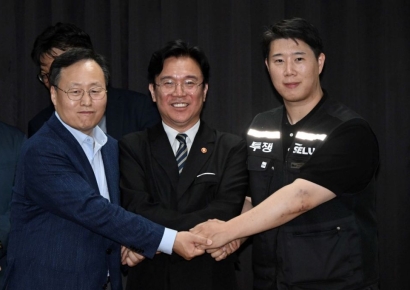
Jeon Nam-do Assemblyman Shin Uijun held a "Meeting on the Improvement of the Organic Seafood System" with eco-friendly seafood producers. Provided by Jeon Nam-do Council
View original imageThe Eco-Friendly Seafood Certification Direct Payment System is a program that supports production costs for aquaculture farms that receive eco-friendly seafood certification and comply with Hazard Analysis and Critical Control Points (HACCP) standards. It is being implemented to ease the management burden of aquaculture farms, promote eco-friendly fisheries, and strengthen public functions such as marine environment conservation.
However, starting this year, the method of direct payment has changed significantly, raising concerns among fishermen. Previously, direct payments were made in proportion to the area (ha) of certified eco-friendly aquaculture farms. From this year, however, the payment standard has been changed to 15% of the sales performance of certified products. In addition, the system has been restructured to provide a maximum of 65 million KRW per fishery farm and a maximum of 30 million KRW per seaweed farm.
Fishermen who attended the meeting raised several issues, such as the obligation to provide proof of sales performance and the reduction in support amounts due to the set limit. As solutions, they suggested raising the direct payment standard from 15% to at least 30% of sales performance, increasing the support limit for seaweed (30 million KRW), and providing additional incentives beyond the basic direct payment.
Shin stated, “Eco-friendly seafood certification is a government-level initiative focused on expanding the production of safe food and conserving the marine environment. To ensure that the recent restructuring does not discourage participation, it is essential to increase the payment standards and limits.” He added, “We will closely coordinate with South Jeolla Province and actively propose the opinions gathered at the meeting to the government to ensure they are reflected as much as possible.”
Hot Picks Today
 Samsung Electronics Introduces New "Special Performance Bonus" for Semiconductors, Paid Entirely in Company Shares
- "Could I Also Receive 370 Billion Won?"... No Limit on 'Stock Manipulation Whistleblower Rewards' Starting the 26th
- "From a 70 Million Won Loss to a 350 Million Won Profit with Samsung and SK hynix"... 'Stock Jackpot' Grandfather Gains Attention
- "US-Iran: Patch-Ups More Likely Than Settlement... Unlikely to Resolve Within 6 Months" [Economic Policy Zoom-In]
- "Who Is Visiting Japan These Days?" The Once-Crowded Tourist Spots Empty Out... What's Happening?
© The Asia Business Daily(www.asiae.co.kr). All rights reserved.







