Following Tariffs, Trump Now Declares a 'Tax War'
Trump Cites Section 891 of U.S. Code,
Signals Imposition of Punitive Taxes
Withdraws from Global Minimum Tax on First Day in Office
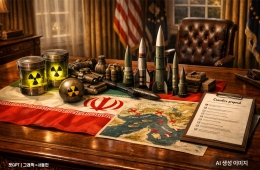
President Donald Trump has declared a tax war against countries that impose discriminatory taxes on American global companies, following tariff measures. This is part of the America First trade policy, aiming to impose retaliatory taxes on countries that levy what are considered unfair taxes on American citizens or companies. Experts predict that such measures could trigger global conflicts over tax systems and deepen protectionism, as countries pursue only their own interests.

According to the British daily Financial Times (FT) on the 21st (local time), the memorandum on the 'America First trade policy' released on the night of the 20th, President Trump's first day in office, includes a directive that "the Secretary of the Treasury shall investigate, in consultation with the Secretary of Commerce and the United States Trade Representative (USTR), whether discriminatory or extraterritorial taxes are imposed on American citizens or companies by foreign countries under Title 26, Section 891 of the United States Code (USC)." FT reported that Section 891 is a vague provision that is 90 years old and grants the president the authority to retaliate by imposing punitive taxes on foreigners or companies within the U.S.
This provision allows the president, upon officially declaring discrimination in tax measures, to double the tax rates on companies or citizens of the offending country without congressional approval. President Trump, who advocates 'America First,' appears to intend to use taxes as a policy tool to maximize national interests, following tariffs.
Earlier, on his first day in office, January 20th, President Trump announced that starting February 1st, he would impose 25% tariffs on Canada and Mexico respectively. On the 21st, he also stated that a 10% tariff on China was under discussion. However, regarding his universal tariff pledge to impose 10-20% tariffs on all imported goods worldwide, Trump said, "It is not ready yet," but promised to "impose it soon." This is interpreted as a move to slow down amid market concerns that tariff hikes could push up prices and trigger inflation.
While signaling the possibility of retaliatory tax measures, Trump decided to terminate tax agreements made with other countries. On his first day in office, in a separate memorandum, he declared that the U.S. would withdraw from the global minimum tax agreement reached last year with the Organisation for Economic Co-operation and Development (OECD). He also instructed, "Investigate whether there are foreign countries that do not comply with treaties with the U.S. or that implement or may implement tax treaties that are extraterritorial or disproportionately affect American companies."

The global minimum tax system allows countries to apply the Income Inclusion Rule (UTPR) to tax multinational corporations with worldwide revenues exceeding 1 trillion won if they pay less than 15% tax in their home country, taxing the difference to reach 15%. It was established to prevent multinational corporations from deliberately seeking low-tax countries to evade taxes.
FT interprets President Trump's withdrawal declaration as a signal that the U.S. intends to broadly challenge global tax regulations, sending a warning to OECD signatories including European Union (EU) member states, the United Kingdom, South Korea, Japan, and Canada. This is not the first time Trump has shown discomfort with the global minimum tax. During his first term, he clashed with European leaders over digital tax systems affecting major U.S. tech companies such as Apple and Alphabet, Google's parent company, and at one point threatened to impose tariffs on France.
There is also speculation that the targets referred to in Trump's memorandum extend beyond countries that agreed to the OECD global minimum tax. Alex Cobham, head of the Tax Justice Network, said, "If taken literally, most countries in the world, including most OECD countries, could be said to fall under the countermeasures they describe."
Mathias Cormann, Secretary-General of the OECD, said, "Concerns have been raised by U.S. representatives about various aspects of our international tax agreements," adding, "We will continue to work with the U.S. and all countries to enhance clarity, avoid double taxation, and support international cooperation to protect the tax base."
Some view President Trump's move to abolish the global minimum tax as a result of pressure from big tech leaders to act on taxes rather than tariffs. A senior EU official said, "Billionaire big tech entrepreneurs are pressuring him to act on taxes rather than trade," adding, "Talks about tariffs are about deals, but the real fight will move to where wealth is, and big tech will benefit."
Hot Picks Today
 "If Your Age and Years of Service Total Over 70...
- "Did Trump Anticipate This?" Export Orders Surge Amid War... Record-High Export ...
- "Be Quiet, Pig": Jimmy Kimmel Live! Wins 'Broadcasting Pulitzer' After Sharp Sat...
- "Using Company Funds Like a Personal Piggy Bank"... Musk Turned to SpaceX Whenev...
- "Surviving 17 Days on Rainwater Without Food"... Ukraine Shocked by Photos of Ma...
Valdis Dombrovskis, the EU's Executive Vice-President, expressed "regret" over the announcement but said, "We want to take the time to discuss this issue with the new U.S. tax authorities."
© The Asia Business Daily(www.asiae.co.kr). All rights reserved.