Ruling and Opposition Parties Discuss December 3 Emergency Martial Law Special Investigation Act... Outcome 'Uncertain'
Each Side Pushes Its Own Bill
Ruling Party: Minimum Investigation Targets and Period
Opposition: Includes Incitement, Propaganda of Insurrection, and Foreign Exchange Crimes
Democratic Party Leaves Room for Negotiation
The ruling and opposition parties will enter negotiations on the 17th regarding the passage of a special prosecutor law related to the December 3 emergency martial law situation. Attention is focused on whether the ruling and opposition parties can find a consensus to some extent between the People Power Party's own special prosecutor proposal (Martial Law Special Prosecutor Law), which includes the minimum investigation targets and period, and the opposition's special prosecutor proposal (Insurrection Special Prosecutor Law), which includes charges of incitement and propaganda of insurrection and foreign exchange crimes.

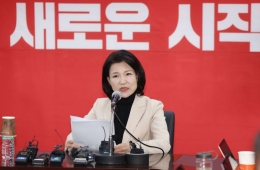
Kwon Seong-dong, floor leader of the People Power Party, is speaking at the party meeting held at the National Assembly on the 16th. Photo by Kim Hyun-min
View original imageThe People Power Party plans to propose its own special prosecutor law related to the emergency martial law on the same day. The party intends to submit it to the National Assembly under the names of all 108 members before the negotiation between the ruling and opposition floor leaders mediated by Speaker Woo Won-sik. Although the bill has been largely completed, it is reported that the wording and structure are still being revised. The party's own special prosecutor proposal excludes foreign exchange crime charges, incitement and propaganda of insurrection charges, related complaints and accusations, and related cases recognized during the investigation process, all of which are included in the Insurrection Special Prosecutor Law previously proposed by the Democratic Party.
The scope of the investigation is also limited to specific acts on the day of the emergency martial law and during the preparation process, such as attempts to paralyze the functions of the National Assembly and the Central Election Commission, participation and command of insurrection, and prior conspiracy charges. The investigation period and personnel are set at a maximum of 110 days and 58 people. Initially, the number of investigators was considered to be 68, comparable to a permanent special prosecutor, but it was further reduced. The opposition's proposal sets the investigation period and personnel at 150 days and 155 people, respectively.
The People Power Party views the implementation of a special prosecutor itself as unnecessary. However, as the opposition parties, including the Democratic Party, pushed for the special prosecutor law again and many defections occurred, the party judged that preparing its own special prosecutor proposal was inevitable. The ruling party has decided to avoid a situation where the opposition-led special prosecutor law is passed unilaterally and aims to pass a special prosecutor law agreed upon by both parties.
Kwon Seong-dong, floor leader of the People Power Party, said at a floor strategy meeting held at the National Assembly on the same day, "Since the investigation of those related to the declaration of martial law has already ended or is about to end, it is appropriate to withdraw the special prosecutor law," adding, "I judge that the special prosecutor itself is useless."

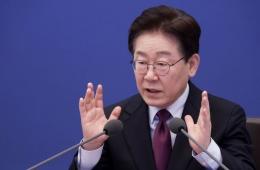
Park Chan-dae, floor leader of the Democratic Party of Korea, is speaking at the policy coordination meeting held at the National Assembly on the 16th. Photo by Kim Hyun-min
View original imageThe Democratic Party strongly criticized the People Power Party's own special prosecutor proposal. Park Chan-dae, floor leader of the Democratic Party, pointed out at the floor strategy meeting on the same day, "Although it is called a special prosecutor law, it is no different from conducting a sloppy investigation and covering it up appropriately." This is because many key contents were omitted from the Insurrection Special Prosecutor Law previously proposed by the opposition. He also increased pressure on Choi Sang-mok, Acting Prime Minister and Minister of Strategy and Finance, saying, "Even if the ruling and opposition parties fail to reach an agreement, do not exercise the veto power on the special prosecutor law."
However, it is reported that the Democratic Party is willing to negotiate on some issues proposed by the People Power Party, such as changing the law's name and excluding foreign exchange crime charges. The Democratic Party plans to continue negotiations until the plenary session, which starts at 2 p.m., ends at midnight, even if it means keeping the session open until then. However, they stated that they have no intention of further negotiations after midnight, leaving room for the possibility of passing the Insurrection Special Prosecutor Law originally proposed by the opposition as is.
Hot Picks Today
 "If Your Age and Years of Service Total Over 70...
- "Did Trump Anticipate This?" Export Orders Surge Amid War... Record-High Export ...
- "Be Quiet, Pig": Jimmy Kimmel Live! Wins 'Broadcasting Pulitzer' After Sharp Sat...
- "Using Company Funds Like a Personal Piggy Bank"... Musk Turned to SpaceX Whenev...
- "Surviving 17 Days on Rainwater Without Food"... Ukraine Shocked by Photos of Ma...
However, as the expected proposal of the People Power Party's own special prosecutor law was delayed, the meeting between the ruling and opposition floor leaders was also canceled. As a result, dark clouds have gathered over the passage of a bipartisan agreement.
© The Asia Business Daily(www.asiae.co.kr). All rights reserved.