Will Steel and Battery Prices Rise Due to 'Trump Trade Barriers'? [Trump 2nd Term D-3]
If Universal Tariffs Are Applied,
Korean-Made Materials Will Suffer a Blow
Need to Reconsider Investments
Such as Factory Construction in the U.S.
![Will Steel and Battery Prices Rise Due to 'Trump Trade Barriers'? [Trump 2nd Term D-3]](http://www.asiae.co.kr/news/img_view.htm?img=2024072917400268353_1722242401.png)
When the Donald Trump administration takes office on the 20th, the domestic steel and battery industries are expected to require massive additional investments. The industry is once again likely to pay a ‘high price’ due to Trump’s ‘trade barriers.’
If universal tariffs are applied, electric vehicle prices could rise by millions of won
According to related industries on the 17th, if the U.S. government applies universal tariffs of 10-20%, batteries and electric vehicles using Korean battery materials will suffer a significant blow to their price competitiveness within North America.
For example, in an electric vehicle sold for 50 million won, the battery cost is 20 million won, with cathode materials costing 8 million won and anode materials 2 million won, totaling 16 million won just for electric vehicle materials. Assuming a 20% universal tariff is added, the electric vehicle price would rise to 53.2 million won. Battery and electric vehicle companies using Korean battery materials would have to either raise prices by about 3.2 million won overnight due to tariffs or accept profit erosion. In an electric vehicle market already experiencing a chasm (temporary demand stagnation in a growth industry), a price increase could lead to further demand stagnation or decline.
President-elect Trump pledged to impose universal tariffs on all imports upon taking office. Recently, he even announced on his SNS (social network service) plans to create a new government agency called the ‘Foreign Import Agency’ to collect tariffs from foreign companies.
![Will Steel and Battery Prices Rise Due to 'Trump Trade Barriers'? [Trump 2nd Term D-3]](http://www.asiae.co.kr/news/img_view.htm?img=2024050720325363688_1715081573.png)
The Korean battery industry has so far operated on a structure where raw materials are sourced from China, intermediate materials such as cathode and anode materials are produced mainly domestically, and finished battery cells are manufactured in the U.S. The Inflation Reduction Act (IRA) recognizes battery materials processed in countries with which the U.S. has free trade agreements (FTA) as equivalent to domestic products, providing electric vehicle consumer subsidies accordingly. This enabled the ‘Korean material manufacturing, U.S. finished product production’ structure and led to investments centered in Korea by material companies. If battery material tariffs become a reality, the Korean battery industry’s business model will need to be reconsidered.
Additional investments to build new factories or expand existing ones in North America are highly likely. For cathode materials, which have the highest cost ratio, companies such as Ecopro BM, LG Chem, and POSCO Future M are constructing factories in North America. Among them, LG Chem’s Tennessee plant (annual capacity of 120,000 tons) is the only one located in the U.S., while POSCO Future M and Ecopro BM are building plants in Canada. A battery industry official said, "We need to see how things will concretize after the Trump administration takes office," but added, "We are already under significant pressure from price declines, and if tariffs are imposed as well, profit erosion is a concern."
Steel exports restricted by quotas may require trillion-won investments
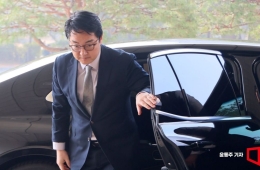
The steel industry, which was restricted by quotas during the first term of the Trump administration, is also inevitably facing the impact of universal tariffs. On the 14th, Seo Kang-hyun, CEO of Hyundai Steel, told reporters that when asked if they were considering building a steel mill in North America, "The scale and location are undecided, but it is under consideration."
Hot Picks Today
 "Did Trump Anticipate This?" Export Orders Surg...
- "If Your Age and Years of Service Total Over 70, Please Retire"... MS Implements...
- "Be Quiet, Pig": Jimmy Kimmel Live! Wins 'Broadcasting Pulitzer' After Sharp Sat...
- "Using Company Funds Like a Personal Piggy Bank"... Musk Turned to SpaceX Whenev...
- "Surviving 17 Days on Rainwater Without Food"... Ukraine Shocked by Photos of Ma...
Hyundai Motor Group has gone through specific business review stages and has been in contact with several state governments, including Georgia where its factories are located, to discuss investment conditions such as infrastructure. There are also reports that the steel mill investment could exceed 10 trillion won. As Hyundai Motor Group begins full-scale electric vehicle production in North America, it appears to be preparing proactive measures to secure steel supply, including steel sheets for electric vehicles.
© The Asia Business Daily(www.asiae.co.kr). All rights reserved.