Japan Approves 'Largest Ever' Budget for Next Year... Defense Spending Surpasses 8 Trillion Yen for the First Time
The Japanese government has approved the largest budget ever for next year.
According to the Nihon Keizai Shimbun (Nikkei) on the 27th, the Japanese Cabinet led by Shigeru Ishiba finalized the 2025 fiscal year (April 2025 to March 2026) budget at 115.5415 trillion yen (approximately 1073 trillion won) during the Cabinet meeting that day. This represents an increase of about 2.6% compared to the 2024 fiscal year budget, marking the largest scale in history.

In particular, social security expenditures, including medical care and insurance, have increased noticeably due to Japan's aging population. Social security spending, which was around 37.7 trillion yen in the 2024 fiscal year, rose by 558.5 billion yen to a record high of 38.2778 trillion yen in the 2025 fiscal year. Nikkei explained, "Although the government is pushing reforms such as setting caps on out-of-pocket expenses at medical institutions and lowering drug prices, it is unable to keep up with the rising trend of social security expenditures."
Defense spending also increased by 9.7% compared to the previous year, reaching about 8.5 trillion yen, setting a new record high. This is the first time annual defense spending has exceeded 8 trillion yen. This is interpreted as the influence of the military strengthening policy led by former Prime Minister Fumio Kishida and the involvement of Prime Minister Ishiba, who has a background as Minister of Defense. Nikkei reported that the defense budget will be used for the development of long-range missiles and the payment of allowances to Self-Defense Force personnel living in barracks.
Generally, issuing government bonds is inevitable to cover such a large budget. However, due to improved corporate performance and the impact of high inflation this year, Japan is expected to cover the budget without issuing new bonds. Thanks to Japan raising a record-high 78.4 trillion yen in tax revenue this year, new government bond issuance is expected to remain at 28.6 trillion yen, a 19% decrease from the previous year. This is the first time in 17 years that new bond issuance has fallen below 30 trillion yen.
However, since the ruling Liberal Democratic Party and coalition partner Komeito have not secured a majority of seats, it is uncertain whether the Japanese government's record-breaking budget will pass through the parliament. Bloomberg News reported, "Ishiba's minority government faces a critical test to obtain parliamentary approval for the budget," and noted that minor parties, aware of their power needed for the budget's passage, are negotiating with the ruling parties to push through their desired policies.
Hot Picks Today
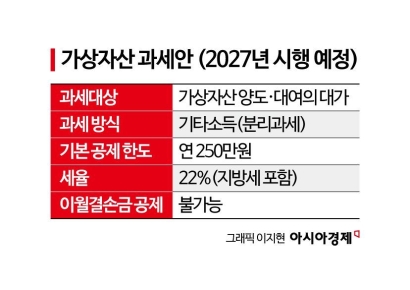 "Stocks Are Not Taxed, but Annual Crypto Gains Over 2.5 Million Won to Be Taxed Next Year... Investors Push Back"
- "Not Jealous of Winning the Lottery"... Entire Village Stunned as 200 Million Won Jackpot of Wild Ginseng Cluster Discovered at Jirisan
- "Rather Than Endure a 1.5 Million KRW Stipend, I'd Rather Earn 500 Million in the U.S." Top Talent from SNU and KAIST Are Leaving [Scientists Are Disappearing] ①
- "How Did an Employee Who Loved Samsung End Up Like This?"... Past Video of Samsung Electronics Union Chairman Resurfaces
- "Even With a 90 Million Won Salary and Bonuses, It Doesn’t Feel Like Much"... A Latecomer Rookie Who Beat 70 to 1 Odds [Scientists Are Disappearing] ③
The Ishiba Cabinet, launched last October, is currently walking a political tightrope with approval ratings remaining in the 30% range according to recent polls by Kyodo News and Mainichi Shimbun. Bloomberg explained, "After receiving public criticism for failing to arrange a meeting with U.S. President-elect Donald Trump, Ishiba is showing mixed results on the international stage," and added, "To overcome this, he is aiming to pass the budget in March next year by joining forces with the second opposition party, Nippon Ishin no Kai."
© The Asia Business Daily(www.asiae.co.kr). All rights reserved.