[The Editors' Verdict] Imperialistic Controlling Shareholders and the Imperial Presidency
Weak Corporate Governance Causes Stock Market Undervaluation
Highlighting 'Commercial Act Amendment' to Protect Common Shareholders
2399.49. This is the final closing price of the KOSPI this year. Ultimately, the year ended without even maintaining the 2400 level. On January 2nd, when President Yoon Suk-yeol attended the stock market opening ceremony as the first sitting president to do so, he declared that he would "resolve the ‘Korea Discount’ (undervaluation of the Korean stock market) through deregulation of the capital market during his term," which revived investor sentiment. Thanks to the government's value-up initiatives, the KOSPI showed vitality by surpassing the 2800 mark in the first half of the year. However, after continuous declines since July, the sudden declaration of martial law and the onset of the impeachment crisis ultimately caused the 2400 level to collapse. The domestic stock market recording six consecutive months of decline has only happened twice before, during the 2000 IT bubble and the 2008 global financial crisis. Why did the market take such a downturn in the second half of this year?

The KOSPI closing price on the first trading day of the stock market this year (right) and the KOSPI closing price on the last trading day.
View original imageThe cause is the imperialistic controlling shareholders. The boards of directors of domestic companies are so ineffective that they are often labeled as rubber stamps. There are almost no cases of opposing the leadership of controlling shareholders, so company decisions have repeatedly been aligned more with the interests of controlling shareholders than with those of general shareholders. Controlling shareholders detach and attach profitable subsidiaries at will for their own benefit or proceed with paid-in capital increases at prices below market value. The rate of dual listings is also 18.43%, significantly higher than in the U.S. (0.35%) and Japan (4.38%). Because actions prioritizing controlling shareholders’ interests over those of all shareholders are widespread, undervaluation is inevitable.
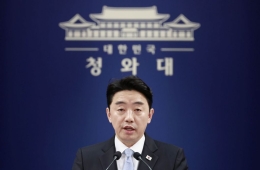
Since November, the stock market has further plummeted due to the imperialistic president. The declaration of martial law followed by the impeachment crisis poured cold water on about a year of value-up efforts. The government’s tax reform plan, which included reducing dividend income tax through separate taxation for shareholders of dividend-excellent companies and providing corporate tax cuts to companies increasing shareholder returns, also failed to pass.
If the president is blamed, there may be counterarguments citing why stock markets in other countries with problematic heads of state perform well. This is because Korea is ‘imperialistic.’ The current presidential system grants extensive powers to the president. When poor leadership is in place, concentration of power causes political instability and increases market uncertainty. Which investor would trust and invest in such a capital market? Would a market in a country where the ruler’s will takes precedence over the will of the entire people be dynamic? If problematic leadership cannot be systemically checked, replaced, or supplemented, the country must bear the burden of undervaluation as an ‘investment-vulnerable country.’
This collaboration between imperialistic controlling shareholders and an imperialistic president has created the current excessive discount. However, the fortunate thing is that although the momentum for value-up has been lost, paradoxically, a clue to resolving undervaluation has been found.
Hot Picks Today
 Frozen Meals, Two Hours of Sleep... "I Wish I C...
- "Never Hike Alone as a Woman" "Even Two Are at Risk"... Growing Fear of Crime on...
- The Quoted 800,000 Won, the Bill Was 5 Million... Bereaved Families of 'No-Funer...
- "You Can Only Have This in Korea": Which National Museum Cafe Menu Is Captivatin...
- Gwangjang Market Stall That Charged Foreigners 2,000 Won for Water Suspended for...
The government has realized how poor leadership affects the market. The structural problems of Korean politics must be reexamined, and a more democratic and efficient power structure sought. As the issue of imperialistic controlling shareholders has come to the fore, amendments to the Commercial Act to enhance the interests of minority shareholders have emerged as a solution. Cases of capital transactions by large corporations, such as Doosan Group’s governance restructuring, Hanwha Energy’s public tender offer for Hanwha Corporation, and Korea Zinc’s general public paid-in capital increase, have highlighted the need for amendments to the Commercial Act that explicitly strengthen shareholder protection. Legal and institutional improvements are necessary to minimize conflicts of interest between controlling shareholders and general shareholders and to balance the interests of all shareholders. Only by escaping ‘poor governance’ can companies be free from chronic undervaluation.
© The Asia Business Daily(www.asiae.co.kr). All rights reserved.