Yoon Jong-ho, Gyeongbuk Provincial Assembly Member, Criticizes Excessive Business Trips of 85 School Principals Over 100 Days This Year During Administrative Audit
Yoon Jong-ho, a member of the Gyeongbuk Provincial Council (People Power Party, Gumi 6), criticized excessive business trips by principals leading to expense expenditures and work gaps, as well as the poor working conditions of kitchen staff, during the 2024 Gyeongbuk Office of Education administrative audit, he announced on the 24th.
Assemblyman Yoon emphasized, “Principals, as key leaders in the educational field, should faithfully oversee school finances, budgets, and supplies, and fulfill their roles in school management and internal and external communication and cooperation.”

According to the administrative audit data submitted by the Gyeongbuk Office of Education, some principals’ business trips were found to be excessive. From January 2024 to the present, the status of principals’ business trips by school shows that 85 principals have taken business trips for more than 100 days, accounting for 10% of all principals. In particular, it was pointed out that frequent trips by some principals, including five who traveled for more than 151 days, could cause excessive expense expenditures and work gaps at schools.
Assemblyman Yoon said, “There was even a principal who took business trips for more than 120 days, starting on Fridays and continuing through weekends for 13 occasions (26 days) consecutively,” adding, “While it is very important for principals to communicate and cooperate with the local community, they should refrain from trips unrelated to learning activities and do their best to prevent work gaps at schools.” He urged improvements.
Yoon also pointed out the poor working conditions and treatment of kitchen staff. Kitchen staff in cafeterias are exposed to harsh environments where they inevitably inhale various harmful substances generated during food preparation. He criticized that the risk of cooking fumes, which contain carcinogens in the vapor, has been continuously raised, making cafeteria environment improvements urgent.
Assemblyman Yoon Jong-ho requested careful review when improving cafeteria environments and installing ventilation fans’ locations or directions to prevent secondary damage to students or residents in order to eliminate the risks of cooking fumes.
Yoon said, “On average, one kitchen staff member is assigned per 75 students, but the average is meaningless,” pointing out, “Half of the schools in Gyeongbuk are small schools. When one kitchen staff member is assigned to a small school with 45 students and two kitchen staff members to a school with 150 students, it may look like one per 75 students on average, but in overcrowded schools with more than 1,000 students, one kitchen staff member is responsible for about 130 students, causing a significant difference in workload.”
Moreover, the workload and working hours differ between small schools that serve one meal once, overcrowded schools that serve one meal three times, and schools that serve three meals once. Despite this, there are cases of complaints because there is no additional treatment beyond payment for overtime work.
Hot Picks Today
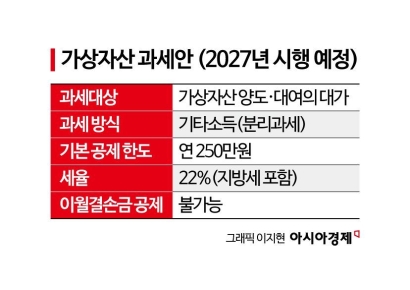 "Stocks Are Not Taxed, but Annual Crypto Gains Over 2.5 Million Won to Be Taxed Next Year... Investors Push Back"
- "Not Jealous of Winning the Lottery"... Entire Village Stunned as 200 Million Won Jackpot of Wild Ginseng Cluster Discovered at Jirisan
- "Even With a 90 Million Won Salary and Bonuses, It Doesn’t Feel Like Much"... A Latecomer Rookie Who Beat 70 to 1 Odds [Scientists Are Disappearing] ③
- "Rather Than Endure a 1.5 Million KRW Stipend, I'd Rather Earn 500 Million in the U.S." Top Talent from SNU and KAIST Are Leaving [Scientists Are Disappearing] ①
- "How Did an Employee Who Loved Samsung End Up Like This?"... Past Video of Samsung Electronics Union Chairman Resurfaces
Assemblyman Yoon said, “The turnover rate of kitchen staff working in overcrowded schools with many students is much higher than in small schools with fewer students for these reasons,” adding, “Although restrooms were created to improve kitchen staff treatment, they hardly have time to take a short break. Concrete measures must be prepared to improve the poor working conditions and treatment of kitchen staff.”
© The Asia Business Daily(www.asiae.co.kr). All rights reserved.







