Korea Forest Service: "We Will Balance Forest Resource Protection and Utilization"
The Korea Forest Service will distinguish and manage forests for economic use and those requiring ecological conservation to enhance the sustainability of forests and maximize their inherent functions and roles. This marks a step forward from focusing solely on greening the land over the past 50 years to placing greater emphasis on harmoniously protecting and utilizing forests.
On the 10th, the Korea Forest Service announced the "Forest for All Promotion Strategy," which contains these details. This strategy emphasizes promoting the free use of forests needed for economic purposes while thoroughly protecting forests with high conservation value. The basic direction of the strategy is to increase forest sustainability so that not only the current generation but also future generations?including the public, forestry workers, urban residents, and mountain village inhabitants?can equally enjoy the value of forests.

Lim Sang-seop, the Commissioner of the Korea Forest Service, is announcing the "Forest Strategy for Everyone" at the Government Complex Daejeon on the 10th. Photo by Korea Forest Service
View original imageFirst, from the perspective of protecting forest resources, the Korea Forest Service will develop superior tree species with excellent environmental adaptability to maintain sustainable forest ecosystems despite climate change, and actively promote conservation activities for vulnerable species such as Abies koreana. The strategy also includes expanding carbon sinks by conducting new afforestation projects on currently unused or neglected idle lands in collaboration with related ministries.
The role of forests in responding to climate change will also be strengthened. A representative example is the promotion of legislation to activate wooden architecture using domestic timber, thereby expanding the use of wood as a carbon storage medium. To this end, the Korea Forest Service plans to improve regulations related to wood utilization.
Protecting the lives and property of citizens from forest disasters is another key task included in the strategy. Recently, forest disasters have become more frequent and larger in scale due to climate change. Considering this, the Korea Forest Service plans to enact the "Forest Disaster Prevention Act" to establish an integrated response system that manages facilities, equipment, and human resources, which have been separately operated for each disaster type such as forest fires, landslides, and forest pests.
Additionally, the strategy ensures thorough protection of forest resources and citizens’ lives and property from forest disasters by organically connecting ground resources such as high-performance, multipurpose forest fire trucks and AI-based forest fire monitoring platforms with aerial resources like agricultural and forestry satellites and helicopters.
The strategy also emphasizes valuable utilization of forests as a resource. Fifty-six percent of domestic private forests are owned by absentee owners, and 86% of owners manage less than 3 hectares, making proper forest management difficult on the ground. To improve this, the Korea Forest Service will promote rationalization of forest ownership structures.
The Korea Forest Service plans to introduce a "Forest Land Bank System," whereby forest lands owned by uninterested owners are acquired and provided to prospective foresters such as youth and returnees to rural areas who have an intention to manage forests. It also plans to introduce a "Forest Public Value Conservation Payment System" to provide fair compensation to owners of protected forest areas with limited economic production activities.
To enable forest owners to freely conduct forest management activities such as timber production, the strategy also promotes the introduction of a "Timber Harvesting (Logging) Agreement System" to resolve conflicts with local residents.
The strategy seeks to develop forests as a key economic asset to counter regional decline. The core idea is to create jobs, food, and recreational opportunities in forests so that forests themselves can serve as a central platform to prevent regional extinction.
To this end, the Korea Forest Service plans to establish "Regional Timber Hub Complexes" that unify all processes from timber production to distribution and processing, enabling a shift away from the current domestic timber industry structure heavily dependent on imported wood. It will also actively promote the domestic timber brand "Hanmok (韓木)."
By rationally improving forest regulations that hinder regional development and developing new tourism resources based on forests, the agency will focus its capabilities to ensure forest tourism resources act as catalysts for revitalizing local economies.
Furthermore, keeping in mind the growing corporate interest in Environmental, Social, and Governance (ESG) factors, the Korea Forest Service will build a corporate and social contribution collaboration network for companies wishing to participate in the forest sector, thereby activating private investment and participation in forest protection and utilization.
Hot Picks Today
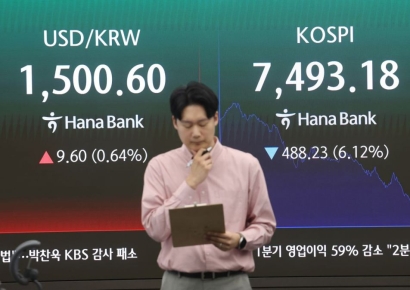 After Topping 8,000 Instead of Hitting 10,000... KOSPI Plunges—When Will It Rebound?
- "Samsung and Hynix Were Once for the Underachievers"... Hyundai Motor Employee's Lament
- [Breaking] Court Rules Against Samsung Electronics Union...1 Billion Won per Day Penalty for Exceeding Strike Scope
- 'Real Strike' Looms as Samsung Union Grows More Hardline... How the 2024 Strike Process Compares
- "That? It's Already Stashed" Nightlife Scene Crosses the Line [ChwiYak Nation] ③
Im Sang-seop, Administrator of the Korea Forest Service, said, "The Korea Forest Service will strive to create healthy forests so that both current and future generations can enjoy the benefits of forests meaningfully. We will continuously communicate with the field and provide unwavering support to achieve tangible results through this promotion strategy."
© The Asia Business Daily(www.asiae.co.kr). All rights reserved.