Long Road Ahead for Real Estate PF Normalization... Financial Authorities and Industry Discuss at National Assembly
Office of Rep. Kim Jaeseop Holds Policy Seminar
NPL Sale Faces Difficulties Due to Buyer-Seller Disagreements
Authorities and Industry Seek PF Restructuring and Normalization Directions

As the financial authorities' sorting of domestic real estate project financing (PF) sites begins in earnest this month, a policy seminar related to PF normalization involving officials from the Financial Services Commission and the Financial Supervisory Service will be held on the 6th. Measures to smoothly operate the PF normalization fund and promptly proceed with the sale of non-performing loans (NPLs) will also be key agenda items.
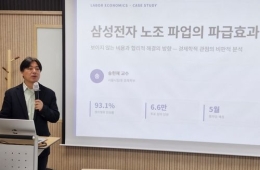
According to the National Assembly on the 5th, Kim Jae-seop, a member of the People Power Party on the National Assembly's Political Affairs Committee, and the Korea Construction Management Society will hold a seminar titled "Strategies to Revitalize Real Estate Finance through PF Project Restructuring" at 10 a.m. on the 6th at the National Assembly Members' Office Building.
There will be four presenters on the day, covering topics such as ▲ causes of real estate PF insolvency and project restructuring measures, ▲ stabilization improvement plans, ▲ fund operation plans and policy directions for normalizing PF non-performing loans, and ▲ reasons for unsold real estate PF NPLs and strategies to activate sales.
Discussion panelists include Kang Young-soo, Director of the Financial Policy Division at the Financial Services Commission, and Kim Hyung-won, Director of the Supervisory General Bureau at the Financial Supervisory Service. Real estate PF experts from Hana Bank, Korea Investment & Securities, and Daishin Securities, among others in the finance and securities industries, will also participate.
Real estate PF was also cited by Kim Byung-hwan, Chairman of the Financial Services Commission, in his inaugural speech on July 31 as one of the four major risks currently faced, alongside household debt, loans to self-employed individuals, and the soundness of the secondary financial sector. Since May, the financial authorities have been implementing a "soft landing plan for real estate PF" that involves auctioning off insolvent projects and smoothly supplying funds to sound projects.
Initially, in the NPL market where non-performing loans are sold, the influx of bad debt from secondary financial institutions such as savings banks and Saemaeul Geumgo slowed down the sales process. As the supply of bad loans increased, NPL companies lowered their purchase prices further, causing a gap in price expectations between sellers and buyers, which hindered smooth sales. Holders of bad loans must confirm losses due to discounted sales. The disposal of assets through Korea Asset Management Corporation (KAMCO), which conducts auctions, also did not proceed smoothly.
However, recently, the Financial Supervisory Service completed the enhanced business feasibility evaluations it has been conducting since June at the end of last month, which is expected to accelerate the sorting process. On the 29th of last month, it announced that the scale of projects with cautionary or insolvency concerns, based on the application of strengthened real estate PF business feasibility evaluation standards to the first evaluation target projects, amounted to 21 trillion won. This represents about 9.7% of the total real estate PF scale. By sector, among financial sectors, mutual finance and savings banks, which had a high proportion of land-secured loans, accounted for 9.9 trillion won and 4.5 trillion won respectively, making up 70% of the total cautionary and insolvent projects. Projects with "insolvency concerns" will proceed to auction stages, while "cautionary" projects will undergo restructuring and voluntary sales procedures. The financial authorities judged that most of the cautionary and insolvent loans are bridge loans or land-secured loans, and since the PF scale currently under construction is not large, the impact on construction companies will be limited. The financial authorities will check the implementation performance of post-management monthly from the end of this month if financial companies finalize restructuring and liquidation plans by the 6th of this month.
Hot Picks Today
!["Overseas Travel Is Out, Let's Earn Daily Wages with Short-Term Jobs"... Rising Living Costs Drive Japanese Seniors to Part-Time Work [Sunday Japan Culture]](https://cwcontent.asiae.co.kr/asiaresize/93/2026042215265936333_1776839219.png) "Overseas Travel Is Out, Let's Earn Daily Wages...
"Overseas Travel Is Out, Let's Earn Daily Wages...
- April Housing Market Heats Up... 3,559 Units Launch Nationwide
- "Be Quiet, Pig": Jimmy Kimmel Live! Wins 'Broadcasting Pulitzer' After Sharp Sat...
- "If Your Age and Years of Service Total Over 70, Please Retire"... MS Implements...
- Loud Bang Suspected as Gunfire at Correspondents' Dinner Attended by Trump... Tr...
A representative from Rep. Kim Jae-seop's office said, "Real estate PF can have a significant impact on the domestic industry and economy, but the current status is not accurately understood," adding, "Rather than hastily approaching through legislation, it is necessary to focus more on understanding the market and solving the accumulated problems." The upcoming policy seminar is explained as an extension of this concern.
© The Asia Business Daily(www.asiae.co.kr). All rights reserved.