Illegal Immigration 'Headache'... Australia Limits International Students to 270,000 Annually
The Australian government, struggling with illegal immigration, has decided to limit the number of foreign international students to 270,000 annually as part of immigration regulations.
According to Bloomberg and The Guardian, Jason Clare, Australia's Minister for Education, announced at a press briefing held in Sydney on the 27th (local time) that this cap on international students will be introduced starting next year. The breakdown by sector is 145,000 for public universities, 95,000 for vocational education and training, and 30,000 for private universities and non-university education institutions.
This decision comes amid a sharp increase in international students coming to Australia primarily for employment rather than study, which has led to serious problems such as illegal workers, soaring rents, and housing shortages. The annual cap of 270,000 is about half the number of student visas approved last year, which approached 600,000, the news agencies reported.
Minister Clare explained the policy background, saying, "(Education) remains a key sector of our economy, but its reputation has deteriorated," adding, "This is to ensure sustainability for the future. We want students to come and study." The government has also sent letters to universities informing them of this cap.
According to the Australian Bureau of Statistics, as of August 2021, there were 1.2 million international students enrolled in universities and other higher education institutions. Additionally, more than 600,000 entered Australia on student visas in the vocational education and training sector. Minister Clare noted that the number of international students in the vocational education sector is currently about 50% higher than before the pandemic. He also emphasized that this measure aims to crack down on "those who are not genuinely operating for student education but are providing a backdoor for working here (in Australia)" and "those exploiting this industry to make quick money."
Until now, the Australian government has been discussing broad measures to curb the surge in illegal immigrants exploiting lax visa regulations and illegal entry following the COVID-19 pandemic. In Australia, even those entering on student visas are allowed to work a certain number of hours, which has increasingly been abused as a way for low-skilled foreign workers to stay. Moreover, the post-pandemic surge in immigrants has been linked to housing shortages and soaring rents, contributing to a decline in the current government's approval ratings.
In response, the Australian government doubled the student visa application fee in July and raised the English language requirements for visa issuance. The Guardian reported, citing Universities Australia, that as of early August, the number of student visas issued had decreased by 23%, or about 60,000, compared to the previous year.
However, there are warnings that this cap on international students could negatively impact the education industry, which is a significant pillar of the Australian economy. Australia's international education market, led by attracting international students, is worth AUD 48 billion (approximately USD 32.5 billion, about KRW 43.3 trillion), accounting for about 7% of total exports. Earlier this month, concerns were raised in the Senate that this cap could cause losses of up to AUD 4.3 billion to the Australian economy.
Hot Picks Today
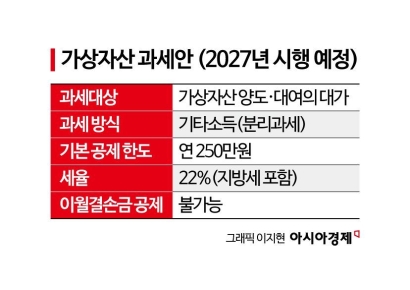 "Stocks Are Not Taxed, but Annual Crypto Gains Over 2.5 Million Won to Be Taxed Next Year... Investors Push Back"
- "Not Jealous of Winning the Lottery"... Entire Village Stunned as 200 Million Won Jackpot of Wild Ginseng Cluster Discovered at Jirisan
- "Rather Than Endure a 1.5 Million KRW Stipend, I'd Rather Earn 500 Million in the U.S." Top Talent from SNU and KAIST Are Leaving [Scientists Are Disappearing] ①
- "How Did an Employee Who Loved Samsung End Up Like This?"... Past Video of Samsung Electronics Union Chairman Resurfaces
- "Even With a 90 Million Won Salary and Bonuses, It Doesn’t Feel Like Much"... A Latecomer Rookie Who Beat 70 to 1 Odds [Scientists Are Disappearing] ③
Professor David Lloyd of Universities Australia criticized the policy as "putting the brakes on Australia's second-largest export industry." Green Party education spokesperson Merin Faruqi condemned the policy, saying, "Despite almost unanimous opposition, they are pushing a terrible policy," and accused the government of targeting international students to stoke fears about immigration. The Student Accommodation Council of the Australian Property Council pointed out that the government should address broader structural supply issues rather than targeting international students in relation to rising rents.
© The Asia Business Daily(www.asiae.co.kr). All rights reserved.







