"Win the Swing Voters"... Ruling and Opposition Parties Intensify Competition to Ease Inheritance Tax
Minjoo Party Proposes Raising Unified and Spouse Deduction Limits
Government and Ruling Party Focus on Strengthening Child Inheritance Deductions
Centrist Voter Sentiment Key in Next Presidential Race
The ruling and opposition parties are actively pushing for a tax law amendment to raise the inheritance tax deduction amount that has been maintained for 27 years. This comes as dissatisfaction with the tax burden has grown even among the middle class due to the increase in asset size caused by rising real estate prices. The Democratic Party of Korea is focusing on raising the uniform deduction and spouse deduction amounts for inheritance tax. On the other hand, the government and ruling party are primarily considering strengthening the child deduction to increase benefits for multi-child households.
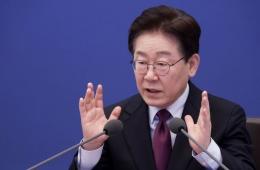
Specifically, the Democratic Party's inheritance tax reform efforts are being led by lawmakers Im Kwang-hyun and Ahn Do-gul, who serve as standing vice chairs of the Policy Committee under Lee Jae-myung’s second term leadership. Im is a former deputy commissioner of the National Tax Service, and Ahn is a former vice minister of the Ministry of Economy and Finance, both experts in taxation and budgeting. The core of the inheritance tax reform plan they are promoting is to raise the minimum deduction thresholds. Im is pushing to increase the uniform deduction from the current 500 million KRW to 800 million KRW, and the spouse inheritance deduction minimum from 500 million KRW to 1 billion KRW. Ahn is preparing a bill to raise the uniform deduction and spouse deduction amounts to 750 million KRW each.
However, they opposed raising the current child inheritance deduction limit (50 million KRW) and lowering the top tax rate (50% for amounts exceeding 3 billion KRW). Their reasoning is that increasing the child personal deduction could cause disparities in tax burdens depending on the number of children, which may violate fairness, and that lowering the top tax rate could concentrate benefits on high-net-worth individuals, inviting criticism of tax cuts for the wealthy.

The government’s plan centers on increasing the child inheritance deduction per child by tenfold (from 50 million KRW to 500 million KRW). This aims to strengthen inheritance tax benefits for multi-child households in consideration of the world’s lowest birth rate. The minimum thresholds for uniform and spouse deductions are likely to remain at the current 500 million KRW each. The government and ruling party’s stance on inheritance tax is still fluid. Even within the People Power Party, there are opinions advocating raising the uniform deduction. Song Eon-seok, chairman of the National Assembly’s Planning and Finance Committee and a member of the ruling party, plans to propose a bill to raise the uniform deduction to 1 billion KRW and the spouse deduction to at least 1 billion KRW. In summary, both the government and the ruling and opposition parties agree on raising the inheritance tax deduction limits but differ on the scope of deductions.
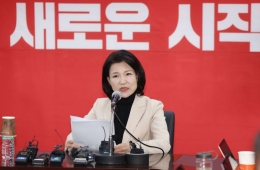
Political analysts say the acceleration of inheritance tax reform efforts in the political sphere is linked to the 'presidential plans' of the new ruling and opposition leaders, Han Dong-hoon and Lee Jae-myung. This is based on the judgment that the success of the 2026 local elections and the next presidential election depends on securing the votes of the centrist middle class. Leader Han repeatedly mentions livelihood issues such as electricity bill reductions and price stabilization to expand his appeal to the 'Jung-Su-Cheong' (centrists, metropolitan area residents, and youth). Lee’s rightward shift is similar. Initially, there was opposition within the Democratic Party to raising the inheritance tax deduction limits, citing it as a 'tax cut for the ultra-rich,' but Lee changed direction by repeatedly advocating for reducing the tax burden on middle-class homeowners.
Hot Picks Today
 "If Your Age and Years of Service Total Over 70...
- "Did Trump Anticipate This?" Export Orders Surge Amid War... Record-High Export ...
- "Be Quiet, Pig": Jimmy Kimmel Live! Wins 'Broadcasting Pulitzer' After Sharp Sat...
- "Using Company Funds Like a Personal Piggy Bank"... Musk Turned to SpaceX Whenev...
- "Surviving 17 Days on Rainwater Without Food"... Ukraine Shocked by Photos of Ma...
Political circles expect the competition between the ruling and opposition leaders to target the centrist voters to become even more intense. Jeong Seong-guk, a People Power Party lawmaker, said, "Future approval ratings will hinge on how the pledges toward the centrist voters are shaped," adding, "It seems that approval ratings will tilt toward the side that achieves results in the competition to court the centrist voters between the ruling and opposition leaders."
© The Asia Business Daily(www.asiae.co.kr). All rights reserved.