[The Editors' Verdict] Joyful Conflict, The Art of Coexistence
"Are You Conservative or Progressive?"
Youth Questions Reveal Deep Divides
Bringing Social Conflict Into Public Debate
A Synergy for an Open Society
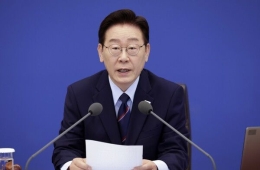
![[The Editors' Verdict] Joyful Conflict, The Art of Coexistence](http://www.asiae.co.kr/news/img_view.htm?img=2024082210273493009_1724290054.jpg)
"Reporter uncle, are you conservative? Or progressive?"
The question was bold, and the answer was awkward. This was the most embarrassing moment for me while serving as a guest lecturer for the ‘Reporter Career Exploration’ program, where journalists from member companies of the Korea Newspaper Association visit elementary, middle, and high schools to provide media education. The ‘Reporter Career Exploration Program’ mainly focuses on educating youth in the smartphone era about ‘media literacy,’ the ability to critically understand media, but when questions about political ideology arise, clear answers are hard to give. Some students even ask directly, “Which president in history do you respect the most?” The questions from youth about political leanings seem to indicate that ideological conflicts have deeply permeated society, extending from political camps into individuals and families.
A survey also revealed that 9 out of 10 citizens believe the conflict between progressives and conservatives is the most serious among societal conflicts. This was included in the report titled ‘Diagnosis of Social Integration Status and Response Measures (Ⅹ),’ published on the 4th by the Korea Institute for Health and Social Affairs, based on interviews with 3,950 citizens aged 19 to 75. Responses regarding willingness to date across political lines highlighted the conflict even more starkly. 58.2% of respondents said they could not date or marry someone with different political views. This was not due to religious reasons or personality differences. Three out of ten respondents said they would not even share drinks with friends or acquaintances who have different political views. Terms like ‘conflict republic,’ ‘black hole of conflict,’ and even the provocative phrase ‘psychological civil war state’ have emerged. This is exactly the situation described by social biologist Choi Jae-cheon, a distinguished professor at Ewha Womans University, as ‘all imaginable conflicts erupting simultaneously.’
Hot Picks Today
 "Stocks Are Not Taxed, but Annual Crypto Gains Over 2.5 Million Won to Be Taxed Next Year... Investors Push Back"
- "Don't Throw Away Coffee Grounds" Transformed into 'High-Grade Fuel' in Just 90 Seconds [Reading Science]
- [Breaking] Bloomberg: "Korean HMM Oil Tanker Attempts Escape from Strait of Hormuz"
- Signed Without Viewing for 1.6 Billion Won... Jamsil and Seongbuk Jeonse Prices Jump 200 Million Won in a Month [Real Estate AtoZ]
- "Even With a 90 Million Won Salary and Bonuses, It Doesn’t Feel Like Much"... A Latecomer Rookie Who Beat 70 to 1 Odds [Scientists Are Disappearing] ③
So, are all the conflicts currently facing Korean society bad and something that must disappear? Can a society without conflict necessarily be called a good society?
Conflicts are often inevitable in human relationships. Even within families, conflicts among members are always present. Above all, in the endlessly diversifying 21st century, emphasizing only integration is not feasible. However, if conflicts are mishandled, they can become serious states that are difficult to recover from, so the process of resolving them is important.
First, we must move beyond viewing social ‘conflict’ as mere division. There is an expression, ‘agree to disagree.’ It means that conflicts should be seen based on mutual ‘recognition of differences.’ Therefore, conflicts should not be hidden under the bed. They must be brought into the open public forum, faced directly, and resolved through dialogue. The deliberative process of resolving these ‘conflicts’ can be a synergy that transforms society for the better.
‘Hip Berlin, The Paradox of Conflict,’ which tells the story of Berlin citizens who turned internal conflicts during Germany’s division period into a driving force for an open society, can serve as a good reference for us. The book’s co-author, Lee Jin (a political culture scholar based in Germany), described the process of managing social conflicts as a driving force toward a new society, calling it ‘conflict competence.’
What is important here is the role of political society, including the government and political parties, in mediating and resolving conflicts, and the maturity of civil society that listens attentively to minority opinions until the end. What we need now is the ‘art of coexistence’ that can elevate various conflicts into ‘joyful conflicts’ based on mutual ‘recognition of differences.’ Now, I send my answer to the youth who asked, ‘Are reporters conservative or progressive?’ “Birds fly balanced in the sky with two wings, left and right.”
Jo Young-chul, Opinion Team Leader
© The Asia Business Daily(www.asiae.co.kr). All rights reserved.