"Korean Temperature Rise Three Times Higher Than Global Average... The Lost 'Cheoseo Magic'"
"By Mid-21st Century, Heatwaves Double and Tropical Nights Increase Fivefold"
In Seoul, with tropical nights occurring for 28 consecutive days, breaking the record for the longest tropical night ever, the hot weather continues. Former Director of the National Institute of Meteorological Sciences, Jo Cheon-ho, stated, "Recently, the temperature rise in our country is three times faster than the global average," and predicted, "The 22nd, which is Choseo according to the solar terms, will not have the Choseo magic this time." Choseo, the 14th solar term among the 24 solar terms, is known as the period when the heat subsides after summer. Among the public, the term 'Choseo magic' is sometimes used to mean that the weather magically cools down after Choseo.
On the 19th, Jo, on CBS Radio's 'Kim Hyun-jung's News Show,' explained, "Analyzing data from the past 100 years, winter has shortened by one month, while summer has lengthened by about one month," adding, "Since summer has lengthened, the Choseo of the past and the present are different." He continued, "We expect to continue experiencing tropical nights and heatwaves until early next week," expressing concern, "Besides the heat, if rain increases humidity, summer could become even more unbearable."
![On the afternoon of the 16th, when the heatwave continued day after day, heat haze caused by ground heat was rising above Yeouidaero in Yeongdeungpo-gu, Seoul. [Image source=Yonhap News]](http://www.asiae.co.kr/news/img_view.htm?img=2024081809470487946_1723942024.jpg)
On the afternoon of the 16th, when the heatwave continued day after day, heat haze caused by ground heat was rising above Yeouidaero in Yeongdeungpo-gu, Seoul. [Image source=Yonhap News]
View original imageHe also expressed concern about the gradual rise in global temperatures. Jo said, "Temperature rise is a global issue, but the temperature increase in our country is about three times faster than the global average," and added, "The higher the latitude, the faster the temperature rises. Especially in Korea, rapid urbanization is causing summer temperatures to rise even more sharply."
He mentioned that as the weather balance breaks down, cold waves in winter could become more severe. Jo stated, "By the mid-21st century, heatwaves are expected to double, and tropical nights to increase fivefold," and added, "Although extreme cold in winter may decrease, the breakdown of weather balance could increase the likelihood of cold waves."
Hot Picks Today
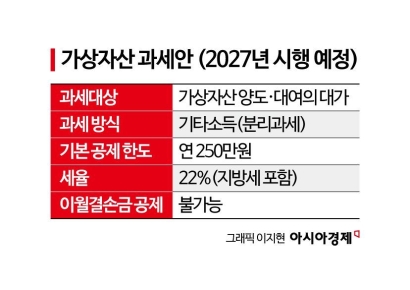 "Stocks Are Not Taxed, but Annual Crypto Gains Over 2.5 Million Won to Be Taxed Next Year... Investors Push Back"
- "Not Jealous of Winning the Lottery"... Entire Village Stunned as 200 Million Won Jackpot of Wild Ginseng Cluster Discovered at Jirisan
- "Rather Than Endure a 1.5 Million KRW Stipend, I'd Rather Earn 500 Million in the U.S." Top Talent from SNU and KAIST Are Leaving [Scientists Are Disappearing] ①
- "How Did an Employee Who Loved Samsung End Up Like This?"... Past Video of Samsung Electronics Union Chairman Resurfaces
- "Even With a 90 Million Won Salary and Bonuses, It Doesn’t Feel Like Much"... A Latecomer Rookie Who Beat 70 to 1 Odds [Scientists Are Disappearing] ③
There is also a forecast that typhoons will strike after the heatwave subsides. According to the Korea Meteorological Administration, Jeju will enter the influence zone of Typhoon Jongdari starting from the 20th. Jo explained, "When the North Pacific High pressure stays over the Korean Peninsula, it is difficult for typhoons to enter our country, but if the high pressure moves downward, typhoons follow around the high pressure and enter," adding, "As temperatures rise, the amount of water vapor, which is the energy source of typhoons, increases, making it more likely that stronger typhoons than usual will come."
© The Asia Business Daily(www.asiae.co.kr). All rights reserved.







