KOSPI's July Slump, Will It Regain Upward Momentum in August?
KOSPI Records Monthly High Then Weakens
Drops from 2890 to 2730 Range
August Hopes for Reversal Amid FOMC and Others
Limited Upside Despite Strengthened Rate Cut Expectations
Despite high expectations for a July summer rally in the KOSPI, the market showed a sluggish trend contrary to anticipation, drawing attention to whether it can regain its upward momentum in August. While some forecasts suggest that the mood will reverse following the U.S. Federal Open Market Committee (FOMC) meeting in July, others believe the upside potential will be limited, indicating that the KOSPI's performance in August cannot be viewed with unreserved optimism.

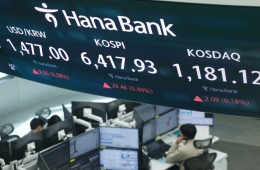
According to the Korea Exchange on the 31st, the KOSPI closed at 2,738.19, down 27.34 points (0.99%) from the previous session. The KOSPI, which had been on an upward trend since June, settled above the 2,800 mark in July and reached a yearly high of 2,891.35 on the 11th, approaching the 2,900 level. However, it has since fallen back to the 2,700 range due to U.S.-originated political risks and a sharp decline in tech stocks. The KOSPI has dropped 5.3% from its peak.
Lee Kyung-min, a researcher at Daishin Securities, analyzed, "The KOSPI, which was on the verge of reaching 2,900, dropped to the low 2,700s in just two weeks. This was influenced by the peak in interest rate cut expectations and a sharp rise in the yen, leading to the liquidation of yen short (selling) and big tech (large information technology companies) long (buying) positions." He added, "Subsequently, issues such as the Trump trade, the Biden administration's strengthened semiconductor regulations against China, Tesla's earnings shock, and uncertainties regarding Alphabet's increased capital expenditure on artificial intelligence (AI) and the timing of its profit contributions caused a broad sell-off in tech stocks."
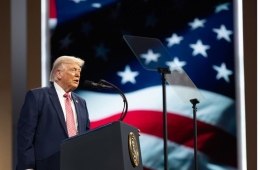
There is an analysis that the U.S. presidential election event was reflected in the market earlier than initially expected. Yoo Myung-gan, a researcher at Mirae Asset Securities, said, "Looking at the average monthly stock price increases of the S&P 500 and KOSPI in years with U.S. presidential elections, they generally showed weakness in September and October, followed by recovery starting in November." He added, "This year, starting with the assassination attempt on Trump, the U.S. presidential election event has been quickly reflected in the stock market."
Several major events that could influence the market direction are scheduled in succession. The Bank of Japan (BOJ) is holding a two-day monetary policy meeting starting yesterday, and the U.S. FOMC results will be announced on the 1st. The sharp rise in the yen, which caused the Nasdaq plunge, is expected to calm down following the BOJ meeting. Lee said, "Since the BOJ meeting is expected to decide on maintaining interest rates, the sharp rise in the yen will likely ease around the 31st."
Expectations for interest rate cuts are anticipated to grow again at the FOMC. Lee predicted, "Expectations for U.S. interest rate cuts will once again have a favorable impact on the market through this FOMC. The U.S. Federal Reserve (Fed) is expected to increase the visibility of a rate cut in September."
There is a forecast that the KOSPI will attempt to break through the 2,900 level again as it absorbs major events and corporate earnings. Lee said, "After passing through the BOJ, FOMC, and the full-fledged earnings season, the mood is expected to reverse. The KOSPI will show a resilient rebound as its undervaluation appeal stands out, aiming to surpass the 2,900 mark."
Hot Picks Today
![[Exclusive] "What? I Used It for Fried Eggs and Kimchi Pancakes, but It Wasn't Edible?"... Raw Pork Lard Supplied to Department Stores, Causing Stir](https://cwcontent.asiae.co.kr/asiaresize/93/2026042216151436513_1776842114.png) [Exclusive] "What? I Used It for Fried Eggs and...
[Exclusive] "What? I Used It for Fried Eggs and...
- [Report] "Professionals in Their 30s and 40s With at Least 2 Billion Won in Cash...
- "375 Won Per Share" SK hynix to Pay 26.58 Billion Won Cash Dividend
- No More Updates on 'Star' Wolf Neugoo for Now... Was the Pressure from Fans Over...
- "Chairman Chey Tae-won's Warning Comes True"... Laptop Prices Already Up 1 Milli...
However, there are also views that despite strengthened expectations for rate cuts, the stock market's upside potential will be limited. Researcher Yoo said, "In August, due to the Fed's rate cut expectations, further declines in the stock market will be limited, but after the end of the second-quarter earnings season, the disappearance of earnings momentum, the possibility of a slowdown in domestic corporate earnings in the second half, and increased political uncertainty will likely limit the extent of gains." He added, "With the uncertainty related to the U.S. presidential election reflected about a month earlier than usual, and with slowing earnings growth and a low risk premium, valuations are unlikely to rise significantly. Therefore, the upside potential in August will likely be limited to recovering the losses from July."
© The Asia Business Daily(www.asiae.co.kr). All rights reserved.