'4.9 Million Residents' Population Decline Areas, Living Population Reaches 25 Million
Ministry of the Interior and Safety and Statistics Korea Announce First Results of Resident Population Estimation
Figures Combine Registered Residents and Stay Population
"To Be Used as Data for Customized Regional Revitalization Strategies"
The results of the first-ever calculation of 'living population,' which combines the resident registration population with the population that stays in a specific area for a certain period regularly, have been announced. The living population in nationwide population-declining areas reached about 25 million, five times the resident registration population.
The Ministry of the Interior and Safety and Statistics Korea calculated the living population for 89 population-declining areas for the first quarter of this year and announced the results on the 25th. The living population is a population concept introduced in 2023 through the enactment of the "Special Act on Support for Population Declining Areas." It includes not only the resident registration population and registered foreigners but also the "staying population" who stay in the area for more than three hours a day at least once a month.

The data used for this calculation combined the Ministry of the Interior and Safety’s resident registration data and the Ministry of Justice’s foreigner registration data with pseudonymized and linked data from the three major telecommunications companies. Statistics Korea utilized this data to analyze the demographic and activity characteristics of the respective areas and produced the results.
The results showed that the total living population in population-declining areas was about 25 million, of which the staying population was approximately 20 million. This is about four times the registered population of approximately 4.9 million. In all population-declining areas, the staying population exceeded the registered population. In the case of Gurye, Jeollanam-do, the staying population was 18.4 times the registered population, showing a significant difference compared to other areas.
The Ministry of the Interior and Safety plans to provide these analysis results to relevant institutions to support their use as basic data for projects and policies addressing population decline. Additionally, starting from the second quarter living population calculation, they plan to secure additional data such as credit card usage information and workplace information from credit information companies to estimate more detailed characteristics of the staying population.
Hot Picks Today
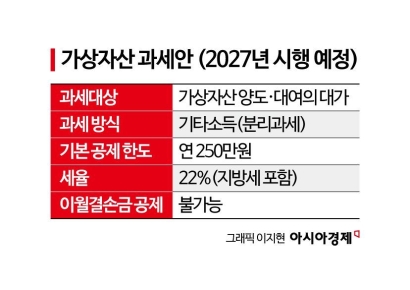 "Stocks Are Not Taxed, but Annual Crypto Gains Over 2.5 Million Won to Be Taxed Next Year... Investors Push Back"
- "Not Jealous of Winning the Lottery"... Entire Village Stunned as 200 Million Won Jackpot of Wild Ginseng Cluster Discovered at Jirisan
- "Rather Than Endure a 1.5 Million KRW Stipend, I'd Rather Earn 500 Million in the U.S." Top Talent from SNU and KAIST Are Leaving [Scientists Are Disappearing] ①
- "How Did an Employee Who Loved Samsung End Up Like This?"... Past Video of Samsung Electronics Union Chairman Resurfaces
- "Even With a 90 Million Won Salary and Bonuses, It Doesn’t Feel Like Much"... A Latecomer Rookie Who Beat 70 to 1 Odds [Scientists Are Disappearing] ③
Minister of the Interior and Safety Lee Sang-min stated, "In population-declining areas, the living population data, calculated at a scale more than five times the actual registered population, is expected to be usefully applied in establishing customized regional revitalization policies." He added, "We will strive to ensure that living population statistics can be utilized not only for regional revitalization policies but also diversely in the private sector."
© The Asia Business Daily(www.asiae.co.kr). All rights reserved.