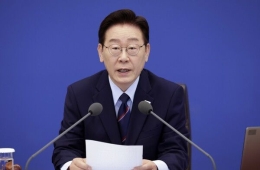
"To Overcome the Climate Crisis, Transition Finance System Must Be Reformed" [Future Finance Seminar]
Financial Services Commission and Financial Supervisory Service Emphasize Their Roles in Climate Finance
Encouraging Transition to Low-Carbon Businesses Through Combined Incentives and Regulations
There was an opinion that financial authorities should play a role in supplying funds to promote the transition to low-carbon industries in response to the climate crisis. The authorities emphasized the importance of ‘transition finance’ that encourages companies engaged in high-carbon businesses to shift to low-carbon businesses, and pledged to spare no institutional support such as completing the legal framework and providing incentives.
At the ‘Future Finance Seminar’ held on the 8th at the Bankers’ Hall in Jung-gu, Seoul, the Financial Services Commission and the Financial Supervisory Service said they are expanding support for climate crisis response through policy finance.
First, the FSC stated that climate finance is essential for sustainable development, but private finance faces burdens in direct investment, so policy finance should provide systematic support. Kwon Yoo-yi, head of the Industrial Finance Division at the FSC, said, “Private financial companies should play the role of transition finance providers by raising green bonds and other means to encourage each company to transition to low-carbon industries.” To this end, the authorities will work with related organizations to prepare support measures and simultaneously improve the legal framework (such as clarifying the ambiguous definition of climate finance in the Green Finance Promotion Act).
The FSS said it is preparing to provide incentives that enable financial companies to supply funds well for eco-friendly activities and to regulate the reduction of fund supply to high-carbon industries. Kim Jeong-il, head of the ESG System Risk Analysis Team at the FSS, said that guidelines for green credit management will be prepared within this year to enable banks and others to provide funds to companies through loans. Regarding the formation of future energy funds, they are considering preferential policies to reduce the burden on banks when making equity investments so that more high-risk investments can be made. However, they also said they will create management guidelines to strengthen climate risk management and conduct climate stress tests to activate climate finance.
![Participants are engaged in a panel discussion during the second session, "Climate Crisis and Changes in Finance," at the "Future Finance Seminar" held on the 8th at the Korea Federation of Banks Building in Jung-gu, Seoul. <br>[Photo by Jeon Youngju ange@]](http://www.asiae.co.kr/news/img_view.htm?img=2024070815560243838_1720421762.jpg)
Participants are engaged in a panel discussion during the second session, "Climate Crisis and Changes in Finance," at the "Future Finance Seminar" held on the 8th at the Korea Federation of Banks Building in Jung-gu, Seoul.
[Photo by Jeon Youngju ange@]
There was also an opinion to form an initiative (a corporate group that creates autonomous norms such as guidelines to encourage mutual compliance and cooperation) with Japan, which introduced transition finance policies ahead of Korea, to prepare for climate finance. Cho Jeong-hoon, head of the ESG division at Shinhan Financial Group, said, “Transition finance is developing centered on Japan, and Korea can create new opportunities by leading the initiative together with Japan in East Asia or by implementing transition finance policies with a roadmap to build an ecosystem.”
Suggestions were also made that the financial industry should first invest in energy and food issues arising from the climate crisis. Hong Jong-ho, professor of economics at the Graduate School of Environmental Studies at Seoul National University, said that Korea’s market size for eco-friendly energy such as solar and wind power and its food self-sufficiency rate (below 20%) are very insufficient compared to other countries, adding, “There needs to be a policy shift by the government, and active support from policy finance and the private sector is necessary.” He added, “As the climate crisis spreads from an environmental problem to crises in various fields such as food and energy, it can act as a risk in daily life issues such as food and heating/cooling.”
Meanwhile, Lee Ok-soo, partner at Deloitte Anjin Accounting Firm, emphasized the importance of climate technologies that reduce a large amount of carbon cheaply in his presentation titled ‘The Role of Finance in the Era of Climate Crisis,’ saying, “We need to expand startups and venture companies with related technologies through financial support or investment and M&A support.” He also said that climate disclosure will be mandatory mainly for listed companies from 2026, and support is needed especially for companies that have declared active responses to the climate crisis.
Hot Picks Today
 "Stocks Are Not Taxed, but Annual Crypto Gains Over 2.5 Million Won to Be Taxed Next Year... Investors Push Back"
- "Don't Throw Away Coffee Grounds" Transformed into 'High-Grade Fuel' in Just 90 Seconds [Reading Science]
- [Breaking] Korean Oil Tanker Attempting Passage Through the Strait of Hormuz
- "Groups of 5 or More Now Restricted"... Unrelenting Running Craze Leaves Citizens and Police Exhausted
- "Even With a 90 Million Won Salary and Bonuses, It Doesn’t Feel Like Much"... A Latecomer Rookie Who Beat 70 to 1 Odds [Scientists Are Disappearing] ③
Lee Seung-jun, research fellow at the Korea Insurance Research Institute, proposed an ‘index-type weather insurance’ as a climate finance-related product in the insurance sector. He said, “Renewable energy such as wind and solar power is very important, but its share in Korea is only 7.1%. It is a sector that requires financial support,” adding, “Index-type weather insurance, which compensates for volatility risk so that income does not fluctuate depending on the weather, should be introduced quickly.” He explained that index-type products compensate profits quickly without separate loss assessment if certain criteria are exceeded or not met, and that they can contribute to carbon neutrality.
© The Asia Business Daily(www.asiae.co.kr). All rights reserved.