[Seoul's Future] "Yongsan is Seoul's Future Flagship... Connecting Local Areas and Industries is Essential"
Asia Economy Seoul Future Forum - Panel Discussion on Yongsan's Future
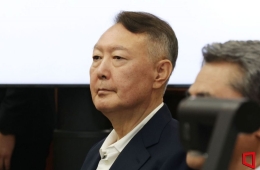
Director Park Jonghyun "The combined area of Tokyo hubs should be approached with connectivity and innovative concepts"
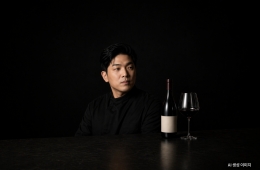
Vice Chair Kim Seona "Need to consider soft content and the variable future generations"
Kim Sehun "Vacated urban core spaces play a role in enhancing city attractiveness"
"The future demand holders of the Yongsan International Business District, such as global companies and international organizations, must appeal the value of choosing Seoul over Tokyo as their hub." (Park Jong-hyun, Director of Nomura Research Institute Seoul)
"The core keyword of 21st-century cities is network. We must create synergy by cooperating with surrounding cities. It is also necessary to complement with soft content." (Kim Sun-ah, Vice President of the Korea Urban Planners Association)

On the 26th, panelists are having a discussion at the '2024 Seoul Future Forum: The Future of Yongsan' held at the Press Center in Jung-gu, Seoul. From the left: Jahoony Gu, Professor at Hanyang University Graduate School of Urban Studies; Jonghyun Park, Director of Nomura Research Institute Seoul; Seona Kim, Vice President of the Korean Urban Planners Association; Sehoon Kim, Professor at Seoul National University Graduate School of Environmental Studies. Photo by Jinhyung Kang aymsdream@
View original imageUrban competitiveness comes from 'connection.' The most important keyword for Yongsan International Business District to rise beyond a simple hub to become a high-level center of Seoul is also 'connection.' Urban planning experts emphasized that to perform international business functions beyond Seoul's three central business districts (Gwanghwamun, Yeouido, Gangnam), creating new industries and linking with surrounding cities are crucial.
On the 26th, at the Press Center in Jung-gu, Seoul, during the panel discussion of the '2024 Seoul Future Forum' hosted by Asia Economy under the theme 'The Future of Yongsan,' Professor Koo Ja-hoon of Hanyang University Graduate School of Urban Studies, who chaired the session, said, "Tokyo has set the goal of being the number one global city, and for Seoul's urban competitiveness to rise, Yongsan will be at the center, which will determine our country's competitiveness."
"Yongsan International Business District should be approached as Seoul's future flagship with an innovative concept"
The Yongsan International Business District, developed on 500,000 square meters in the heart of Seoul, is a project to create a 'city within a city.' It is also a task to build Seoul's future on an area equivalent to the combined size of Tokyo's major projects such as Roppongi Hills, Azabudai Hills, and Ark Hills.
Park Jong-hyun, Director of Nomura Research Institute Seoul, said, "The unit of the Yongsan International Business District is not a development project unit but creating a city within a city, and since it can be a flagship place for future Seoul, it should be approached with a concept close to innovation," adding, "It should be considered as a model combining several cities encompassing urban residential, business centers, and entertainment."

Jonghyun Park, Director of Nomura Research Institute Seoul, is attending and discussing at the '2024 Seoul Future Forum: The Future of Yongsan' held on the 26th at the Press Center in Jung-gu, Seoul. Photo by Jinhyung Kang aymsdream@
View original imageDirector Park mentioned Tokyo's metropolitan development projects such as 'Greater Shibuya,' emphasizing that it is important not only to have individual complex developments but also to 'connect' major hubs. He explained, "Japan has created and grown compact cities based on pedestrian living zones and then worked on connecting regions at the Tokyo metropolitan level. This was done in three stages: urban environment maintenance, regional management, and regional connection."
Park said, "Without open innovation exchanges between Tokyo and Seoul, it is difficult to create new industries. The Yongsan International Business District should be connected and expanded with Namsan, the Han River, and Yongsan Park to appeal the future image of the international business district as 'Seoul's future' to global companies and international organizations," emphasizing, "International city Seoul must start by placing global players who will lead future industries at the center."
He added, "When creating Seoul's future image, it can gain more support when the regeneration of the Han River, Namsan, and Yongsan Park linked with the international business district and how to connect them at the regional level are concretized not as a business development plan but as a regional plan," and said, "New values must be set at a higher vision level and overcome through collaboration with experts."
Yongsan development should also consider 'soft content'
There was also an opinion that in various development projects such as the Yongsan International Business District, 'soft content' based on the actual experience of space users should be prioritized over physical planning.
Kim Sun-ah, Vice President of the Korea Urban Planners Association and CEO of Spacing Engineering Architecture Office, said, "While many cities have been preparing to become cities that can create 21st-century economic opportunities, we missed the chance," adding, "In the case of Yongsan, preparation is needed when viewed in that way."

Kim Sun-ah, Vice President of the Korea Urban Planners Association, is attending and discussing at the '2024 Seoul Future Forum: The Future of Yongsan' held on the 26th at the Press Center in Jung-gu, Seoul. Photo by Kang Jin-hyung aymsdream@
View original imageVice President Kim emphasized that focusing on internal content is a priority over so-called 'big picture' development plans and designs. She explained, "The most important question in the international business district development plan is what companies and industries will enter there and who will work there," adding, "It is not about massively increasing the floor area ratio physically and then thinking about what to fill it with; the order has been reversed."
Kim said, "Thinking only about physical buildings and urban spaces limits imagination," and suggested, "If we put down all the drawings and think about what industries will enter, architects and planners who create spaces can create spaces where infinite imagination can be exercised." Regarding the current situation in domestic laws and systems where the physical framework must be established first in development plans, she also emphasized, "Innovating the system is a priority."
Large-scale development projects such as the Yongsan railroad maintenance depot and U.S. military base are also opportunities to empty the city. It is important to establish urban plans so that it can function as the highest-level center beyond Seoul's three central business districts and as a leisure space.
Yongsan development is an opportunity to create the 'aesthetics of emptiness'
Professor Kim Se-hoon of Seoul National University Graduate School of Environmental Studies said, "(Yongsan development) is a very good opportunity to elegantly empty the 'urban sediment' including the external spaces of Yongsan Park and the upcoming International Business District."

Professor Kim Sehun of the Graduate School of Environmental Studies at Seoul National University is attending and discussing at the '2024 Seoul Future Forum: The Future of Yongsan' held on the 26th at the Press Center in Jung-gu, Seoul. Photo by Kang Jinhyung aymsdream@
View original imageHe cited globally competitive cities as examples, mentioning that having 'emptied spaces' is a common feature. Examples include New York's Meta and Central Park, Paris's Champs-?lys?es and Concorde Square, Boston Common area, and near Barcelona's Sagrada Familia Cathedral. Professor Kim emphasized, "These external spaces enhance the city's attractiveness and play a role in making people remember the city after visiting."
Professor Kim also stressed that the development of 'central areas' requires flexibility to adapt to changes. He said, "Until now, when planning city centers, there seemed to be an inertia to specialize or fill something," adding, "Labeling it as specialization and making it difficult to adapt to changes later, when the real estate market changes or the paradigm of industrial innovation shifts, narrow specialization can hinder urban change."
Hot Picks Today
 "I Wish I Could Sleep": Frozen Meals, Two Hours...
- The Quoted 800,000 Won, the Bill Was 5 Million... Bereaved Families of 'No-Funer...
- "You Can Only Have This in Korea": Which National Museum Cafe Menu Is Captivatin...
- Tragedy in Luxury Apartment: Woman in Her 20s Found Dead, Suspect Identified
- "Never Hike Alone as a Woman" "Even Two Are at Risk"... Growing Fear of Crime on...
In his closing remarks, Professor Koo Ja-hoon said, "When conceptualizing the Yongsan International Business District, the focus has been on showing the future direction," and explained, "The success or failure of the project will hinge on land sales, real estate development strategies, how to attract anchor companies, and how to operate administrative, financial support, and software, and in that regard, flexibility is inevitable."
© The Asia Business Daily(www.asiae.co.kr). All rights reserved.