[Inside Chodong] Prices Keep Rising, but Where Are the Government's Measures?
![[Inside Chodong] Prices Keep Rising, but Where Are the Government's Measures?](http://www.asiae.co.kr/news/img_view.htm?img=2023081610425941286_1692150178.jpg)
Since June, prices of food items such as chocolate, beverages, seaweed, and soy sauce have been rising one after another. The food industry expresses its own difficulties, saying that the increase in raw material costs and the rise in the won-dollar exchange rate, combined with the fact that price hikes had been postponed as much as possible, made this an inevitable decision. BBQ, a leading chicken brand, recently postponed the timing of its price increase twice within half a month, but ultimately decided to raise the prices of major menu items by 3,000 won starting from the 4th. When the government requested a delay in the price increase considering consumers' positions, the company reluctantly accepted but did not withdraw the decision to raise prices. No matter how loudly the government claims to control inflation or consumer groups criticize companies for maximizing profits, there is no way to stop companies’ will to raise product prices in a free market economy.
This domino effect of food and dining price increases was already anticipated. Ahead of the last general election, the government repeatedly pressured companies to participate in price stabilization. The Ministry of Agriculture, Food and Rural Affairs designated officials responsible for managing prices of major processed foods, such as a 'bread manager' and a 'milk officer,' and hastily considered importing apples when the 10,000 won 'golden apple' became controversial. Since rising food prices directly lead to increased living costs and thus burden consumers, the government tried to present some measures to curb inflation. With already high inflation, high interest rates, high exchange rates, and external shocks like the Middle East war, concerns grew about the urgent need to block negative impacts on the Korean economy.
However, as always, excessive price control policies tend to do more harm than good. It is impossible to indefinitely freeze selling prices when raw material costs are sharply rising. Suppressing price increases in the long term can shrink corporate production activities and negatively affect the overall economy. Above all, when price increase factors accumulate and are reflected all at once at some point, it causes greater shocks and more confusion.
The government directly intervening to block or delay price increases is not a fundamental solution. If the goal is to stabilize prices, it must carefully examine and regulate whether domestic production is sufficient in advance, whether there are supply and demand issues, whether prices can be lowered by utilizing stockpiles or tariff quotas, and whether there are unnecessary costs or profiteering by intermediaries in the distribution process. It should also regularly check and adjust whether national monetary and fiscal policies are functioning properly. Calling food companies or distribution firms to request restraint on price hikes or threatening with Fair Trade Commission investigations and coercive controls has proven ineffective in the past.
Hot Picks Today
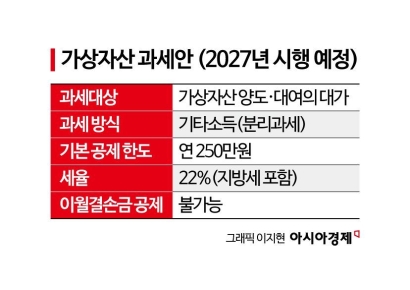 "Stocks Are Not Taxed, but Annual Crypto Gains Over 2.5 Million Won to Be Taxed Next Year... Investors Push Back"
- "Not Jealous of Winning the Lottery"... Entire Village Stunned as 200 Million Won Jackpot of Wild Ginseng Cluster Discovered at Jirisan
- "Even With a 90 Million Won Salary and Bonuses, It Doesn’t Feel Like Much"... A Latecomer Rookie Who Beat 70 to 1 Odds [Scientists Are Disappearing] ③
- General Strike D-1: Final Negotiations Between Samsung Electronics Labor and Management Over One Key Issue
- "How Did an Employee Who Loved Samsung End Up Like This?"... Past Video of Samsung Electronics Union Chairman Resurfaces
At a high-level party-government-national assembly meeting held at the National Assembly the day before, Choo Kyung-ho, floor leader of the People Power Party, urged, "Controlling living and grocery prices is the first step to gaining public support, so the government should devote all efforts to stabilizing perceived prices." Before his inauguration, President Yoon Suk-yeol received advice at the presidential transition committee workshop that "No government can beat inflation. People may forgive lack of growth, but they will be angry if inflation is not controlled." Artificially suppressing prices is risky, but at the same time, price management directly related to the livelihoods of ordinary people cannot be neglected. It is time for more innovative and macroeconomic policies that can induce price stability from a long-term perspective.
© The Asia Business Daily(www.asiae.co.kr). All rights reserved.