"'Revival of Jigu-dang? I Oppose' Oh Se-hoon Opposes Political Party Act Revision... 'A Law Good Only for Party Leaders, Not the People'"
Handonghun, Ahn Cheolsu, Yoon Sanghyun Directly Refute Revival Theory of Local Party Branches
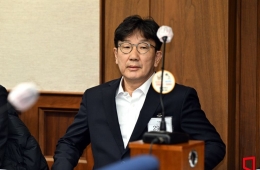
Seoul Mayor Oh Se-hoon, a key figure behind the amendments to the Political Funds Act, Political Parties Act, and Public Official Election Act aimed at abolishing district party organizations, declared his opposition on the 31st to discussions in the political sphere about abolishing district parties. This stance contrasts with that of People Power Party (PPP) leadership contenders such as former Emergency Committee Chairman Han Dong-hoon and PPP lawmaker Yoon Sang-hyun, who have expressed support for reviving district parties.
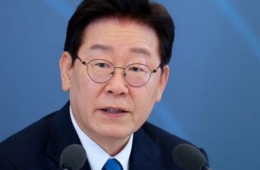
On the 31st, Mayor Oh opposed the revival of district parties via social media (SNS), stating, "District parties are not for the people but only serve to strengthen a one-man, imperial-style party leader."
![[Image source=Yonhap News]](http://www.asiae.co.kr/news/img_view.htm?img=2024053118311692239_1717147876.jpg)
He explained, "I have pondered deeply over the past few days because I understand the difficulties and fairness issues faced by politicians outside the National Assembly," but added, "I want to clearly address the regression of reforms achieved jointly by the ruling and opposition parties. The original intent of the amendments to the Political Funds Act, Political Parties Act, and Public Official Election Act?known as the Oh Se-hoon Law?was to streamline the party structure, once called a money-guzzling beast, into a parliamentary party form to drastically change the high-cost political structure."
Referring to the U.S. political system centered on parliamentary parties, Mayor Oh pointed out, "Ideally, politics should flow with the parliamentary leader leading the party and focusing on legislative issues, as in the U.S., but even 20 years after the law revision, Korea still has a party leader-centered structure."
Regarding district parties, he said, "In the past, district parties were hotbeds of local political bosses. It was common for those who made large political donations to district party chairpersons to become local councilors, and they interfered in local interests. The core of the Oh Se-hoon Law reform was to break the dark food chain in politics formed among local bosses, district party chairpersons, and party leaders through elections and candidate nominations."
Mayor Oh stated, "While creating district parties might help party leaders control the party, what benefit would that bring to the people? As we have witnessed in the Russian Communist Revolution, the Chinese Cultural Revolution, and the Unified Progressive Party incident, it could lead to the most worrisome outcome where a small group with extreme views dominates the reasonable majority."
Within the People Power Party, major politicians have recently taken divergent positions on the district party issue. Former Chairman Han argued, "Twenty years ago, when 'cash-for-votes' was rampant, abolishing district parties was political reform, but now reviving district parties is political reform." Lawmaker Yoon Sang-hyun even proposed a bill to revive district parties, with lawmaker Ahn Cheol-soo joining as a co-sponsor.
Hot Picks Today
 "Pay for the Postpartum Care Center with My Car...
- [Exclusive] "Only 1% of Needed GPUs Secured, No Place to Store Them"... AI Defen...
- [Breaking] Rep. Kwon Seongdong Sentenced to 2 Years in Prison in Second Trial fo...
- Found a Cockroach in Tteokbokki Order... Headquarters Apologizes for Discomfort,...
- Back After 3 Years and 5 Months with a 'Shark Nose Surgery'... Hyundai Unveils T...
Through SNS, lawmaker Ahn Cheol-soo also stated, "I welcome other parties opening local offices outside the National Assembly in my constituency," adding, "This allows young political newcomers nationwide, including in the metropolitan area, to legally establish party branch offices/local offices and build a foundation for the future." He continued, "With the implementation of the Kim Young-ran Act, political culture has changed significantly. From July this year, basic and metropolitan councilors can receive donations, but party branch chairs and local committee chairs cannot, creating discrimination. I believe it is time to allow out-of-parliament party branch chairs and local committee chairs to open offices and receive donations."
© The Asia Business Daily(www.asiae.co.kr). All rights reserved.