Ministry of Industry: "China's Export Controls on Aerospace, Gas Turbines, and Textiles... Limited Impact on South Korea"
Joint Public-Private 'Industrial Supply Chain Inspection Meeting' Held
On the 31st, the Ministry of Trade, Industry and Energy held an 'Industrial Supply Chain Inspection Meeting' chaired by the Director of the Industrial Supply Chain Policy Division at the Korea Chamber of Commerce and Industry to assess the impact on the domestic supply chain following the Chinese government's announcement of export controls in the aerospace, gas turbine, and textile sectors (effective July 1).
This Chinese export control measure adds dual-use (civil-military) items under the Chinese Export Control Law, similar to last year's controls on gallium, germanium, and graphite exports. The newly added items include ▲ aerospace parts and engine manufacturing equipment and software ▲ gas turbine engines, related manufacturing equipment, and software ▲ ultra-high molecular weight polyethylene (UHMWPE) fibers. A Ministry of Trade, Industry and Energy official explained, "This measure does not prohibit exports but adds an export licensing procedure. From July 1, Chinese exporters must undergo a process to verify the end users of these items (statutory deadline of 45 days) when exporting them." The official added, "For last year's additional controlled items?gallium, germanium, and graphite?export licenses are currently being issued normally, and imports into Korea are proceeding without disruption."

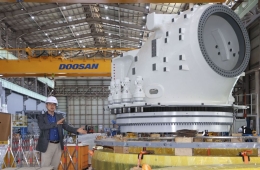
At the meeting, industry representatives projected that the impact on the domestic supply chain would be limited. In the aerospace sector, the targeted items are mainly imported from the United States, Japan, and the European Union (EU), so the related impact is minimal. For gas turbine-related items, the share of Chinese products is small, and alternatives are available. Regarding ultra-high molecular weight polyethylene (UHMWPE) fibers used in bulletproof materials, the high-performance items subject to export controls are primarily imported from the United States, the Netherlands, and Japan, so no direct impact is expected.
The government plans to closely cooperate with the industry to continuously monitor supply and demand trends and promptly resolve any supply difficulties that arise. The Materials and Components Supply Response Support Center will serve as a window to address industry concerns by providing guidance on the Chinese export licensing system and, if necessary, identifying alternative sources. Additionally, various diplomatic and trade channels, including the Korea-China Export Control Dialogue and the Korea-China Supply Chain Hotline, will be activated to maintain close communication and consultation with the Chinese government.
Hot Picks Today
 "Pay for the Postpartum Care Center with My Car...
- [Exclusive] "Only 1% of Needed GPUs Secured, No Place to Store Them"... AI Defen...
- [Breaking] Rep. Kwon Seongdong Sentenced to 2 Years in Prison in Second Trial fo...
- Found a Cockroach in Tteokbokki Order... Headquarters Apologizes for Discomfort,...
- Back After 3 Years and 5 Months with a 'Shark Nose Surgery'... Hyundai Unveils T...
Yoon Seong-hyeok, Director of the Industrial Supply Chain Policy Division at the Ministry of Trade, Industry and Energy, stated, "The domestic impact of this Chinese measure is limited, but we will closely monitor the situation and make every effort to manage supply and demand." He added, "We will also carefully examine whether there is any impact on related industries beyond aerospace, gas turbines, and textiles."
© The Asia Business Daily(www.asiae.co.kr). All rights reserved.